


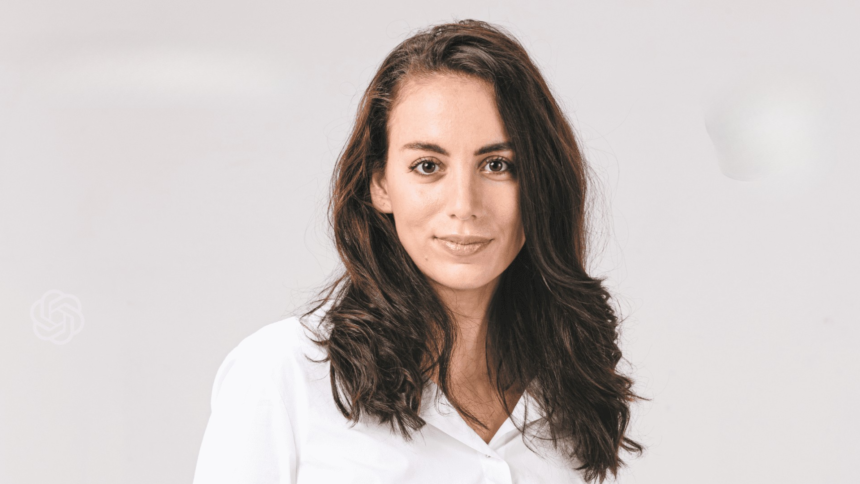
Artificial intelligence is changing the technology industry, and a new startup called Thinking Machines Lab has quickly drawn attention in the field. The company was founded by Mira Murati, who previously served as chief technology officer at OpenAI. Murati launched Thinking Machines Lab in 2025 and now leads the company as its founder and CEO. After helping develop some of the most widely used AI tools in recent years, she is now focused on building a company that can create advanced artificial intelligence systems that are easier for people and businesses to understand and use.
Because of Murati’s experience in the AI industry, the company gained interest soon after it was announced. Researchers, engineers, and investors began following the startup closely, making Thinking Machines Lab one of the most talked-about new AI ventures in the United States.
Early Life and Education
Mira Murati was born on December 16, 1988, in the coastal city of Vlorë in Albania. Growing up, she showed a strong interest in science and mathematics. Her curiosity about how machines worked encouraged her to explore engineering from an early age.
At sixteen, Murati received a scholarship to study at Pearson College in Canada, part of the United World Colleges network. The program brings together students from many countries to study and live together. This international environment helped her develop a broader perspective and introduced her to global academic opportunities.
After completing school in Canada, Murati moved to the United States for higher education. She studied mathematics at Colby College in Maine and later earned a degree in mechanical engineering from Dartmouth College in New Hampshire. During her university years she developed a strong interest in robotics and intelligent systems, subjects that later shaped her career in technology.
Early Career in Technology
Murati began her professional career working on complex engineering and product development projects. One of her early roles was at Tesla, where she worked as a senior product manager between 2013 and 2016. During this time she contributed to work related to the development of the Model X electric vehicle.
After leaving Tesla, she joined Leap Motion, a technology startup known for developing motion-tracking systems used in virtual and augmented reality. Murati served as vice president of product and engineering, helping guide the company’s work on technology that allows computers to recognize human hand movements.
These experiences gave her practical knowledge of building advanced technology products and managing engineering teams.
Leadership Role at OpenAI
Murati joined OpenAI in 2018 as vice president of applied AI and partnerships. The company was already becoming known for its research in artificial intelligence, and Murati played a key role in bringing some of its work into real-world applications.
In 2022, she became chief technology officer of OpenAI. In this position, she helped lead the development of several important AI systems, including ChatGPT and DALL-E. These tools helped introduce artificial intelligence to millions of users and demonstrated how AI could assist with writing, programming, and creative work.
In November 2023, Murati briefly served as interim chief executive officer of OpenAI during a leadership transition at the company. The role placed her at the center of global discussions about the future direction of artificial intelligence.
Launch of Thinking Machines Lab
After several years at OpenAI, Murati decided to pursue a new idea for the future of AI. She left the company in 2024 and began building a new startup that would focus on the next stage of artificial intelligence development.
In February 2025, she founded Thinking Machines Lab in San Francisco. The company aims to build advanced AI systems that can work across different forms of information, such as text and images, while also allowing organizations to adapt the technology for their own needs.
To build the startup, Murati assembled a team of engineers and researchers from several leading technology companies. Among them is John Schulman, a co-founder of OpenAI, who joined the company as chief scientist.
Under Murati’s leadership as CEO, Thinking Machines Lab has also begun building a strong research culture by bringing together experienced AI engineers and scientists. Among the researchers associated with the company is Kevin Lu, who has collaborated with other members of the team on work related to advanced machine learning systems. These collaborations reflect Murati’s approach of combining experienced industry engineers with academic researchers to build powerful and responsible AI technologies. The company continues to expand its technical team as it works on developing new AI models and tools.
Funding and Investor Support
Soon after its launch, Thinking Machines Lab attracted strong interest from investors. In 2025, the company raised about $2 billion in seed funding, one of the largest early-stage investments made in an AI startup.
The funding round was led by the venture capital firm Andreessen Horowitz. Other investors included Nvidia, AMD, Cisco, Accel, and the trading firm Jane Street. The investment valued the company at around $12 billion.
This financial support allows the company to invest in research, hire engineers, and develop the computing systems needed to train large artificial intelligence models.
Looking Ahead
Thinking Machines Lab is still a young company, but it has already gained recognition in the technology industry. Murati’s experience in building successful AI products and her ability to bring together skilled researchers have given the startup a strong foundation.
Her journey from a student in Albania to the founder of a major artificial intelligence company reflects how global the technology industry has become. Through her work at Tesla, Leap Motion, and OpenAI, Murati helped shape some of the most important developments in modern artificial intelligence.
With strong investor backing and a growing research team, Thinking Machines Lab is positioning itself as an important new participant in the American AI industry. As artificial intelligence continues to evolve, the company’s work could play a role in shaping how businesses and researchers use the technology in the years ahead.