


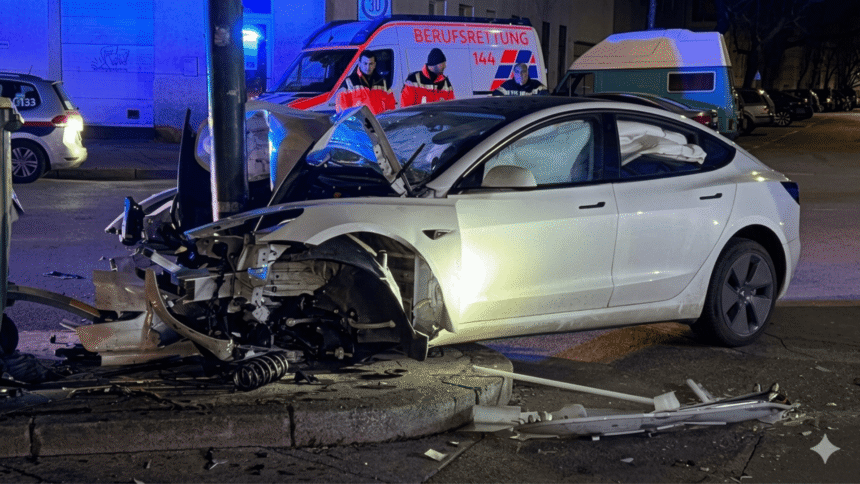
Tesla’s Full Self-Driving (FSD) system is once again under federal scrutiny in 2026, following a series of crashes that have raised fresh concerns about its performance in real-world conditions. U.S. regulators are now taking a closer look, increasing the pressure on the company’s long-promised autonomous driving ambitions.
On March 18, the National Highway Traffic Safety Administration confirmed it has expanded its ongoing investigation into Tesla’s driver-assistance technology. The probe covers a broad range of Tesla vehicles equipped with FSD software and focuses on how the system performs in challenging environments, particularly when visibility is reduced.
Focus on Low-Visibility Conditions
At the center of the investigation are crashes that occurred in conditions such as fog, sun glare, and low light. Regulators are examining whether Tesla’s system can reliably detect and respond to hazards when camera visibility is compromised.
Preliminary findings suggest that in several cases, the system may not have adequately adjusted to environmental limitations or provided sufficient alerts for drivers to take control in time. While FSD is marketed as an advanced driver-assistance feature, it still requires active driver supervision, a point regulators continue to emphasize.
The review includes multiple crashes over recent years, including incidents involving injuries and at least one fatality. Officials have not released full details, but the pattern has been enough to trigger deeper analysis.
Questions Around Tesla’s Approach
Tesla’s FSD system relies primarily on cameras to interpret its surroundings, a strategy that sets it apart from many competitors. Other companies in the autonomous vehicle space, including Waymo, use a combination of sensors such as lidar and radar to build a more layered view of the road.
This difference in approach has become a key point of debate. Some autonomous vehicle experts argue that relying mainly on cameras can limit performance in conditions where visibility is naturally reduced, such as heavy fog or direct sunlight. Others support Tesla’s approach, pointing to the scalability and cost advantages of camera-based systems.
The ongoing investigation may play a role in shaping how regulators view these competing strategies going forward.
Safety Claims Under Review
Tesla has consistently defended the safety of its technology. The company has said that vehicles using its driver-assistance systems experience fewer crashes per mile than the U.S. average. However, regulators and analysts caution that such comparisons may not reflect similar driving conditions.
Most miles recorded by advanced driver-assistance systems tend to occur on highways, which are generally safer and more predictable than city streets. As a result, direct comparisons with national averages can be misleading without additional context.
Some analysts and safety experts have also raised concerns about how incidents are reported and categorized. Questions remain about whether all relevant crashes are captured in publicly available data, an issue regulators are likely to examine as part of the investigation.
Regulatory Pressure Builds
The expansion of the federal probe signals a more serious phase of oversight. While no formal action has been announced, such investigations can lead to regulatory steps ranging from software updates to broader recalls if systemic issues are identified.
For Tesla, the timing is critical. The company has continued to promote the future rollout of more advanced, less supervised versions of its FSD system. Any regulatory findings that highlight safety gaps could delay those plans or force changes to how the technology is deployed.
Beyond Tesla, the outcome may influence the broader autonomous vehicle industry. Regulators are increasingly focused on ensuring that marketing claims, system capabilities, and real-world performance are aligned.
A Defining Moment for Self-Driving Technology
The latest scrutiny reflects a larger challenge facing the auto industry: balancing rapid technological progress with safety accountability. Advanced driver-assistance systems are improving quickly, but edge cases, especially in unpredictable or low-visibility environments, remain difficult to solve.
The current investigation is likely to shape not only Tesla’s next steps but also the standards applied to self-driving systems across the United States. As regulators dig deeper, the gap between what these systems promise and how they perform in everyday driving conditions is coming into sharper focus.
For now, Tesla’s Full Self-Driving system remains under watch, with regulators, investors, and drivers all waiting to see what comes next.
Image Credit – collisionrepairmag.com