



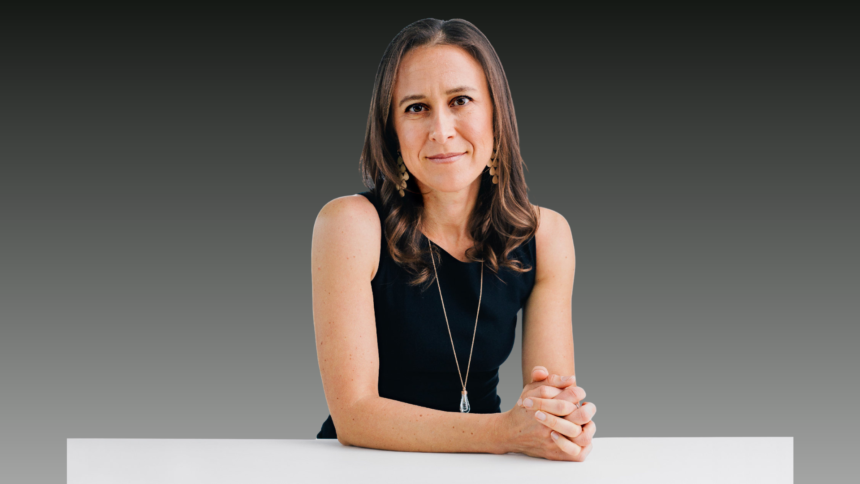
If you’ve ever taken a home DNA test to learn about your ancestry or health risks, there’s a good chance the idea traces back to Anne Wojcicki. As the co-founder and longtime CEO of 23andMe, Wojcicki helped introduce a bold concept: your genetic information shouldn’t live only in hospitals or research labs. It should be available to you.
The company, founded in 2006 by Anne Wojcicki along with Linda Avey and Paul Cusenza, turned that belief into one of the most recognizable biotechnology startups in the United States. What started as an experimental Silicon Valley idea eventually became a global name in consumer genetics.
A Curiosity About Health and Data
Anne Wojcicki didn’t begin her career in biotech entrepreneurship. She was born in 1973 in California and grew up in a family where science and education were everyday topics. Her father taught physics, and intellectual debate was common around the dinner table. She later studied biology at Yale University, graduating in 1996. But instead of heading straight into a laboratory, Wojcicki entered the world of finance.
For nearly a decade, she worked as a healthcare investment analyst on Wall Street. Her job was to evaluate pharmaceutical and biotechnology companies. The work gave her an insider view of how medical research moves from laboratories to the marketplace.
Over time, however, Anne Wojcicki began noticing a pattern. Patients often had very little access to their own medical information. Health data stayed locked inside institutions, even though it belonged to individuals. That realization would eventually shape her next move.
The Idea That Sparked 23andMe
By the early 2000s, advances in genetic sequencing were making DNA analysis faster and cheaper. Wojcicki believed the technology could do something powerful: give ordinary people insight into their own biology. In 2006, she teamed up with technology entrepreneur Linda Avey and scientist Paul Cusenza to launch 23andMe in Mountain View, California. The name came from the 23 pairs of chromosomes found in human DNA.
Their concept was simple but groundbreaking. Instead of going through a medical facility, customers could order a DNA kit online, provide a saliva sample, and receive reports about their ancestry and genetic traits. At the time, the idea sounded unusual to many experts. Genetic testing had traditionally been limited to hospitals or research institutions. But Wojcicki believed people would want to understand their own biology if the information became accessible.
Silicon Valley Takes Notice
Startups need funding to grow, and 23andMe quickly caught the attention of investors. In 2007, Google invested about $3.9 million in the young company. That investment helped the startup expand its technology and build a consumer platform. Within a few years, the company’s DNA testing kits were being used by people curious about their ancestry, family origins, and inherited traits.
The innovation didn’t go unnoticed. In 2008, the company’s personal genome testing service was named “Invention of the Year” by Time Magazine. Suddenly, consumer genetics was no longer a fringe concept. It was becoming an industry.
When Science Meets Big Pharma
As millions of customers began using 23andMe kits, the company built something incredibly valuable: a large genetic database that could help researchers understand how genes relate to diseases. That research potential led to a major partnership in 2018 with GlaxoSmithKline, one of the world’s largest pharmaceutical companies.
The agreement, valued at about $300 million, allowed researchers to analyze anonymized genetic data to identify potential drug targets. For pharmaceutical companies, this type of data can speed up the process of discovering new treatments. For 23andMe, it marked a shift from consumer testing toward biomedical research.
Regulatory Hurdles Along the Way
Innovation rarely happens without resistance. In 2013, the U.S. Food and Drug Administration told 23andMe to stop offering certain health-related genetic reports until the company could demonstrate its scientific accuracy. The decision created uncertainty for the young biotech firm.
Instead of backing away, Anne Wojcicki and her team spent years working with regulators and researchers. Eventually, the company received approvals to offer several genetic health reports again. The process helped establish clearer rules for the entire consumer genetics industry.
From Startup to Public Company
A major milestone arrived in 2021 when 23andMe became a publicly traded company through a merger with a special purpose acquisition company. The transaction raised nearly $600 million and marked a new phase in the company’s growth. By that time, more than ten million customers had used its DNA testing service.
But like many tech-driven companies, the journey hasn’t been perfectly smooth. In 2023, the company faced a significant data breach affecting millions of users. The incident triggered investigations and stronger discussions about privacy in the genetic testing industry. For a company built on personal data, maintaining trust remains essential.
The Bigger Impact on Healthcare
Whether through ancestry reports or medical research, Anne Wojcicki’s work has changed how people interact with genetic science. Before companies like 23andMe, DNA testing was largely confined to laboratories and academic institutions. Today, millions of individuals have explored their ancestry and health traits using consumer genetic services.
The idea that people should understand their own biological data is now influencing healthcare innovation across the United States. Wojcicki’s vision helped turn a complex scientific field into something that everyday consumers could access. And in doing so, Anne Wojcicki helped open the door to a new era of personalized medicine.