



The anxiety around AI isn’t slowing down. From office jobs to creative work, people are starting to wonder how long their roles will last.
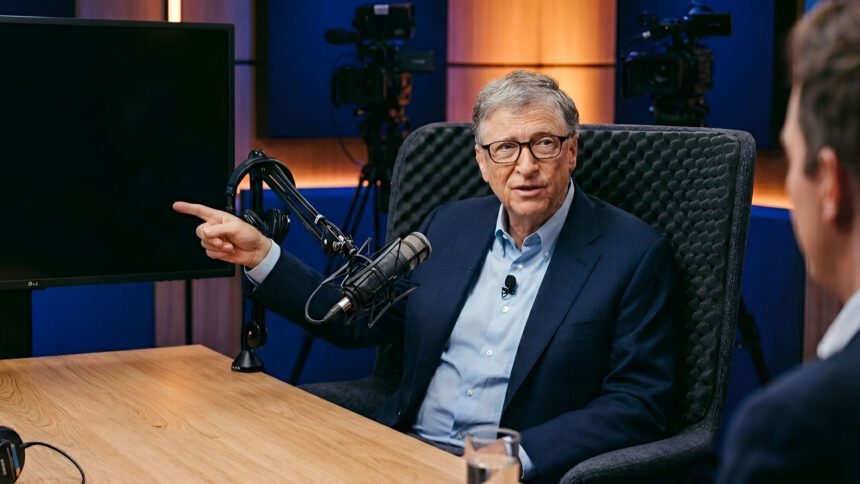
Amid all this, Bill Gates has offered a more measured take. He has been clear that artificial intelligence will reshape the workforce in a big way. But he also points out that some fields are less likely to be replaced anytime soon.
In recent discussions, Gates highlighted three areas that appear more resilient than others: biology, energy, and programming. These fields stand out because they rely heavily on human judgment, creativity, and the ability to handle real-world complexity, areas where AI still struggles.
Let’s take a closer look at why these roles are expected to evolve rather than disappear.
Biology: A Field Driven by Questions, Not Just Data
Biology goes far beyond analyzing information. At its core, it is about asking the right questions and exploring the unknown.
AI has already made progress here. It can process massive datasets, assist in drug discovery, and even predict biological structures. But the field itself is not just about patterns; it is about discovery.
Breakthroughs in biology often begin with curiosity. Researchers notice something unusual, challenge assumptions, and test new ideas. This process is not always logical or predictable. It involves trial and error, intuition, and the ability to rethink an approach when results do not make sense.
AI can support this work, but it still depends on human direction. Scientists decide what problems to focus on, how to design experiments, and how to interpret unexpected outcomes.
There is also a layer of responsibility in areas like medical research and biotechnology. Decisions here can have real consequences, and they often require careful human judgment.
Because of this, careers in biology are expected to remain important. AI will likely become a powerful assistant, but not a replacement.
Energy: Where Real-World Decisions Matter Most
The energy sector is one of the most complex systems humans manage today.
From power generation to distribution, everything is connected. And as the world shifts toward cleaner energy, the challenges are only growing. Managing this transition is not just a technical task; it involves economics, infrastructure, and long-term planning.
AI can help improve efficiency. It can forecast demand, optimize performance, and detect issues early. But running energy systems is not only about optimization.
Unexpected situations happen all the time. Weather disruptions, equipment failures, and sudden spikes in demand require quick decisions. These moments often involve incomplete information and high stakes.
Energy professionals are responsible for weighing risks, making judgment calls, and ensuring systems stay stable. These are areas where AI still has limitations.
The move toward renewable energy adds another layer of complexity. It requires coordination across industries, policy decisions, and careful implementation in the real world.
Because of this, the role of human expertise remains central. The field is likely to change with AI, but not be replaced by it.
Programming: The People Guiding the Technology
At first glance, programming might seem vulnerable. AI tools can already generate code, fix errors, and assist with development tasks.
So why does this field still stand strong?
Because AI does not operate on its own. It is built, trained, and guided by people.
Developers are responsible for designing systems, setting rules, and ensuring everything works as intended. Even when AI writes code, it still needs human oversight to check accuracy, security, and usefulness.
Programming is also about problem-solving. It starts with understanding what needs to be built and why. This involves context, communication, and creativity, areas where human input remains essential.
As AI systems become more advanced, the need for skilled developers may actually grow. There will be more demand for people who can build reliable systems, fix issues, and make sure technology is used responsibly.
The nature of programming is changing, but its importance is not going away.
What This Means for the Future of Work
It is tempting to divide jobs into “safe” and “unsafe,” but the reality is more complicated.
AI is not simply replacing roles; artificial intelligence will reshape the workforce.
In fields like biology, energy, and programming, human expertise remains at the center. At the same time, AI tools will become part of everyday work, handling repetitive tasks and speeding up processes.
The real shift is in how people adapt.
Workers who learn to use AI tools, stay curious, and keep building their skills will be in a stronger position. The focus is no longer just on choosing the right career, but on growing within it.
Final Thoughts
The idea that AI will take over everything or that artificial intelligence will reshape the workforce makes for dramatic headlines, but it does not reflect the full picture.
As Bill Gates suggests, some fields are more resilient because they depend on human thinking, judgment, and adaptability, qualities that AI tools are still developing.
Biology, energy, and programming are not untouched by change. They are evolving alongside it.
And that is really the point. The future of work is not about humans versus machines. It is about how the two work together, and who knows how to make the most of it.