

There’s a particular kind of ambition that doesn’t look like ambition at first. It looks like anger. Or principle. Or ideology. That’s what Elon Musk’s exit from OpenAI looked like in 2018. He co-founded it. He funded it. And then, citing disagreements over the direction the company was going, too commercial, too cozy with Microsoft, he walked.
For a few years, the world moved on. GPT happened. Then GPT-4. Then ChatGPT crossed 100 million users in two months and rewrote what the public thought AI could do.
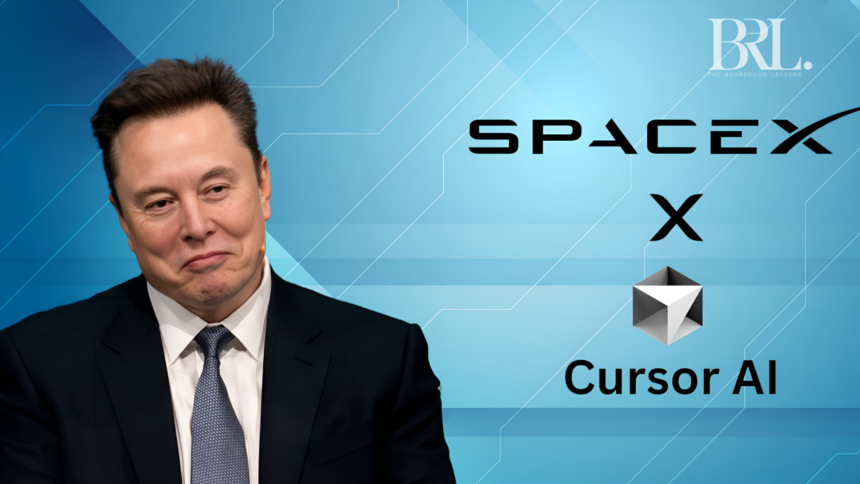
Musk watched all of it. And now, through SpaceX, through xAI, through a jaw-dropping $60 billion Elon Musk Cursor deal to potentially acquire an AI coding startup called Cursor, he’s making his move.
This isn’t an investment. It’s a reclamation.
What $60 Billion Actually Tells You
When a company the size of SpaceX tables a $60 billion offer for a startup, the instinct is to focus on the number. Don’t focus on the structure.
The deal gives SpaceX either the right to buy Cursor outright or to pay $10 billion just to work alongside it. That’s not the math of a company making a confident bet. That’s the math of a company that desperately needs what Cursor has, isn’t 100% sure it can integrate it cleanly, and is willing to pay enormous sums either way.
Cursor, for those unfamiliar, is one of the fastest-growing AI coding tools in the world right now. Developers use it the way writers use a really good editor; it doesn’t do the work for you, but it makes the work dramatically faster. It’s already generating revenue in the hundreds of millions annually and has carved out a serious chunk of the market that GitHub Copilot once dominated alone.
Musk isn’t buying a product. He’s buying a position.
Why Coding AI Is the Battleground Nobody’s Talking About
Here’s a thing most non-technical people miss: whoever controls the tools that build software controls the pace at which everything else is built.
Coding AI doesn’t just write apps. It writes other AI systems. It writes the infrastructure. It writes the models that run the models.
If you own the coding layer, you own the factory floor.
This is why Microsoft paid billions for GitHub. This is why Google has been quietly integrating AI into every inch of its developer tools. And this is why Musk, who is trying to build his own AI empire from scratch, needs a coding platform in his stack badly enough to put $60 billion on the table.
The Empire He’s Trying to Build
Step back and look at what Musk has assembled over the last three years, and a picture starts to come into focus. SpaceX merged with xAI earlier this year, combining its most cash-generative company with its AI lab in one move. He’s scaling GPU infrastructure at a pace that most AI companies can’t match, with plans to go from 200,000 to a million GPUs. Starlink sits in the background as a potential distributed compute network. Tesla is already a rolling AI experiment in autonomy.
And then there’s X, formerly Twitter, which Musk himself has described as a data goldmine. Every post, every interaction, every trending topic: raw material for training models.
Put it all together:
X feeds the data. SpaceX and Colossus supply the compute. xAI builds the models. Cursor builds the tools. Tesla and Starlink become the applications and the delivery system. That’s not a portfolio. That’s a supply chain.
The Uncomfortable Truth: He’s Still Behind
Here’s where honesty matters.
Despite all of this, the mergers, the GPU farms, the billion-dollar deals, xAI is not OpenAI. Grok is not GPT-4o. Musk’s AI operation is scrappy, fast-moving, and backed by his personal credibility and capital. But it’s playing catch-up against companies that have years of institutional knowledge, the best researchers in the world, and entrenched distribution.
The Cursor deal, in many ways, is an acknowledgement of that gap. He’s not acquiring from a position of dominance. He’s acquiring because he needs to close the distance fast.
The “$60 billion or $10 billion to collaborate” structure tells the whole story. It’s a man who knows he needs the thing, isn’t sure exactly how he’ll use it yet, but cannot afford to let someone else have it.
The Bigger Picture Nobody’s Saying Out Loud
Cursor and Musk are just the most dramatic examples of something that’s happening across the entire industry right now.
AI is no longer a product category. It’s becoming infrastructure, the way electricity is infrastructure, the way the internet is infrastructure. You don’t compete with infrastructure. You build on top of it, or you get left behind. And when something becomes infrastructure, consolidation always follows.
Microsoft has OpenAI locked in. Google has DeepMind. Amazon has Anthropic. Every major tech power is trying to own a piece of the foundational layer, not just to make money from AI, but to make sure nobody else can lock them out. Musk is the only one trying to do this without partnering with a tech giant. He’s trying to be the tech giant.
Whether that works is genuinely an open question. But the ambition is real, the money is real, and the urgency is visible in every move he makes. He left the table in 2018 because he didn’t like where the game was going. Now he wants to own the table, the room, and the building.