



Most people assume owning property means saving for years, getting a mortgage, and praying interest rates cooperate. For most of us, a Manhattan apartment or a New York City rental building isn’t even in the conversation.
- What Is Real Estate Tokenization, Exactly?
- So, How Does It Actually Work in Real Life?
- Think of It Like Buying a Stock, But for a Building
- The New Jersey Government That Proved It Works
- Real Examples Happening in America Right Now
- Is Tokenized Real Estate Safe?
- What’s Stopping This from Taking Off Everywhere?
- What impact will this have on ordinary individuals?
But what if you could own a small piece of one, for $50?
That’s not a fantasy. Real estate tokenization is making it happen right now, and it’s simpler than it sounds. No broker. No bank approval. No giant down payment. Just a digital share of a real building, paying you real rent.
Here’s what it is, how it works, and why it’s starting to matter to people who’ve never thought of themselves as property investors.
What Is Real Estate Tokenization, Exactly?
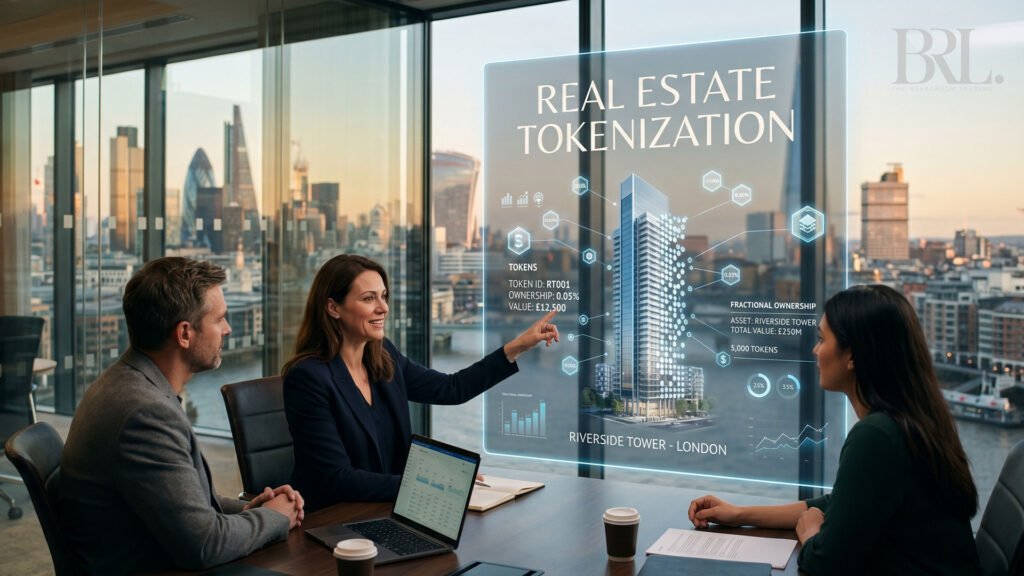
Real estate tokenization means taking a physical property, an apartment block, a rental home, a commercial building, and dividing ownership of it into thousands of small digital pieces called tokens. Each token represents your share of that property. Buy tokens, own a fraction of the building, and receive your portion of the rent.
Think of it like buying shares in a company on the stock market. Except instead of owning a slice of Apple or Tesla, you own a slice of a building. And instead of hoping for a dividend, you receive actual rental income, sometimes daily, deposited straight to your digital wallet.
The technology running all of this is called blockchain, the same kind of system behind cryptocurrencies like Bitcoin. It keeps a permanent, tamper-proof record of who owns what, so there’s no paperwork mountain, no solicitor back-and-forth, and no months-long wait to complete a deal.
So, How Does It Actually Work in Real Life?
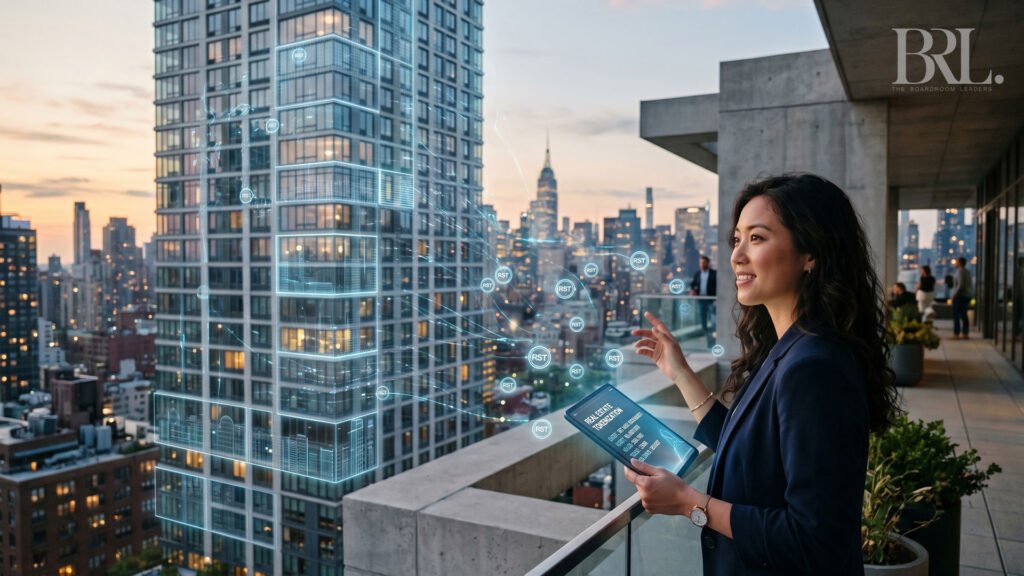
Think of It Like Buying a Stock, But for a Building
Here’s a straightforward example. A company called NYREF took a 32-unit apartment building at 3187 Grand Concourse in the Bronx, New York, worth $18 million, and split it into 18,000 digital tokens, priced at $1,000 each. Anyone can buy one. The building is leased to the U.S. Government, so the rent is reliable. Token holders receive a 5.52% annual return, paid out automatically through a smart contract, a piece of code that sends you money when the rent comes in, no human needed.
You could buy one token for $1,000 and start earning rent. Or you could use a platform like Lofty AI, where you can get started for as little as $50.
That’s the core idea. A property gets sliced into digital pieces. You buy pieces. You earn rent. You can sell your pieces later when you want out, no estate agent required.
The New Jersey Government That Proved It Works
If you’re wondering whether this is just a tech experiment, consider this. Bergen County, New Jersey, home to nearly one million people, signed a five-year deal to move all 370,000 of its property deeds onto the Avalanche blockchain. That’s $240 billion worth of real estate records, now stored digitally in a system that’s fraud-proof and permanent.
The goal is to reduce deed settlement times from 90 days down to just one, creating a searchable, tamper-resistant record across all 70 of the county’s municipalities. The Defiant
If your local government is using this technology to manage property records, it’s safe to say this is no longer a fringe idea.
Real Examples Happening in America Right Now
A few platforms are already up and running, with real money and real returns:
Lofty AI lets you buy fractional shares of U.S. rental properties starting at just $50. The rent gets distributed every 24 hours. By September 2025, Lofty had tokenized over 160 rental properties across the U.S. worth $89 million, with rental income paid out daily. You don’t manage the property, deal with tenants, or fix anything. You just hold your tokens and collect your share. Lofty
RealT works similarly; you buy digital tokens in residential properties across cities like Detroit, and rent hits your wallet daily in stablecoins, which are digital currencies pegged to the dollar so their value doesn’t swing wildly.
Propy is a platform that has processed over $4 billion in real estate transactions using blockchain. In March 2022, they completed the first-ever U.S. property sale via a digital token, a home in Gulfport, Florida, and have since helped buyers use Bitcoin and Ethereum as loan collateral, meaning you don’t have to sell your crypto to buy a house. You can borrow against it instead.
And in Manhattan, back in 2018, a luxury condo complex valued at $30 million became the first major New York property tokenized on the Ethereum blockchain. What started as an experiment is now a growing industry.
Is Tokenized Real Estate Safe?
This is the most important question, and the honest answer is: it’s safer than it was, but it’s not without risk.
On the positive side, some of the biggest financial institutions in the world are now involved. BlackRock, the world’s largest asset manager, which looks after trillions of dollars, launched a tokenized fund that peaked at nearly $2.9 billion in value by mid-2025. When a firm that size bets on a technology, it tends to signal something real is happening.
The U.S. government has also stepped in with clearer rules. In July 2025, President Trump signed the GENIUS Act into law, the first-ever federal framework for the kind of digital currencies used in these transactions, requiring them to be backed one-for-one by real dollars. That’s meaningful consumer protection. The Clarity Act, which sets broader rules for digital assets, passed the House in July 2025 and is now working through the Senate. Latham & Watkins
On the risk side, a few things are worth knowing. First, most tokens can only be traded on the platform where you bought them; there isn’t yet a big open market where you can sell them easily to anyone, anywhere. That’s changing, but it’s not fully there yet. Second, if the platform you’re using goes under, your investment could be at risk, so choosing established, insured platforms matters. Third, these investments are still classed as securities in the U.S., which limits some of the rules protecting smaller investors. ScienceSoft:
None of those are reasons to avoid it entirely. But there are reasons to start small and understand what you’re buying.
What’s Stopping This from Taking Off Everywhere?

Mostly, the rules are still catching up with the technology.
Right now, regulators at KPMG and EY have noted that U.S. real estate tokens are treated the same as traditional securities, meaning the same restrictions apply, which can make it harder for everyday investors to participate fully. That’s expected to ease as dedicated legislation takes shape.
There are also technical growing pains. The most popular blockchain, Ethereum, can charge high fees on transactions, which eats into returns on smaller investments. Many platforms have moved to newer, cheaper systems like Polygon or Avalanche to get around this. Blockchain platforms are now reducing transaction costs by up to 70% compared to older methods, with deals settling in under 24 hours. Lofty
The secondary market, basically, the ability to sell your tokens freely to anyone, is still limited. Swift, the global banking network, is working with Chainlink and major institutions, including BNY Mellon, BNP Paribas, and Citi, to build the plumbing that would allow tokens to move freely between platforms and traditional financial systems. Once that’s live, selling your property tokens could become as easy as selling a stock.
These are solvable problems. They’re being solved. Just not overnight.
What impact will this have on ordinary individuals?
Here’s the plain truth. For most of history, property investment was a game for people who already had money. You needed a large deposit, a mortgage, a solicitor, a surveyor, years of patience, and a lot of luck with the market. Most people were locked out entirely.
Real estate tokenization changes that equation.
Not completely, not yet. But a Detroit rental paying daily rent to someone who invested $500 in digital tokens is a genuinely new thing in the world. So is a first-time investor in their twenties owning a fractional share of a New York apartment building without ever speaking to an estate agent.
The technology is real. The returns are real. The risks are real, too. But for the first time, the door to property investment isn’t only open to people with a six-figure deposit sitting in the bank.
The rules of who gets to own a piece of real estate are changing. And the best time to understand those new rules, before everyone else does, is right now.