



A beauty brand flies 20 diverse creators to Bermuda. No script. No hard sell. Just good content, a genuine trip, and a brand that trusted the process. The result? Three million impressions. Five thousand new followers. Zero celebrity contracts.
That was Topicals, back in August 2023. And it’s exactly the kind of campaign that makes the influencer marketing debate so maddening, because for every story like that, there’s a brand quietly pulling the plug on its entire creator budget and reallocating to something measurable.
So what’s actually going on? Influencer marketing ROI is under the microscope like never before, and the numbers are sending mixed signals. Global spend hit $32.55 billion in 2025. And yet some brands are walking away entirely. Here’s what the data really shows, and what separates the campaigns that work from the ones that quietly hemorrhage budget.
Why Are Brands Pulling Back from Influencer Marketing?

The short answer: they can’t always prove it works.
Measuring influencer marketing ROI remains the top challenge for somewhere between 26% and 60% of marketers, depending on who you ask. That’s a shockingly wide range, and it tells you everything about how inconsistent attribution still is in this channel. Brands can track clicks, sure. But connecting a sponsored reel to an actual sale, three weeks later, through a messy multi-touch journey? That’s where things get blurry.
And then there’s the trust problem. Consumers increasingly clock “ads in disguise”, a sentiment that’s bleeding across markets on both sides of the Atlantic. When your audience knows they’re being sold to the moment someone says “use my code,” the authenticity advantage disappears. That’s the whole point of influencer marketing. Lose that, and you’ve paid a premium for a banner ad with a face on it.
Fake engagement compounds the damage. A Localogy audit of 8 million influencer accounts exposed the true scale of the problem, and brands are responding by demanding AI-driven audience verification before deploying any capital. Add the platforms’ own spam issues and data handling concerns, and you start to understand why some marketing directors are just done.
What Is the Real ROI of Influencer Marketing?
On paper, the numbers look strong. Brands earn an average of $5.78 for every dollar spent on influencer marketing, with top-performing campaigns reaching $18 to $20 per dollar, outperforming traditional digital advertising by 11 times, per Influencer Marketing Hub.
Read that again. Eleven times. So why are people pulling out?
Because averages lie. That $5.78 figure flattens everything, the campaigns that crushed it alongside the ones that generated nothing but follower counts nobody can spend. The variance is brutal.
Where Influencer Campaigns Actually Deliver
E-commerce brands with solid tracking infrastructure are seeing real results. When you can directly attribute a TikTok Shop sale or an Instagram affiliate link to a specific creator, ROI becomes defensible and impressive. During Cyber Week 2025, influencer-driven spend jumped 51% while commission costs stayed flat, per impact.com’s 2026 trends report. That’s not noise. That’s a channel proving itself at scale.
Nano and micro-influencers continue to punch above their weight. Nano-influencers average 2.71% engagement on Instagram, roughly three to four times the rate of macro influencers, which sit in the 0.61%–0.87% range, according to Social Cat’s 2025 industry report. Smaller audience, tighter trust, better conversion. Simple math.
Where They Fall Apart
One-off posts. Brand announcements. Any campaign built around vanity metrics.
Brands see a 30.5% dip in ROI when collaborating with influencers on new product announcement content, which is ironic, given that’s what most marketers instinctively reach for, per Shopify’s influencer marketing data. Awareness campaigns without conversion architecture downstream are expensive noise. And B2B brands are learning this the hard way, with influencer ROI in that space often sitting in the 3–5x range, decent, but rarely worth the effort when attribution remains a guessing game.
UGC and Micro-Influencers Are Filling the Gap
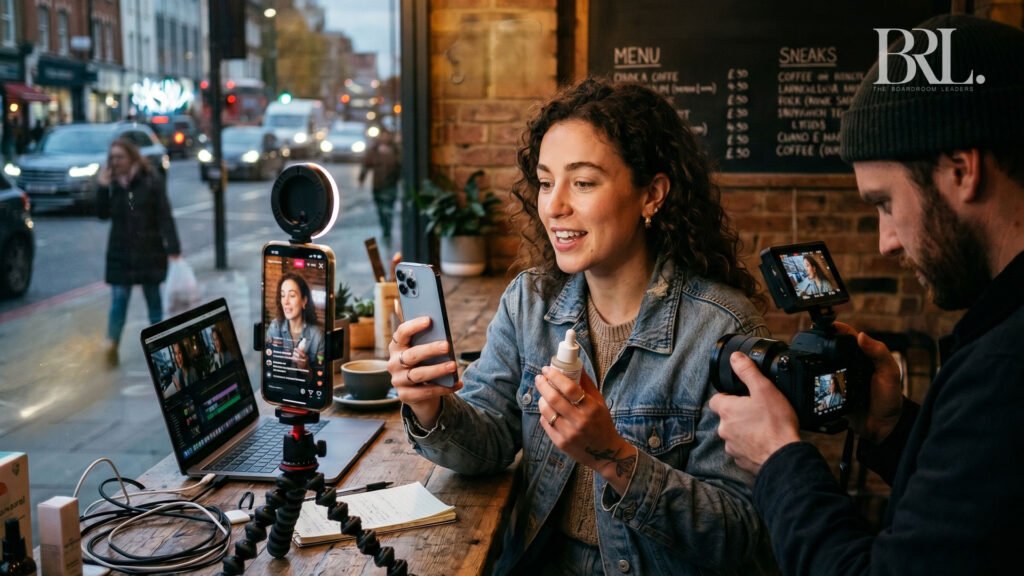
Here’s what’s actually happening with the brands pulling back from traditional influencer deals: they’re not abandoning creator content. They’re restructuring around it.
User-generated content, real customers, real reviews, and real footage consistently outperform polished sponsored posts in engagement benchmarks. It’s cheaper to produce and harder to fake. When a genuine buyer films an unboxing in their bedroom, it doesn’t look like an ad. Because it isn’t one.
The 2026 Influencer Marketing Benchmark Report from Influencer Marketing Hub shows a clear shift toward nano/micro and UGC-driven production, with brands treating creator content less like a media buy and more like an always-on content engine. Micro-influencers are getting 60% of the budget allocation in performance-forward strategies. The logic is sound: you’d rather have 50 engaged nano-creators than one macro influencer with a disengaged audience and an inflated rate card.
Topicals figured this out in 2023. Their Bermuda trip, 18 BIPOC creators, no script, genuine community, generated 3 million impressions and 5,000 new followers by putting community over celebrity. It remains one of the most-cited creator campaign blueprints in the industry, and the reason is simple: it didn’t feel like marketing. So did BoAt, the Indian lifestyle brand that embedded creators into its product culture, fitness, fashion, and music, rather than using them as product spokespeople. The difference is subtle but decisive. One approach treats influencers as a distribution channel. The other treats them as collaborators.
Is Influencer Marketing Still Worth It in 2026?
Yes, but not automatically, and not for everyone.
Four in five brands worldwide maintained or increased their influencer marketing spend in 2025, and 74% of marketers plan to actively increase their budgets in 2026, per impact.com’s State of Influencer Marketing data. The industry isn’t contracting. It’s bifurcating.
The brands pulling back aren’t representative of a dying channel. They’re the ones that ran undifferentiated campaigns, skipped attribution setup, and measured success by follower reach. Their exit makes room and makes the case for brands willing to do it properly.
What does “properly” look like? Long-term partnerships over one-off posts. Affiliate structures that tie creators to actual performance. AI tools that now help optimize around 66% of campaigns, handling creator vetting, fraud detection, and performance prediction. Hybrid compensation, base fees plus 10–15% commissions plus tiered bonuses, is becoming the new standard, per impact.com, aligning creator incentives with brand outcomes instead of impressions.
And social commerce is accelerating everything. Social commerce sales are projected to reach $80 billion in the U.S. by 2025, with influencer content driving a significant chunk of it. TikTok Shop, Instagram Checkout, and YouTube Shopping are closing the loop between discovery and purchase in ways that make attribution far more tractable than it was two years ago.
How to Navigate the Split Without Burning Budget

The brands losing money on influencer marketing ROI tend to share a few habits: they prioritize reach over relevance, skip attribution, and judge campaigns by follower counts. The brands winning tend to do the opposite.
A few principles worth building around:
Track harder than you post. If you can’t connect creator content to a measurable business outcome, sales, signups, or CAC, you’re flying blind. Only 20% of brands currently track cost-per-acquisition, and just 18% measure average order value in creator programs, per impact.com’s State of Affiliate Marketing Report. That means most campaigns are being evaluated on metrics that don’t pay the bills.
Favor depth over breadth. One long-term micro-creator relationship almost always outperforms three one-off celebrity posts. You get compounding content, real audience trust, and a creator who actually knows your product and can talk about it without sounding like a script.
Mix owned and earned. Blend creator content with your own UGC pipeline. The best-performing brands aren’t choosing between influencer marketing and alternatives; they’re running both, with each feeding the other.
The skeptics aren’t wrong. Influencer marketing ROI is messy, highly variable, and routinely oversold by the platforms that profit from it. But the data doesn’t support walking away from it entirely; it supports getting smarter about how you use it.
Genuine beats glitz. But genuineness still needs a strategy behind it.