

Image Credit – Yahoo News
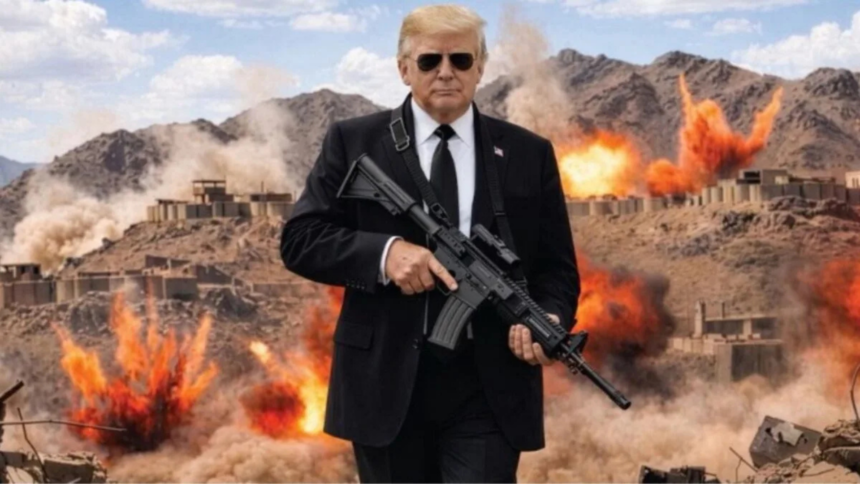
Washington DC – President Donald Trump has thrust US Iran tensions into uncharted digital territory, posting an AI-generated image of himself brandishing a high-powered rifle alongside the aggressive caption “No more Mr. Nice guy!” on Truth Social. The provocative imagery, which appeared amid rising concerns over the long-stalled Iran nuclear deal, marks a significant shift in presidential communication, prioritizing viral spectacle over traditional diplomatic channels.
The Evolution of Political Spectacle
The image depicts the President in a cinematic, desert-themed backdrop, framing his current stance as an uncompromising shift in Middle East policy. By leveraging generative AI, the administration is bypassing conventional media to speak directly to its base, effectively weaponizing digital content as a tool for international intimidation. This strategy highlights how AI tools are rapidly being integrated into modern political warfare, turning statecraft into a high-stakes game of online influence in which imagery carries as much weight as policy mandates.
Global Reactions and Digital Risks
The post has triggered a polarized global response, with supporters praising the display of strength while policy experts raise alarms regarding the erosion of diplomatic decorum. Critics argue that using deepfake-style technology for direct geopolitical threats increases the risk of international miscalculation, particularly as proxy networks and state media in Iran have already responded with their own counter memes and digital barbs. The resulting cycle of AI-generated provocations has effectively created a digital mirror world where perception is often treated as political reality, potentially complicating any future attempts at formal resolution.
Normalizing Synthetic Political Media
This escalation serves as a crucial case study for the evolving role of AI in 2026 politics, where the boundaries between digital satire and actual government policy are becoming increasingly obscured. As global leaders and intelligence agencies monitor the situation, the incident underscores a broader, concerning trend: the normalization of synthetic media as a primary instrument for shaping public opinion and foreign policy narratives. Whether or not this tactic forces a change in Tehran’s position remains to be seen, but the intent to dominate the psychological space is clear.
Future of Algorithmic Diplomacy
With the Iran nuclear standoff showing no signs of de-escalation, this digital gambit suggests that future diplomatic conflicts will be fought as much in the algorithmic arena as they are at the negotiating table. The challenge for policymakers will be distinguishing between genuine intent and AI-generated theater, a task that becomes harder as the technology becomes more sophisticated and accessible.
Ultimately, the President has signaled that in the modern era, the most visible narrative often defines the conflict, forcing rivals to play by the rules of an increasingly volatile digital landscape. As the administration looks toward upcoming regional summits, this display of digital strength sets a confrontational tone that will likely define the diplomatic climate for the foreseeable future.