



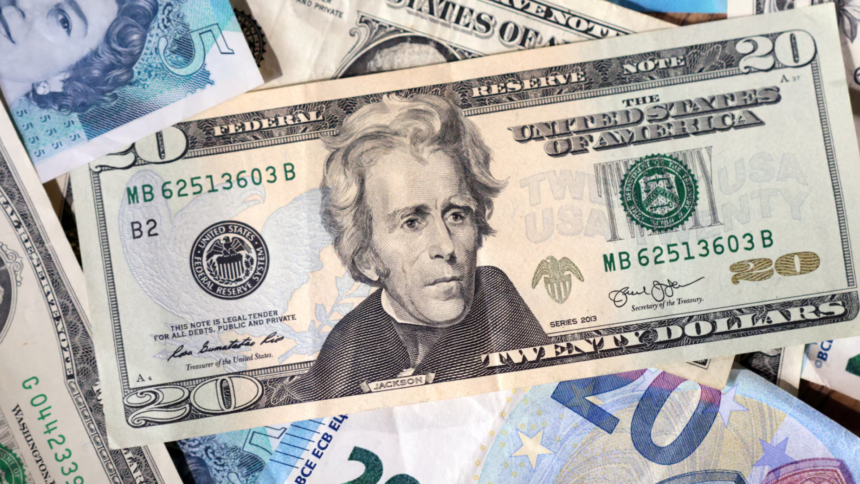
The US Dollar Surges in global currency markets as investors react to rising tensions in the Middle East and a sharp increase in energy costs. The latest escalation in the region has pushed Oil prices above $100, reviving concerns about inflation and economic stability around the world.
Currency traders moved quickly toward the U.S. dollar, a traditional safe-haven asset during periods of uncertainty. The dollar strengthened against several major currencies at the start of the week as investors sought stability amid growing geopolitical risks.
The euro weakened to around $1.15, its lowest level in roughly three months, while the British pound also slipped against the U.S. currency. Risk-sensitive currencies such as the Australian dollar faced pressure as global investors pulled money away from assets tied closely to economic growth. Analysts say the Iran conflict impact on markets is already visible across currencies, commodities, and equities. Rising energy costs and geopolitical uncertainty often lead investors to move funds into safer assets, which tends to strengthen the dollar.
Oil Prices Above $100 Raise Economic Concerns
Energy markets have been at the center of the recent volatility. Oil prices above $100 a barrel returned for the first time since 2022 as traders reacted to the risk of supply disruptions from the Middle East.
The Strait of Hormuz remains a major concern for energy markets. The narrow shipping route carries roughly one-fifth of global oil shipments, making it one of the most critical energy corridors in the world. Any threat to shipping through the strait can quickly push oil prices higher and tighten global supply.
Higher energy costs are closely watched by economists because oil prices influence transportation, manufacturing, and household fuel expenses. A prolonged rise in oil prices can increase inflation and slow economic growth in several major economies.
The Iran conflict impact on markets has also spread to equity markets. U.S. stock futures moved lower as investors assessed the potential consequences of higher energy prices and prolonged geopolitical tensions.
Federal Reserve Outlook in Focus
The surge in energy prices could also complicate monetary policy decisions in the United States. When oil costs rise sharply, inflation pressures often increase, which can make it more difficult for central banks to reduce interest rates.
Market participants are closely watching how policymakers respond to the changing economic environment. While expectations for future interest rate cuts remain uncertain, analysts say the Federal Reserve will likely monitor energy prices and inflation data before making major policy adjustments.
Global Investors Watch the Next Moves
US Dollar Surges again as investors continue to weigh the broader economic implications of the conflict and energy price movements. The strength of the U.S. currency highlights its role as a global reserve asset during periods of uncertainty.
For American consumers, the most visible impact could appear at gas stations if oil prices remain elevated. Higher crude prices typically lead to higher gasoline costs, which can affect household budgets and consumer spending.
As long as tensions in the Middle East remain unresolved, investors expect markets to stay sensitive to every development. The combination of Oil prices above $100 and geopolitical risk is likely to keep volatility elevated across currencies, stocks, and commodities in the weeks ahead.