

Managing modern cloud infrastructure has evolved into an unsustainable operational burden. In less than two decades, the global corporate landscape shifted completely from on-premises data centers to highly distributed, multi-cloud microservice architectures. While this migration promised infinite scalability and rapid development cycles, it also triggered an unexpected operational crisis: the explosion of system complexity.
- The Failure of Traditional Automation and Manual Audits
- From Oracle to PayPal: The Making of an Infrastructure Expert
- The Black Friday Realization: Killing Toil on a Global Scale
- Coding the Autopilot: Early Execution and the Core Safety Patents
- Accelerating Through Disruption and Scaling Venture Support
- Unifying DevOps, FinOps, and Performance via Reinforcement Learning
- An Engineering-First Culture of Extreme Autonomy
- The Next Frontier: Optimizing the Generative AI Compute Wave
Every day, software development teams spin up thousands of containers, configure serverless functions, and allocate virtual machine resources across platforms like Amazon Web Services (AWS), Google Cloud Platform (GCP), and Microsoft Azure. However, this flexibility comes with massive waste. Across the tech industry, surveys consistently show that an estimated 30% to 35% of all corporate cloud spend is wasted on over-provisioned infrastructure that sits idle.
Engineers now spend countless hours manually adjusting resources, sizing containers, and responding to system alerts, a repetitive operational drag known in the DevOps world as “toil.” Human operators simply cannot process millions of data points in real time to balance cost, system speed, and service availability. The cloud moved past human scale, leaving businesses trapped between soaring, budget-breaking infrastructure bills and the constant threat of application downtime.
The Failure of Traditional Automation and Manual Audits
Before the rise of autonomous solutions, companies attempted to solve cloud management through two traditional methods: manual engineering intervention or rule-based automation. Both approaches failed to scale with modern applications.
Manual cloud optimization relies on Site Reliability Engineers (SREs) and DevOps teams periodically auditing their infrastructure. This approach creates an unresolvable trade-off between performance and cost. Out of caution, engineers routinely over-provision resources, giving an application five times the memory it actually needs, to prevent software slowdowns or system crashes during peak traffic. This defensive strategy drives up unnecessary corporate spending.
When engineers try to downsize these systems to save money, they must spend hours analyzing historical logs, running performance tests, and executing manual configuration changes. Because modern microservices are highly dynamic and update constantly, a manual configuration change is often outdated the moment it goes live. This dynamic leaves organizations with lengthy backlogs of cost-reduction recommendations that are never implemented because teams lack the time and economic justification to execute them safely.
To fix this, the software industry turned to rule-based automation. Companies wrote static threshold rules, such as: “If CPU usage goes above 80%, spin up a new container; if it drops below 30%, delete one.” While this helped handle simple workloads, static rules broke down under the complexity of multi-cloud systems. Rule-based scripts cannot learn from historical data, do not understand application behavior, and cannot balance competing priorities simultaneously.
A static rule might cut costs by downsizing a database, only to accidentally choke application performance and trigger a major outage elsewhere in the system. Because these automated scripts lacked intelligent guardrails, they frequently introduced system instability. This forced engineers to turn them off and return to manual oversight, leaving enterprises with expensive, unoptimized infrastructure and overworked technical teams.
From Oracle to PayPal: The Making of an Infrastructure Expert
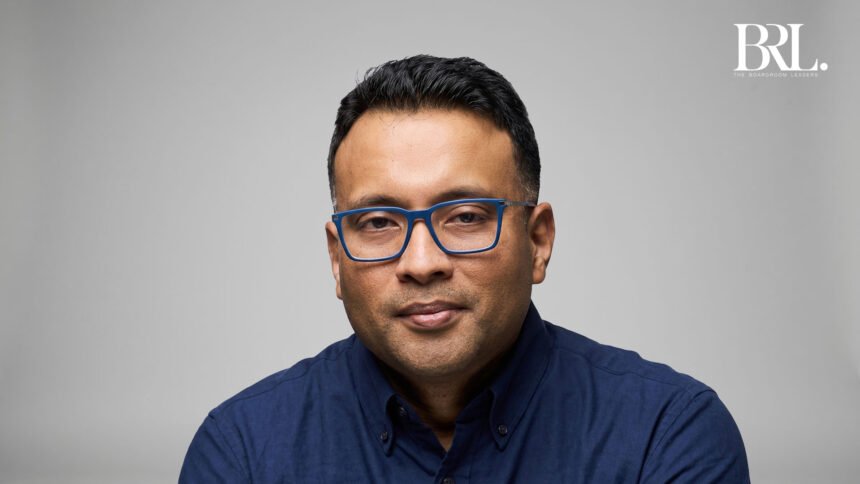
Suresh Mathew is the CEO and Founder of Sedai, an innovative technology company that pioneered the industry’s first autonomous cloud management platform. As a computer programmer, cloud architect, and enterprise software engineer, Mathew spent over two decades developing high-performance distributed systems, container orchestration models, and serverless architectures at some of the world’s leading technology institutions.
Before launching Sedai, Mathew built his career at market-defining organizations including Oracle, Nokia, eBay, and PayPal. Over his engineering career, he established himself as an expert in distributed systems, contributing to numerous technical publications and inventing multiple core patents in cloud infrastructure.
At PayPal, Mathew served as a Senior Principal Management Technical Staff (MTS) Architect, a prestigious technical role focused on ensuring system availability and scale for the global payment network. During his tenure, he specialized in building highly resilient platform engineering frameworks capable of processing millions of global financial transactions daily. By operating at this scale, Mathew observed firsthand how traditional cloud management practices were hitting a hard operational limit. His work addressing these enterprise limitations ultimately laid the foundation for the shift toward autonomous, self-driving cloud infrastructure.
The Black Friday Realization: Killing Toil on a Global Scale
The spark for Sedai came directly from Mathew’s work handling PayPal’s infrastructure. While managing one of the world’s largest private OpenStack cloud environments, Mathew and his co-founder, Benjamin Thomas, faced the task of maintaining flawless payment availability during peak holiday shopping seasons, such as Black Friday and Cyber Monday.
During these high-traffic events, the sheer volume of payment transactions created massive, unpredictable spikes in system load. Traditional manual tuning was too slow, and static automated scripts were too brittle to prevent processing delays. Recognizing that human intervention could not scale fast enough to match incoming traffic, Mathew set out to build an intelligent, self-managing solution.
He engineered an internal, machine-learning-driven platform designed to autonomously detect, analyze, and resolve performance and availability issues across PayPal’s infrastructure. The system worked, executing over two million autonomous remediations per year. It proved so reliable and safe that it became the only automated system trusted by PayPal’s leadership to make independent configuration changes in production environments during peak holiday traffic windows, with no human oversight required.
This milestone led to a profound realization for Mathew: if a massive global payment network could safely run on autonomous operations, then the entire cloud software industry could too. He recognized that millions of software engineers worldwide were stuck in a loop of routine maintenance and resource sizing, tasks that drained creative energy and slowed down actual product development. Driven by a mission to create a better life for engineers by killing toil, Mathew decided to turn this architecture into an enterprise-ready product.
Coding the Autopilot: Early Execution and the Core Safety Patents
In 2018, Suresh Mathew founded Sedai in Pleasanton, California, alongside his former PayPal colleague, Benjamin Thomas, who stepped into the role of Co-Founder & Chief Operating Officer (COO). Together, they set out to build a platform that did not just monitor systems or offer passive advice, but actually acted safely on behalf of engineers.
The founders focused their initial development on building a platform centered on true autonomy. Unlike legacy monitoring tools that required users to set up dashboards and configure complex tracking charts, Sedai was designed as an agentless platform. It integrated directly with existing cloud providers and application performance monitoring solutions via secure APIs, mapping an enterprise’s entire application topology within minutes of installation.
To support this autonomous architecture, Mathew and his engineering team focused heavily on technology safety, securing an extensive portfolio of patents covering autonomous action in cloud environments without causing production incidents. Instead of relying on static rules, the core engine was built on advanced reinforcement learning algorithms. This allowed the platform to continuously study application behavior, discover patterns over time, and simulate the outcome of resource adjustments before executing them.
By anchoring the platform in production safety, Mathew ensured that Sedai could operate within strict, user-defined guardrails. If an optimization action risked slowing down an application, the system would automatically validate each step before proceeding, preventing degraded performance. This safety-first methodology allowed Sedai to win early validation from demanding enterprise buyers, transforming the startup from a bold concept into a production-proven infrastructure solution.
Accelerating Through Disruption and Scaling Venture Support
Building a startup is rarely a linear journey, and Sedai faced a major trial shortly after its founding: the arrival of the COVID-19 pandemic. As global business operations were disrupted overnight, Mathew had to navigate early product development, team recruitment, and customer acquisition in a completely remote environment.
However, Mathew viewed the pandemic as an unexpected strategic catalyst. The global shift to remote work and digital commerce forced enterprise organizations to accelerate their cloud migration timelines by several years. This rapid migration triggered a surge in cloud data usage and infrastructure costs, making efficient cloud management more critical than ever.
As corporate cloud budgets jumped, Sedai’s value proposition became clear. The company successfully executed its initial product rollout and secured critical institutional funding. In March 2022, Sedai secured a $15 million Series A funding round led by Norwest Venture Partners, with participation from Sierra Ventures, Uncorrelated Ventures, and AVP. This capital allowed Mathew to rapidly scale his engineering, product development, and go-to-market operations, expanding their reach to optimize thousands of cloud workloads.
Today, Sedai manages over $3 billion in collective cloud spend for its enterprise customers. The platform has executed more than 25 million autonomous optimization actions in live production environments, serving a growing customer base that spans Fortune 500 enterprises, high-growth business-to-business (B2B) Software-as-a-Service (SaaS) companies, and public institutions. By consistently maintaining its safety-first philosophy, Sedai has delivered measurable cost reductions, slashing production and development resource waste significantly, while maintaining an elite record of zero production incidents across its deployments.
Unifying DevOps, FinOps, and Performance via Reinforcement Learning
Mathew’s core technical expertise centers on breaking down the traditional silos found inside corporate IT operations. Historically, enterprise companies managed infrastructure through three isolated teams, each using separate tools: DevOps and SRE teams focused primarily on system uptime; FinOps teams tracked cloud spend and identified over-expenditures; and Product Engineering teams focused on shipping new features.
Mathew’s vision for a “self-driving cloud” unifies these separate disciplines into a single autonomous framework. At the heart of his philosophy is the shift from passive monitoring to active execution. Legacy tools function merely as aggregators, sending alerts to engineering teams when things go wrong, which often results in “alert fatigue.” Mathew designs technology to eliminate the gap between discovering a problem and deploying a fix.
To achieve this, Sedai’s reinforcement learning engine processes data across three distinct operational pillars simultaneously. Under the first pillar of cost optimization, the platform continuously right-sizes containers, microservices, and serverless resources to eliminate financial waste. Concurrently, the performance tuning pillar dynamically adjusts CPU, memory, and runtime settings to minimize latency for end-users. Finally, the availability and health pillar predicts potential system errors, initiating auto-remediations before an outage can disrupt business operations.
By balancing these components, Sedai acts like an autopilot system for a modern commercial aircraft. Human operators set the flight path and define the safety guardrails, while the autonomous system makes thousands of micro-adjustments per second to maintain optimal efficiency and stability. This methodology addresses the core talent shortage in tech: by automating routine maintenance, companies can optimize their infrastructure without needing to hire an unsustainable number of specialized engineers.
An Engineering-First Culture of Extreme Autonomy
Inside Sedai, Suresh Mathew practices an engineering-first leadership style built on transparency, technical autonomy, and a focus on solving meaningful problems. Drawing from his time at large tech enterprises, Mathew actively maintains a flat, non-bureaucratic corporate culture designed to move fast and minimize friction.
He encourages his product and engineering teams to focus deeply on the underlying problem statement rather than falling in love with a specific technical solution. In practice, this means every feature built at Sedai must tie directly back to eliminating engineering toil or improving system safety for the end-user.
Mathew provides his cross-functional teams with the autonomy to experiment, take calculated risks, and own their product roadmaps. He actively de-escalates the fear of failure by treating operational challenges as learning data, mirroring the reinforcement learning models that power his software.
By building a culture rooted in shared technical passion rather than top-down command structures, Mathew has successfully recruited top-tier engineering talent from across the technology industry. This focus on clear communication and a shared mission ensures the entire global team stays aligned as the company continues to scale its operations and product portfolios.
The Next Frontier: Optimizing the Generative AI Compute Wave
As Sedai looks ahead, Suresh Mathew is positioning the platform to navigate the next major wave in global computing: the explosive growth of artificial intelligence, agentic AI, and generative AI workloads.
The widespread adoption of large language models (LLMs) and advanced AI applications has created an unprecedented demand for specialized cloud computing power. AI models require massive clusters of Graphical Processing Units (GPUs) and specialized cloud infrastructure, which are incredibly expensive to run and complex to configure. Mismanaging an AI cluster can cost a company thousands of dollars in wasted compute time and soaring token spend in just a few days.
Mathew’s roadmap addresses this challenge by extending Sedai’s autonomous optimization capabilities beyond standard microservices into dedicated AI agents and LLM optimization solutions. By analyzing production traffic and managing smart model routing, Sedai allows organizations to balance token cost, latency, and accuracy transparently. The company is actively expanding its footprint across multi-cloud setups, Kubernetes clusters, serverless environments, and data platforms.
Ultimately, Mathew’s long-term legacy will be defined by how he reshapes the relationship between software engineers and the cloud. By proving that autonomous software can manage complex infrastructure safely and efficiently, his work paves the way for a future where engineering toil is entirely removed. Under his leadership, Sedai is turning the “self-driving cloud” from an ambitious vision into an indispensable piece of modern enterprise infrastructure, allowing the next generation of builders to spend less time maintaining systems and more time creating technology that moves the world forward.
For the editorial team at The Boardroom Leaders, Mathew’s trajectory highlights a broader shift in enterprise management: the transition of the modern executive from an overseer of human effort to a designer of autonomous systems. As infrastructure scales past human limitations, leadership is no longer about managing incremental tasks but about choosing where to deploy absolute autonomy. By shifting the operational burden from engineers to software, Sedai offers a compelling blueprint for corporate efficiency in an increasingly complex digital landscape.