

The global race toward net-zero emissions has turned the energy sector into a battlefield of competing technologies. For years, the conversation around clean energy has been dominated by a singular narrative: the world must transition entirely to renewable electricity and water-based hydrogen production. However, this transition faces massive logistical hurdles, soaring capital requirements, and severe infrastructure bottlenecks.
Amidst this challenging backdrop, a British technology company is carving out an entirely different path. HiiROC Ltd. has emerged as a disruptive force in the clean energy landscape by introducing a radical methodology to produce hydrogen. Instead of relying on traditional, energy-intensive water splitting or carbon-heavy fossil fuel refining, the company has unlocked a way to transform hydrocarbons into clean energy without releasing a single molecule of carbon dioxide into the atmosphere.
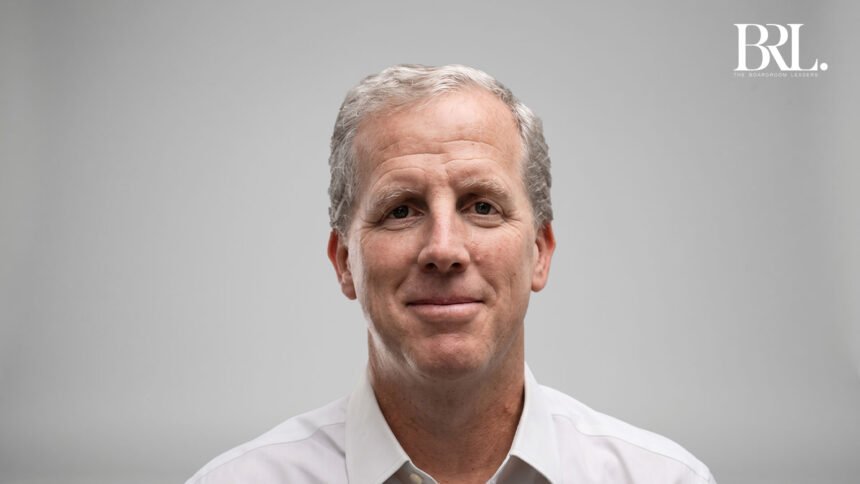
At the helm of this transformation is Tim Davies, a veteran corporate leader whose career spans diverse industrial sectors. Under his guidance, HiiROC has transitioned from a bold scientific hypothesis into a multi-million-dollar, venture-backed enterprise. By challenging established industry norms, the company offers a pragmatic, scalable, and highly economical bridge to a decarbonized global economy.
The Clean Energy Conundrum
The fundamental challenge of the modern industrial era is not a lack of green technology, but the sheer cost and resource intensity required to scale it. Hydrogen has long been hailed as the ultimate clean fuel because its combustion produces only water vapor. It holds the key to decarbonizing “hard-to-abate” sectors such as heavy manufacturing, aviation, maritime shipping, and chemical production. Yet, the global energy market faces a critical problem: nearly all the hydrogen produced today is highly polluting, while the truly clean alternatives remain profoundly inefficient and expensive.
Traditionally, industries rely on Steam Methane Reforming (SMR) to produce “grey hydrogen.” This process is highly cost-effective but environmentally catastrophic, dumping immense quantities of carbon dioxide into the atmosphere. To mitigate this, some companies have adopted “blue hydrogen,” which pairs SMR with Carbon Capture, Utilization, and Storage (CCUS). However, CCUS technologies are notorious for their astronomical costs, regulatory delays, and unproven long-term storage safety.
On the other end of the spectrum lies “green hydrogen,” produced by splitting water molecules using renewable electricity. While environmentally pristine, water electrolysis requires immense amounts of electrical energy. To produce green hydrogen at an industrial scale, the world would need to build an unprecedented volume of new wind and solar farms just to power the electrolyzers. This creates an intense resource conflict, pulling renewable power away from national grids that desperately need it to replace coal and gas plants.
Furthermore, hydrogen is notoriously difficult to transport and store. It is the lightest element in the universe, requiring extreme compression or cryogenic cooling to move across distances. Building dedicated hydrogen pipelines requires billions of dollars and decades of construction time. This creates a severe logistical bottleneck: even if clean hydrogen can be produced efficiently in one location, moving it to where it is actually needed remains a massive financial and physical challenge.
A Visionary Leader with a Strategic Blueprint
Solving an industrial crisis of this magnitude requires a leadership team that pairs rigorous scientific innovation with astute commercial execution. When HiiROC was established in 2019, its foundational architecture brought together two co-founders: Tim Davies, who assumed the role of CEO, and Jan Hendrik Ate Wiekamp, an expert with decades of high-tech and energy engineering experience who became CSO. Alongside them, Simon Morris stepped in as CCO to spearhead the company’s market integration.
Tim Davies brought a highly strategic and atypical professional pedigree to the clean energy sector. Unlike many founders in the greentech space who spend their entire lives in academic laboratories, Davies built his reputation as a versatile corporate builder. Holding a physics degree from the University of Oxford, his professional trajectory combined a first-principles understanding of science with elite-level commercial acumen. His early career was spent developing corporate strategy at renowned consultancies like McKinsey & Company, which later translated into high-level executive leadership roles across major retail and corporate groups, including serving as CEO of Jacques Vert Group and a director at Debenhams.
Throughout his career, Davies specialized in identifying hidden inefficiencies within large-scale operations, restructuring supply chains, and unlocking corporate value. His background gave him a profound understanding of what institutional investors and corporate clients look for: scalability, clear cost advantages, and a realistic path to market commercialization.
By stepping into the role of CEO, Davies provided HiiROC with an invaluable asset: a leader who looks at environmental engineering through a strict commercial lens. He understood from day one that a green technology cannot save the planet if it bankrupts the companies attempting to adopt it. His corporate pragmatism perfectly complemented Wiekamp’s scientific breakthroughs, ensuring that every engineering decision made in the laboratory was aligned with the brutal realities of the global energy market.
The Motivation to Rewrite the Rules
The transition from mainstream corporate leadership to the volatile world of clean-tech entrepreneurship was driven by a profound recognition of a systemic market failure. Throughout his career, Davies witnessed how massive amounts of capital were being poured into environmental initiatives that were fundamentally unscalable. He saw a widening gulf between ambitious corporate net-zero pledges and the actual tools available to heavy industry to achieve those targets.
Davies recognized that the prevailing “all-or-nothing” approach to electrification and water electrolysis was inadvertently slowing down global decarbonization. By demanding that heavy industries completely abandon their existing infrastructure overnight, governments and tech providers were creating massive financial resistance. Industrial giants operating multi-billion-dollar factories, steel mills, and chemical plants simply could not afford to write off their existing assets and wait decades for an unbuilt green electrical grid.
This realization sparked a powerful personal motivation: to discover and commercialize a technology that could utilize existing global energy infrastructure while entirely eliminating its carbon footprint. Davies became convinced that the most effective way to accelerate the green transition was not to build a completely new industrial complex from scratch, but to invent a “drop-in” solution. He sought a technology that could slip seamlessly into existing natural gas grids and industrial supply chains, turning a global environmental liability into a zero-emission asset.
When he encountered the foundational science of Thermal Plasma Electrolysis, he knew he had found the answer. It offered a way to salvage trillions of dollars of existing hydrocarbon infrastructure while decoupling it entirely from greenhouse gas emissions.
Engineering the Plasma Revolution
With a shared vision locked in place, the founders established HiiROC in 2019, positioning its primary development and manufacturing facilities in Hull, its commercial offices in the South of England, and specialized research laboratories in continental Europe. The mission was explicit: commercialize a patented, proprietary variant of methane pyrolysis that could split hydrocarbons at a fraction of the cost and energy requirements of any existing alternative.
To fully understand the brilliance of HiiROC’s approach under Davies’ leadership, it is essential to look at how their core technology, Thermal Plasma Electrolysis (TPE), operates. Traditional methane pyrolysis relies on extreme, sustained thermal heat to break the bonds between carbon and hydrogen atoms. Heating an entire industrial chamber to these temperatures requires massive energy inputs, which often dampens the environmental benefits of the process.
HiiROC completely bypassed this limitation. Instead of using raw heat, their patented system utilizes high-frequency, low-temperature plasma torches to generate powerful internal electrical fields. When methane gas ($\text{CH}_4$) is passed through these custom plasma torches, the intense electrical field violently tears the hydrocarbon molecules apart.
This precise electrical disruption yields two incredibly valuable, high-purity outputs: clean hydrogen gas, which is a zero-emission fuel ready for immediate industrial use or grid blending, and solid carbon black. The carbon black is a highly stable, valuable solid compound that is completely isolated during the process, preventing it from ever entering the atmosphere as a greenhouse gas.
This process represents a massive breakthrough in energy efficiency. HiiROC’s TPE technology requires only one-fifth of the electrical energy needed to produce the same amount of hydrogen via water electrolysis. By slashing the power requirements by 80%, HiiROC completely eliminates the need to construct massive, dedicated wind or solar farms just to run its facilities.
Furthermore, Davies championed a modular design philosophy for the company’s hardware. Instead of building massive, centralized, multi-billion-dollar refineries, HiiROC designs compact, scalable units. These modular systems can be deployed directly at the point of use, whether that is a manufacturing plant, a fueling station, or a local gas distribution node. By producing hydrogen directly where it is consumed, Davies effectively erased the catastrophic transport and storage costs that have crippled the broader green hydrogen economy.
Navigating the Hard Road to Scaling Up
Transforming a groundbreaking laboratory prototype into a ruggedized, field-ready industrial machine is a notoriously difficult journey, often referred to in the tech world as the “valley of death.” For HiiROC, one of the earliest and most intense engineering hurdles involved managing the physical behavior of their solid carbon by-product inside the reactor.
When methane molecules are split apart in a continuous-flow plasma field, the resulting carbon atoms instantly solidify into an incredibly fine, sticky powder known as carbon black. In early iterations of the technology, this rapid carbon condensation would quickly accumulate on the internal surfaces of the plasma torches, causing severe clogging, disrupting the electrical fields, and forcing frequent system shutdowns. Most of HiiROC’s global competitors solved this by running “batch processes,” meaning they would run the machine for a short period, turn it off, clean out the carbon, and restart it.
Davies knew that a batch-based system would never survive in the fast-moving world of heavy industry, where factories must run 24/7 without interruption. He pushed his engineering team to develop a proprietary continuous-flow architecture. Through years of rigorous testing, HiiROC successfully engineered an internal mechanical and aerodynamic system that constantly clears the solid carbon from the plasma zone as it forms. This allowed their units to operate indefinitely without clogging, matching the operational demands of global manufacturing plants.
Simultaneously, Davies had to navigate the highly complex world of deep-tech capital raising. Securing tens of millions of dollars for unproven industrial hardware requires immense corporate credibility. Drawing heavily on his corporate strategy background, Davies structured HiiROC’s fundraising strategy not just around securing capital, but around securing strategic corporate partnerships.
The company’s aggregate funding reached more than $63 million across multiple strategic expansion rounds. Instead of relying solely on traditional venture capitalists, Davies filled his cap table with the very industrial giants that need clean hydrogen. Securing investments and backing from companies like Centrica, CEMEX Ventures, GKN, Hyundai, Kia, and VNG didn’t just give HiiROC capital; it gave them a built-in roster of global enterprise clients ready to deploy their units in real-world scenarios.
Commercial Traction and Industrial Footprint
HiiROC’s commercial trajectory has accelerated significantly, moving from pilot testing into high-impact industrial deployments. Under Davies’ leadership, the company has masterfully positioned its solid carbon output not as a waste product to be disposed of, but as a secondary, lucrative revenue stream.
Carbon black is an essential raw material used globally in the manufacturing of vehicle tires, rubbers, plastics, printing inks, and toners. Traditionally, commercial carbon black is produced via the incomplete combustion of heavy petroleum products, a process that is deeply polluting. HiiROC’s solid carbon, by contrast, is completely clean and sustainable. By selling this high-purity carbon back into the manufacturing supply chain, HiiROC dramatically offsets the operational costs of its hydrogen production. Furthermore, the company is actively collaborating with research institutes to deploy this carbon in next-generation applications, including environmental remediation filters, agricultural soil enhancers, and advanced composite construction materials.
The company’s commercial momentum is highlighted by a series of landmark international agreements. In late 2025, HiiROC expanded its footprint in the United Kingdom by securing a landmark Development Agreement with East Midlands Pipeline Limited (EMP). Within this framework, HiiROC acts as a primary technology partner to advance the deployment of hydrogen networks across the East and West Midlands using local biomethane as a feedstock. When HiiROC’s plasma torches split biomethane, the process actually becomes carbon-negative, permanently trapping carbon as a solid that was originally absorbed from the atmosphere by organic plants.
This momentum was swiftly followed by a major international breakthrough in January 2026, when HiiROC and Tokyo Gas Co., Ltd. executed a strategic Memorandum of Understanding (MoU). This partnership focuses on deploying HiiROC’s TPE technology directly across Tokyo Gas’s expansive utility infrastructure in Japan. The agreement enables the decarbonization of industrial operations on-site while jointly opening up localized commercial supply chains for HiiROC’s sustainable carbon black by-product across Asian manufacturing sectors.
In parallel, HiiROC has aggressively targeted heavy transport sectors. In late 2025, the firm secured a targeted £10 million growth investment from MarineFifty, an investment group dedicated to maritime sustainability, aimed squarely at commercializing TPE technology to accelerate zero-emission marine fuels. Building directly upon this, in January 2026, HiiROC successfully secured vital funding from Scottish Enterprise to launch a comprehensive feasibility study for low-power Sustainable Aviation Fuel (SAF).
Spearheaded by HiiROC’s wholly owned Scottish subsidiary, Zeleno Ltd, in collaboration with Stratus Energy Partners, the study explores the potential of Thermal Plasma Reforming (TPR) to produce SAF at a fraction of the cost of standard alternatives. The project has garnered immediate development interest from major global aerospace and logistics stakeholders, including Airbus, Agile Energy, and World Kinect.
Cultivating a Culture of Extreme Agility
Executing a multifaceted global strategy across maritime shipping, aviation, utility gas, and industrial manufacturing requires a highly distinct leadership style. Tim Davies operates with a philosophy that rejects corporate bureaucracy in favor of lean efficiency, rigorous accountability, and cross-functional agility.
Drawing from his deep strategy background, Davies has structured HiiROC to operate with minimal administrative bloat. Despite managing multi-million-dollar international contracts and complex engineering facilities across multiple regions, the company maintains a highly focused team of just over 100 specialized professionals. Davies believes that small, highly empowered teams of exceptional engineers and commercial minds can move infinitely faster than massive, bureaucratic corporate structures.
He cultivates an environment of complete intellectual honesty. In deep-tech development, experiments will fail, components will break under high pressures, and timelines will face unexpected challenges. Davies has built a culture where engineers are encouraged to report failures instantly without fear of reprimand. This psychological safety allows the company to rapidly diagnose engineering issues, adapt their designs, and iterate their hardware at a pace that leaves traditional energy conglomerates far behind.
Crucially, Davies leads by example when it comes to market adaptability. He does not allow HiiROC to become dogmatically locked into a single application for its technology. Whether the market demands grid-blending hydrogen for utilities, extreme-heat fuel for cement kilns, sustainable feedstocks for aviation, or clean carbon black for tire manufacturers, Davies ensures his leadership team remains highly responsive, treating their technology as a versatile platform capable of pivoting to wherever the commercial demand is highest.
Pioneering the Net-Zero Frontier
As HiiROC looks toward the future, the company is exceptionally well-positioned to play a defining role in the global energy transition. The traditional green energy narrative is shifting. Policymakers, industrial leaders, and grid operators are increasingly waking up to the reality that complete electrification and water electrolysis alone cannot scale fast enough to avert the climate crisis on their own.
The world requires pragmatic, intermediate solutions that can deploy immediately without waiting for a total overhaul of the global electrical grid. This is exactly where HiiROC’s market position becomes unparalleled. By offering a technology that runs beautifully on natural gas, biomethane, and flare gas, HiiROC turns the existing fossil fuel infrastructure into the very vehicle that can deliver a net-zero future.
The company’s immediate roadmap focuses on accelerating the production and deployment of its modular commercial units, enabling localized hydrogen generation networks across Europe, Asia, and North America. As these units roll out to factory floors, utility nodes, and transport hubs worldwide, the financial and environmental benefits will compound exponentially. Heavy industries will finally have access to an affordable, low-power alternative to decarbonize their thermal processes, while manufacturing supply chains will gain a massive, entirely clean source of sustainable carbon black.
Under the steady, commercially disciplined leadership of Tim Davies, HiiROC has proven that the transition to clean energy does not have to be an economically painful choice between environmental protection and industrial productivity. By blending advanced plasma physics with acute corporate execution, Davies and his team are not merely participating in the green energy revolution; they are quietly rewriting its rules, providing the global industrial complex with a realistic, profitable, and undeniably clean path forward.