



In the summer of 2021, Ford shut down several of its truck assembly plants. Not because of a strike. Not because demand had collapsed. Because it couldn’t get enough chips, tiny slivers of silicon roughly the size of a fingernail, to finish building its F-150s. Thousands of workers sat idle. Billions in revenue evaporated. And the world suddenly realized that the most powerful economies on earth were held hostage by a supply chain they barely controlled.
- What Is Semiconductor Independence, and Why Does It Matter?
- The Chip Shortage That Woke the World Up
- The Geography of Risk: Why Everyone Depends on One Island
- The Global Race for Chip Sovereignty
- Can Any Country Actually Achieve Full Semiconductor Independence?
- The Real Cost of Going It Alone
- What’s Actually at Stake
- The Smarter Path Forward: Resilience Over Independence
That was the moment semiconductor independence stopped being an abstract policy debate and became an urgent national priority.
What Is Semiconductor Independence, and Why Does It Matter?
Semiconductor independence refers to a country’s ability to design, manufacture, and secure its own supply of chips without relying on foreign nations that could restrict access during a crisis, conflict, or trade dispute.
It matters because chips aren’t optional. Semiconductors are embedded in virtually every device used today, from LED lightbulbs and solar panels to refrigerators and ultrasound modules, and they form the backbone of AI systems that are rapidly reshaping military, economic, and industrial power. When that supply chain breaks, it doesn’t just slow down consumer electronics. It stalls cars, disrupts hospitals, and, as Russia learned in Ukraine, cripples weapons systems. HIR
The Chip Shortage That Woke the World Up
The 2020–2021 chip shortage was a pandemic problem, but only on the surface. What it actually exposed was something far more dangerous: decades of offshoring had left most nations with almost no domestic chip manufacturing to fall back on.
When the COVID-19 pandemic hit, a semiconductor shortage sent shockwaves through the economy. That shortage made it clear that the United States had a critical vulnerability: it made none of the world’s most advanced chips and lacked legacy chip manufacturing, both of which are needed for defense, critical infrastructure, and emerging technologies like AI.
And it wasn’t just America. Europe’s car manufacturers watched assembly lines grind to a halt. Asian electronics makers scrambled for allocation windows. The crisis was global, sudden, and deeply unsettling, because governments realized they had no emergency lever to pull.
In response, the world’s major economies began shifting from a “market-first” to a “security-first” policy paradigm, unleashing a new wave of state intervention characterized by massive financial incentives. What had been an industry run by cost optimization was now being redesigned around national security.
The Geography of Risk: Why Everyone Depends on One Island

Here’s the part most people don’t fully appreciate.
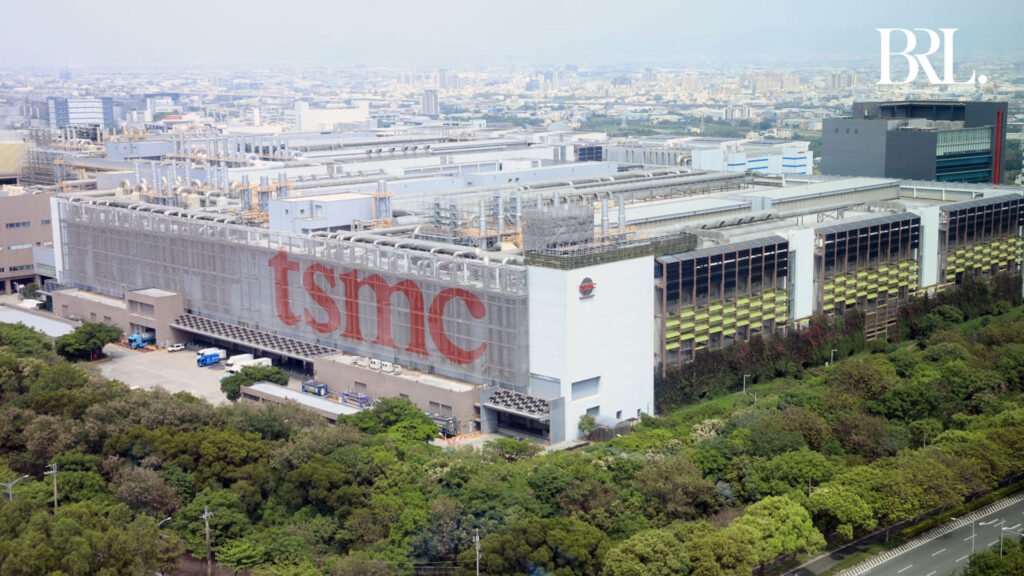
Taiwan controls roughly 67% of global foundry capacity through TSMC, to the point that semiconductors account for one-sixth of Taiwan’s total GDP. The entire global tech ecosystem, from iPhones to fighter jets, depends heavily on what happens at a handful of facilities on a 36,000-square-kilometre island sitting 110 miles from mainland China.
As the chair and vice chair of the National Security Commission on Artificial Intelligence put it: “We do not want to overstate the precariousness of our position, but given that the vast majority of cutting-edge chips are produced at a single plant separated by just 110 miles of water from our principal strategic competitor, we must reevaluate the meaning of supply chain resilience and security.”
That’s not a theoretical risk. It’s a live one.
And Taiwan isn’t the only chokepoint. ASML holds 100% control of EUV lithography machines, the equipment needed to manufacture the most advanced chips, and no other company currently makes them. Meanwhile, the software that designs every modern semiconductor flows almost entirely from three U.S. companies: Synopsys, Cadence, and Siemens EDA. Pull any one of these threads, and the whole sweater unravels. SEMI
The Global Race for Chip Sovereignty

Governments aren’t waiting for the next shock. They’re spending aggressively and competitively now.
The United States committed $52.7 billion through the CHIPS Act. The European Union established a €43 billion Chips Act through 2030. China launched its third “Big Fund” phase with $47.5 billion. South Korea developed a $450 billion K-Semiconductor strategy through 2030. Projections show $2.3 trillion in new wafer fabrication investment between 2024 and 2032, compared to just $720 billion in the previous decade.
That’s not an industry cycle. That’s a geopolitical arms race.
Semiconductors in 2025 are no longer merely about cranking out more chips; they have become closely tied to national sovereignty and strategy. Countries now recognize that owning the leading edge confers not only economic benefit but also bargaining power in a fraught geopolitical climate.
Meanwhile, Asia’s traditional powerhouses are tightening their grip on what they already have. Taiwan, for instance, formalized the so-called “N-1” rule in March 2025: companies like TSMC cannot transfer their most advanced process nodes overseas to overseas fabrication facilities. The message: you can have our chips, but not our knowledge.
Can Any Country Actually Achieve Full Semiconductor Independence?
Honestly? No, not in any complete sense. And the experts who’ve looked hardest at this problem say chasing total self-sufficiency is the wrong goal entirely.
The Real Cost of Going It Alone
Building advanced semiconductor chip plants costs $20–30 billion each and takes years to construct before producing a single chip. These facilities consume up to 15 million litres of ultra-pure water daily, require up to 100 megawatt-hours of power per hour, and face first-time silicon success rates that have dropped to just 14%.
And that’s before you factor in the workforce problem. Specialized chip engineers take years, sometimes decades, to develop. You can build a fab. You can’t instantly conjure the talent ecosystem it requires.
Complete semiconductor independence remains financially prohibitive for any country. Full independence would require approximately $1 trillion in additional global investment and result in 35–65% increases in semiconductor prices due to suboptimal scale and inefficiencies.
Even the U.S., with all its investment, is only inching toward domestic chip production. TSMC only recently began producing advanced 4-nanometer chips at its Arizona facility, with full high-volume production expected by mid-2025, and this represents just a fraction of what true supply chain resilience requires.
So every “independence” initiative, paradoxically, deepens interdependence. The U.S. needs the Netherlands for ASML’s lithography machines. Europe needs Asia for high-volume fabrication. China needs foreign photoresists so badly that even unverified rumors of Japan tightening export controls sparked panic in Chinese industry circles in late 2025, because high-grade photoresists have a shelf life of just 3 to 6 months and can’t be stockpiled.
What’s Actually at Stake
The semiconductor independence push isn’t just economic hedging. It’s a fundamental reassessment of power.
The U.S. Department of Defense now classifies advanced chip production as “critical infrastructure.” China’s military-civil fusion strategy pours billions into semiconductor independence. Russia’s struggles in Ukraine have shown what happens when access to advanced chips is cut off. A country without chip access doesn’t just lose market share, it loses battlefield capability.
In 2025, the strategic significance of semiconductors is comparable to, if not greater than, that of petroleum to the global economy after the 1973 OPEC embargo. And that’s a comparison worth sitting with. Oil shocks in the 1970s reshaped global alliances, accelerated domestic energy policy, and triggered strategic reserve mandates that lasted decades. We may be in the early chapters of something similar.
The Smarter Path Forward: Resilience Over Independence
The goal, most serious analysts agree, shouldn’t be full semiconductor independence. It should be strategic resilience, meaning enough domestic capability and diversified partnerships so that no single country, company, or crisis can cut you off.
The winners will be those who build the most resilient networks and manage interdependence best, rather than chasing an impossible level of independence. Smart interdependence, not autarky, is the realistic path to semiconductor security. SEMI
That means investing in design capabilities, securing access to equipment, diversifying fab partnerships, and building talent pipelines, rather than trying to replicate the entire global semiconductor supply chain within your own borders.
Semiconductor independence, in the purest sense, may be a fantasy. But the countries that treat chips as a strategic asset rather than a commodity, the ones building resilient ecosystems rather than waiting for the next shortage to blindside them, those are the ones who will shape what the next decade looks like.
The 2021 chip shortage left car factories idle. The next one, if it comes at a moment of genuine geopolitical tension, could leave something far more important unable to operate.
That’s why every country wants in. And why none of them can afford to wait.