


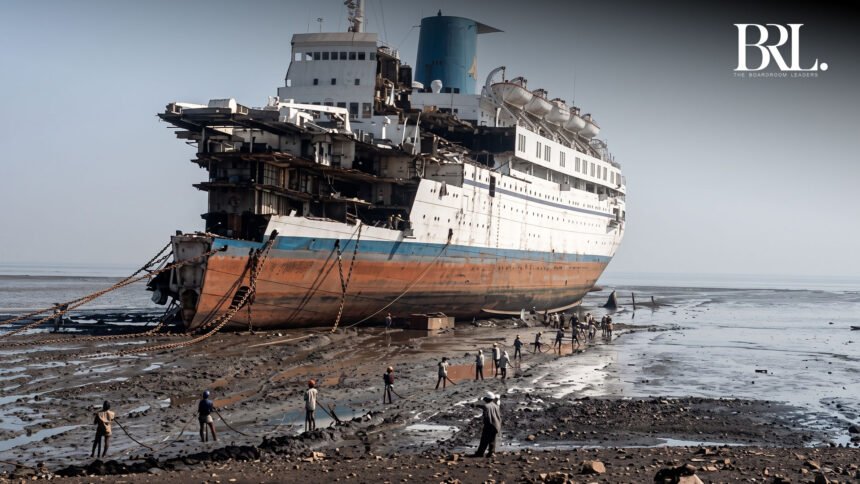
Picture a 300-meter oil tanker at full speed, aimed straight at a beach. Not an accident, a business plan. For decades, that’s how most of the world’s ships have died: run aground on the tidal mudflats of South Asia, then torn apart by hand. The sustainable vessel lifecycle, everything that happens between a ship’s launch and its final teardown, is the industry’s attempt to change that story, and as of the past year, the environmental and regulatory mechanics behind ship recycling finally have real teeth.
- What Is the Hong Kong Convention, Really?
- Why Do So Many Ships Still End Up on a Beach?
- The Regulatory Mechanics: A Paper Trail That Follows Every Ship to Its Grave
- Is Ship Recycling Environmentally Friendly?
- The Steel Nobody Talks About
- How This Vessel Lifecycle Actually Pays Off
- When Green Becomes a Competitive Edge
- What Owners Are Doing Differently in 2026
- The Middle Path: Turkey’s Landing Method
- Designing Ships to Be Recycled, Not Just Built
- When Compliance Fails: A Recent Reminder
- The Part That Still Needs Fixing
That shift matters more than it sounds. Every ship afloat today, the tanker hauling your gasoline, the container ship that brought your sneakers over, has an expiration date, usually somewhere between 25 and 30 years. And the global fleet is getting older fast. So the question isn’t whether hundreds of ships get scrapped every year. It’s how.
What Is the Hong Kong Convention, Really?
The Hong Kong International Convention for the Safe and Environmentally Sound Recycling of Ships is the first binding global treaty governing how end-of-life ships are dismantled, and it finally entered into force on 26 June 2025, sixteen years after it was first adopted.
The delay itself tells you something. The treaty was signed back in 2009, but it needed ratification from enough countries representing enough shipping tonnage, and enough recycling capacity, before it could actually kick in. That threshold required at least 15 ratifications representing 40% of world merchant shipping by gross tonnage, and it wasn’t met until Bangladesh and Liberia signed on in June 2023. Two years later, the clock ran out, and the rules went live.
So what does it actually require? Every ship headed for the scrapyard now needs a ship-specific inventory of hazardous materials on board, built from an appendix listing the substances restricted or banned in shipyards and recycling facilities, plus an initial survey to verify that inventory, renewal surveys through the ship’s life, and a final survey before recycling. It’s less a single rule and more a paper trail that follows a vessel from launch to scrapyard.
Why Do So Many Ships Still End Up on a Beach?
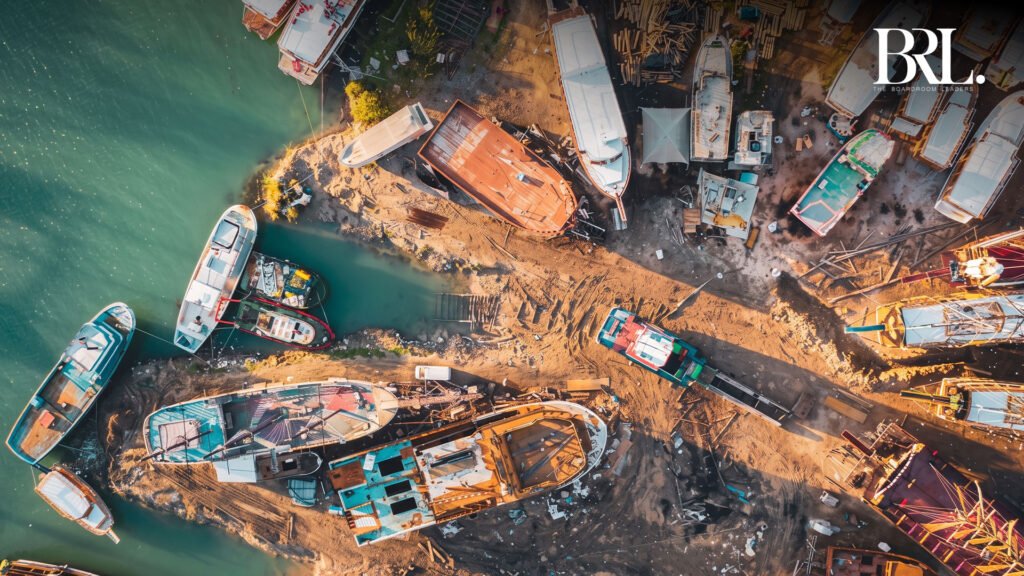
Here’s the uncomfortable part. New treaty or not, geography hasn’t changed. More than 70% of obsolete ships still end up on three beaches, Alang-Sosiya in India, Chattogram in Bangladesh, and Gadani in Pakistan, broken apart under conditions far short of what a shipyard in Rotterdam or Los Angeles would allow. This is “beaching,” and it’s popular for one plain reason: it’s cheap. No dry dock, no crane infrastructure, just a high tide, a beach with the right slope, and a crew waiting with cutting torches.
Roughly 800 large ocean-going vessels get broken down every year, and about three-quarters of them land on those same South Asian beaches. In terms of raw tonnage, the concentration is even starker; those three countries handle around 90% of the world’s scrapped shipping tonnage. That’s not a niche practice on the margins of the industry. That is the industry, for better or worse.
And the environmental cost of doing it wrong is severe. Heavy metal concentrations around Alang-Sosiya have measured twenty times higher than India’s national average, with tides and monsoon currents carrying pollutants into nearby mangroves, canals, rivers, and farmland. Oil slicks cut sunlight beneath the surface. Marine life dies off, and the fishing communities who depended on those waters lose their livelihoods along with it.
The Regulatory Mechanics: A Paper Trail That Follows Every Ship to Its Grave
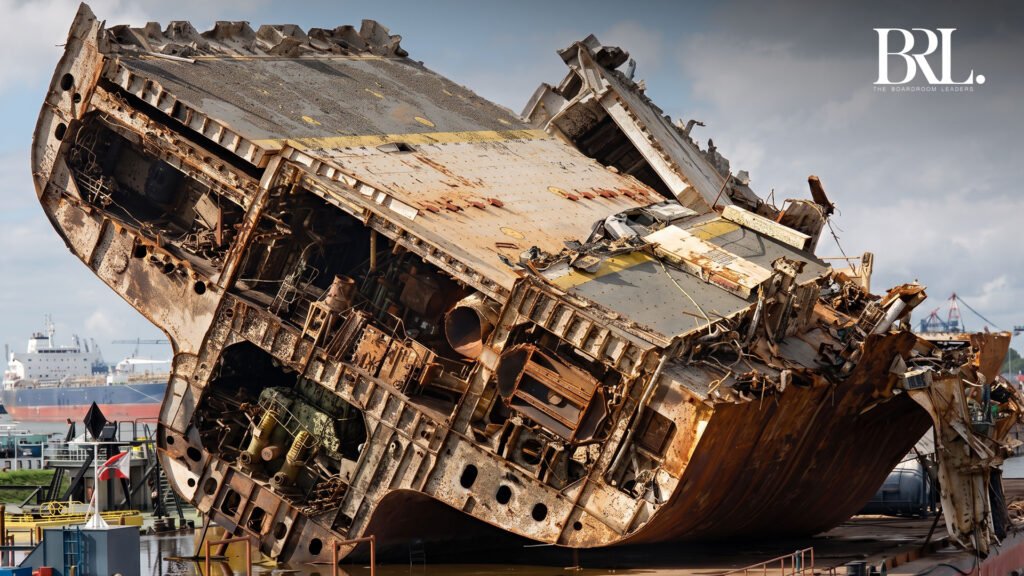
The Hong Kong Convention doesn’t ban beaching outright; that’s its biggest criticism, and a fair one. What it does is force documentation and accountability onto a process that used to run almost entirely on cash and silence.
From 26 June 2025 onward, any ship headed for recycling has to go to a facility holding a valid Document of Authorisation for Ship Recycling, carry an approved Inventory of Hazardous Materials, work from a ship-specific recycling plan built by that facility, and hold a “ready for recycling” certificate before it’s sent off. It sounds bureaucratic because it is, but that bureaucracy is precisely the point. A yard can’t just claim it’s compliant anymore. It has to prove it, on paper, before the ship is ever driven onto the sand.
For shipowners, the timeline shifted too. Existing ships have five years from the convention’s entry into force to obtain a valid international IHM certificate, or before being sent for recycling, whichever comes first. That means the paperwork isn’t a last-minute formality anymore. It has to start years before a vessel is even retired.
Regulators are also trying to make compliance less of a headache. In January 2026, the European Commission rolled out new certificate formats so shipowners could use a single certificate that satisfies both the EU Ship Recycling Regulation and the Hong Kong Convention at once, without lowering EU requirements. Small change, but it matters: one less set of overlapping paperwork for owners juggling multiple jurisdictions.
Is Ship Recycling Environmentally Friendly?
Ship recycling can be genuinely environmentally friendly; steel, machinery, and even furniture get a second life instead of going to landfill, but only when it’s done at a certified facility. Done through beaching without proper hazardous-waste handling, it’s one of the more polluting industrial practices still operating today.
That gap between theory and practice is the whole story of this industry. In principle, breaking down a ship is recycling in its purest form: almost the entire hull comes back as usable steel, and modern yards are recovering materials that used to just get dumped.
The Steel Nobody Talks About
Take Alang, the largest ship-recycling yard on Earth. Alang recycles roughly 3.5 million tonnes of steel a year, steel that would otherwise require 10 to 12 million metric tonnes of iron ore and 6 to 7 million tonnes of coal to produce from scratch, without a single litre of water or unit of electricity consumed in the recovery process. The yard also reclaims around 36,000 tonnes of wood annually without cutting down a single tree. That’s a genuinely strong circular-economy case, when the yard is operating cleanly.
The problem was never the idea of recycling a ship. It was the execution: no containment for oil and chemical residue washing into the tide, no protective equipment for workers cutting through hazardous materials, and until fairly recently, essentially no documentation of what was even built into the ship in the first place.
How This Vessel Lifecycle Actually Pays Off
Sustainable ship recycling isn’t just a compliance cost bolted onto shipping companies; it’s turning into a business advantage, and that’s a genuinely new development.
Roughly 40% of Alang’s recycling yards have already earned ISO 30000 certification, the standard verifying conformity with ship-recycling best practices. That’s not regulators forcing change from the outside, that’s yard owners chasing certification because certified yards win better contracts. As one industry association official put it, the most forward-looking yard owners see a clear business case for offering cleaner, more sustainable recycling conditions, because the Hong Kong Convention has already had a real impact on the ground.
Money is following that shift too. Market researchers currently size the green ship recycling segment at roughly $500 million, with steady growth driven by regulatory pressure and industry-wide sustainability shifts. The broader ship recycling market, green and conventional combined, is forecast to roughly double, from about $4.4 billion in 2025 to nearly $8.9 billion by 2034, driven partly by simple math: more ships are aging out of service than at almost any point in shipping history.
When Green Becomes a Competitive Edge
Financiers and insurers have started treating recycling compliance as a risk factor, not a footnote. Many financing arrangements already required Hong Kong Convention compliance even before it legally entered into force, and shipowners ignoring the overlapping EU Waste Shipment Regulation have faced real fines, in some cases jail time. That’s a different world than the one shipbreaking operated in even a decade ago, when a vessel could quietly be reflagged and sold for scrap with no one asking questions.
What Owners Are Doing Differently in 2026
The practical effect of all this is that the recycling decision now starts years earlier than it used to. Owners increasingly need to build compliance groundwork well before a ship retires, the hazardous-materials inventory has effectively become part of a ship’s sale-readiness, and waiting too long can narrow which yards will take the vessel, weaken price negotiations, and slow the exit process.
There’s still friction, and it’s worth being honest about it. Industry groups like BIMCO have continued pushing for clarity on where the Hong Kong Convention and the older Basel Convention on hazardous waste overlap or conflict, since a single ship can technically fall under both frameworks. And in Brussels, regulators seem content to let the global treaty prove itself before tightening EU rules further. A policy officer at the European Commission’s environment directorate has said there are no plans to revise the EU Ship Recycling Regulation in the short or medium term; the priority is watching how the Hong Kong Convention performs first.
The Middle Path: Turkey’s Landing Method
Not every alternative to South Asian beaching is a fully enclosed dry dock. Turkey’s yards, clustered in Aliağa on the Aegean coast, use something in between called the landing method. The bow of the vessel is grounded on shore while the stern stays afloat, then blocks are lifted by crane onto a drained, impermeable working area instead of being dropped into the water or left on open sand. It’s not as clean as a dry dock, but it’s a clear step up from the gravity method used on South Asian beaches, where cut sections are simply dropped.
Aliağa has been doing this since the 1970s, and one advantage rarely mentioned is proximity: the steel mills that consume the recycled material sit right next to the yards, so recovered steel barely has to travel before it’s back in circulation. Even so, a 2025 industry report flagged real gaps still needing closure in Turkey: proper drainage channels, oil-water separators for wastewater, independent third-party verification of hazardous materials, and a shift toward cold-cutting techniques instead of gas torches. Turkey shows what a workable middle ground looks like, better than beaching, not yet best practice.
Designing Ships to Be Recycled, Not Just Built
One of the more overlooked points in this whole picture: recyclability is increasingly something naval architects think about before a ship is ever built, not just when it’s retired. It’s called “design for recycling,” or DfR.
The idea is to work Hong Kong Convention and EU SRR requirements into a ship’s design spiral from the earliest stages, so a shipowner isn’t tempted to abandon expensive, compliant yards for cheap substandard ones decades later just to save money at the end of a ship’s life. In practice, that means things like modular accommodation blocks and built-in lifting supports that make future dismantling faster and safer, along with documentation of exactly how a ship’s weight is distributed so recycling crews know where to make cuts safely. It’s a slow-moving idea; a ship built today won’t be scrapped for another quarter-century, but it’s the clearest sign yet that recycling is becoming a design constraint, not just an end-of-life afterthought. Springer
When Compliance Fails: A Recent Reminder
None of this is theoretical. In early July 2026, a major oil spill occurred at a shipbreaking yard plot in Alang-Sosiya, Gujarat, raising fresh concerns about safety and environmental standards at the world’s largest ship recycling hub, even after a year of the Hong Kong Convention being in force. It’s a blunt reminder that certificates and inventories only work if they’re enforced consistently, plot by plot, ship by ship. A treaty can exist, and an oil slick can still happen in the same week.
On the more encouraging side, capacity is genuinely expanding in places built for enclosed, contained recycling. The Galloo ship recycling yard in Ghent, Belgium, has drawn support from European industry groups pushing to grow the EU’s own recycling capacity, rather than leaving European shipowners dependent on facilities thousands of miles away.
The Part That Still Needs Fixing
None of this means beaching is over. Roughly 90% of end-of-life ships are still taken apart on those same South Asian beaches, and the Hong Kong Convention was written to be achievable in that environment rather than to ban the practice outright, a compromise critics argue lets the riskiest method of shipbreaking keep operating as long as the paperwork checks out. Workplace deaths on those beaches have run into the hundreds over the past two decades, and the pressure to cut corners hasn’t disappeared just because a treaty exists.
That’s really the test the sustainable vessel lifecycle is facing right now. The rules are finally in place, the certifications are spreading, and the money is starting to reward the yards doing it right. But rules only matter if someone actually checks whether a beach in Gujarat or Chattogram is following them, and that’s a harder problem than getting 15 countries to sign a treaty ever was.