

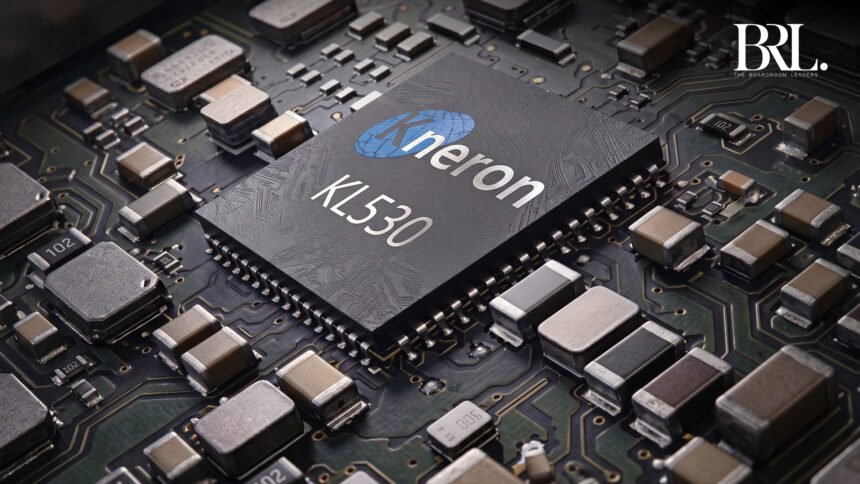
Pop the hood on a 2026 model-year car, and you won’t find the story anymore. The real action is buried in a chip smaller than a matchbox, quietly doing something your engine never could: thinking. That chip is a neural processing unit, an NPU, and the demand for high-performance, low-power versions of it has gone from a niche engineering curiosity to the thing every major automaker is racing to secure for its next platform.
- What Are These NPUs, Exactly?
- Why “Low-Power” Is the Real Headline
- Who’s Building the Demand-Side Case
- Qualcomm’s All-in-One Bet
- Texas Instruments Goes Deep on Efficiency
- STMicroelectronics Bets on the Humble MCU
- Just How Much Demand Are We Talking About?
- What This Demand Looks Like on the Road
- What Could Slow This Demand Down
And it’s happening fast. Depending on which research firm you ask, the automotive NPU market sat somewhere between $2.2 billion in 2024 and $4.2 billion in 2024 for the broader automotive AI chip category, and it’s projected to grow at more than 21% annually through 2034. That’s not a rounding error. That’s an industry rewiring itself in real time, and the demand curve is only getting steeper.
So what’s actually fueling that demand, and why does “low-power” matter as much as “high-performance” here?
What Are These NPUs, Exactly?
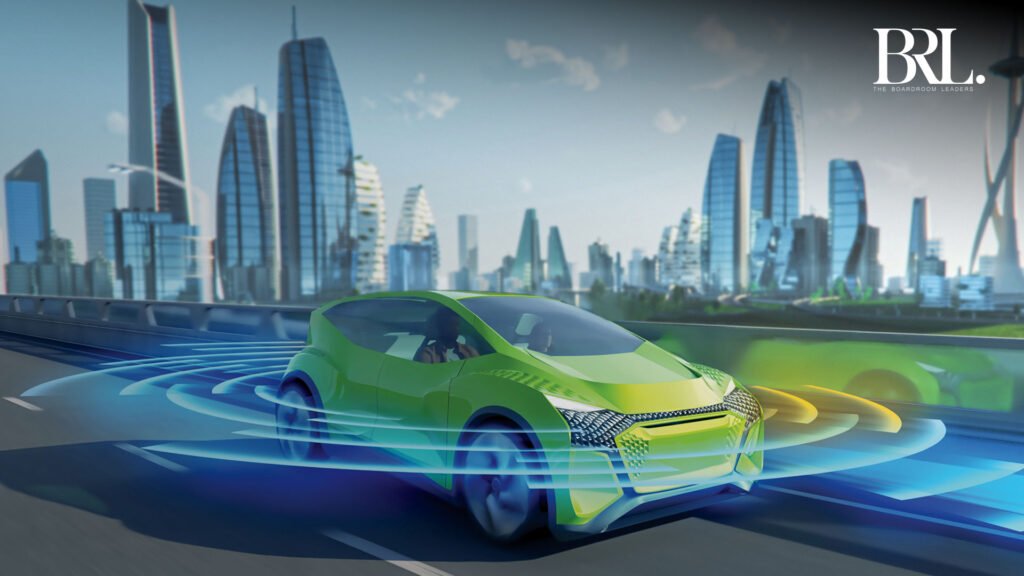
An automotive NPU is a dedicated AI chip inside a vehicle’s computer system, purpose-built to run machine learning tasks, object detection, sensor fusion, and driver monitoring, directly on the car itself, without sending data to the cloud first. Think of it as the difference between asking a question and waiting for the answer to travel across the internet, versus having the answer already sitting in the room with you.
That distinction matters more in a car than almost anywhere else. An NPU is a specialized AI accelerator chip optimized for deep learning tasks such as image recognition, object detection, and natural language processing, and its whole architectural purpose is squeezing high-throughput AI work out of very little power. In a phone, that means better battery life. In a car doing 70 miles an hour, it means the difference between spotting a pedestrian in time and not. Built In
With unmatched parallel processing, NPUs help autonomous vehicles interpret rapidly developing inputs, road signs, traffic patterns, unexpected obstacles, and they do it locally, at the edge, rather than round-tripping to a data center. There’s no time for a round trip when a deer steps into the road. IBM
Why “Low-Power” Is the Real Headline
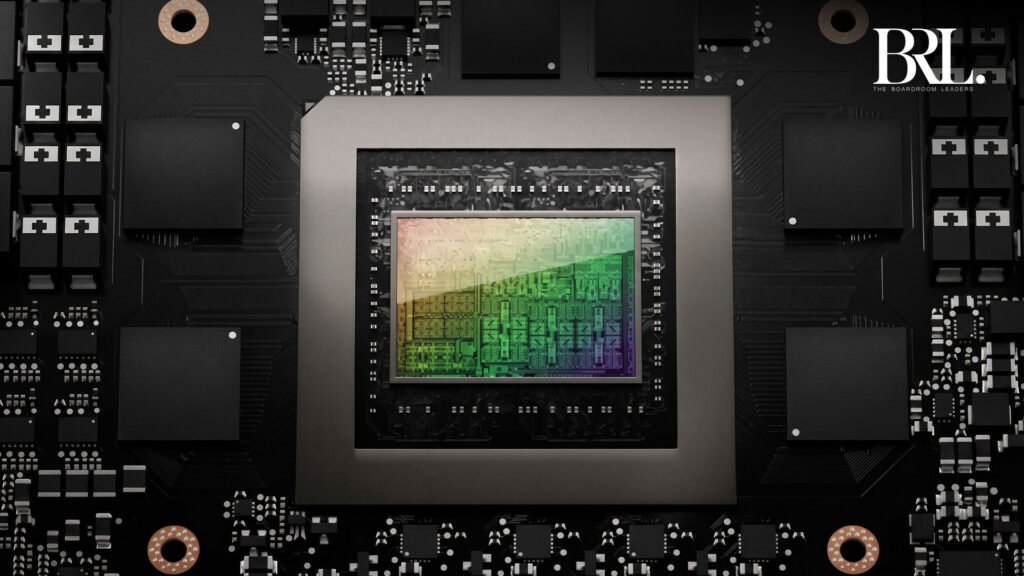
Here’s something that trips people up: the demand isn’t really for raw horsepower, the way a gaming GPU chases speed for its own sake. It’s for efficiency. A car is already juggling dozens of power-hungry systems, batteries, climate control, infotainment, sensors stacked on sensors. Add a compute-hungry AI chip that runs hot, and now you need extra cooling hardware, extra wiring, extra weight. None of that is free, and none of it is good for range in an EV.
That’s exactly the demand chipmakers are chasing right now. Texas Instruments, for instance, built its latest automotive family around integrating its C7 neural processing unit into the TDA5 SoC line, delivering up to 12 times the AI computing of previous generations at similar power consumption, eliminating the need for costly thermal solutions. That last part is the quiet win nobody talks about: skip the extra cooling hardware, and you skip cost, weight, and complexity all at once.
It’s a similar story further down the stack. Even microcontrollers, the unglamorous workhorses that run your window motors and seat adjusters, are getting NPUs now. TI’s newest MCU line folds in a dedicated hardware accelerator that optimizes deep learning inference operations to reduce latency and improve energy efficiency at the edge. High-performance, low-power AI isn’t just steering anymore. It’s showing up in parts of the car nobody would have guessed a few years back. TI
Who’s Building the Demand-Side Case
This isn’t a two-horse race. It’s a full field, and everyone’s running a different strategy to win a piece of that demand.
Qualcomm’s All-in-One Bet
Qualcomm’s approach is consolidation. Its Snapdragon Ride Flex SoC combines CPU, graphics, and NPU on a single platform that runs both ADAS and digital cockpit functions, meaning one chip handles both the safety-critical driving assistance and the flashy touchscreen experience. That modular integration lets automakers cut system costs by up to 30% while boosting computational efficiency. For an industry obsessed with squeezing margin out of every vehicle, that’s a hard number to ignore.
Texas Instruments Goes Deep on Efficiency
TI is playing a different game, going wide across the power spectrum, from big domain-controller SoCs down to the humblest microcontroller, and putting an NPU somewhere in nearly all of them.
STMicroelectronics Bets on the Humble MCU
STMicroelectronics took a similar route with its Stellar P3E, an automotive MCU built around what it calls the Neural ART Accelerator, an embedded NPU optimized for neural network operations like convolution, pooling, and activation functions, bringing real-time AI capabilities directly to the edge. Meanwhile, NXP, Renesas, NVIDIA, and Intel (via its Mobileye arm) are all fighting for the same real estate under the hood, each with a slightly different bet on where the AI workload should actually live in the vehicle’s architecture.
Just How Much Demand Are We Talking About?
Numbers here vary depending on who’s counting and what they’re counting. One research firm pegs the automotive NPU market specifically at $2.2 billion in 2024, growing at a 21.5% compound annual rate to reach $17.1 billion by 2034. A broader “automotive AI chip” category, which folds in GPUs and ASICs alongside NPUs, was valued at $4.2 billion in 2024 and is forecast to hit $21.7 billion by 2033. Different scopes, different totals, but the trajectory is the same story told twice.
What’s driving that demand isn’t one thing; it’s a pileup of trends hitting at once. Rising ADAS take-rates, centralized and zonal electrical architectures that concentrate compute into fewer, more powerful chips, and the push for edge inference to meet safety and latency requirements are all pulling in the same direction. Add to that OEM revenue models built on over-the-air updates and feature unlocks, and you’ve got automakers with a financial incentive, not just a technical one, to demand serious on-board AI compute.
Geography tells its own version of the story too. Asia-Pacific leads on revenue thanks to strong vehicle production and China’s fast-moving EV platforms, while North America is posting the fastest growth rate as software-defined vehicle programs scale up. Europe, meanwhile, holds a solid share on the back of safety regulations and standardized cybersecurity frameworks among German automakers.
What This Demand Looks Like on the Road
You don’t need to know silicon to feel the difference. It shows up as your lane-keep assist reacting a beat faster. It shows up as your car recognizing your face before you’ve buckled your seatbelt. It shows up, increasingly, as features that used to require a cloud connection now working just fine in a parking garage with zero signal.
There’s also a quieter benefit most people never think about: remote model retraining, driver behavior monitoring, and onboard health diagnostics are all becoming possible because the chip doing the thinking lives inside the car itself. Some in the industry are already describing this as the foundation for self-healing vehicle systems, cars that can flag their own developing problems before a dashboard light even turns on.
What Could Slow This Demand Down
None of this is a straight line up and to the right. High silicon and packaging costs at advanced process nodes, memory bandwidth constraints, and the sheer effort required to hit ISO 26262 safety certification across every edge case all slow things down. And there’s a stickier problem underneath it: software portability across different hardware accelerators remains genuinely hard, which risks locking automakers into a single chipmaker’s ecosystem once they’ve built around it.
That’s the tension worth watching. Every automaker wants the performance-per-watt of a specialized NPU. Almost none of them want to be permanently married to the company that built it. Expect the next few years of this demand curve to be shaped less by who makes the fastest chip, and more by who makes the one automakers feel safest betting their whole platform on.
That’s the demand behind next-gen automotive NPUs in 2026, not a single breakthrough, but a slow, expensive, high-stakes bet that the smartest car isn’t the one with the biggest engine anymore. It’s the one that can think fastest with the least power, and not blink when the road throws it something it’s never seen before.