
By using this site, you agree to the Privacy Policy
Accept
Sign In
The Board Room LeadersThe Board Room Leaders
Notification
Font ResizerAa
  • News
    NewsShow More
    Uncovr Raises $7 Million
    Uncovr Raises $7 Million in Seed Funding to Expand AI-Powered Surgical Documentation
    11 hours ago
    Bhavesh Bob Patel
    Sempra Infrastructure Names Bhavesh “Bob” Patel as Incoming Chief Executive Officer
    2 days ago
    InCharge Energy Raises $46 Million
    InCharge Energy Raises $46 Million to Expand Energy Infrastructure Services Across North America
    4 days ago
    Kalogon funding
    Kalogon Raises $5.75 Million to Advance Smart Seating Technology
    6 days ago
    Suno Series D Funding
    Suno Raises Over $400 Million in Series D Funding at $5.4 Billion Valuation
    6 days ago
  • Featured
    FeaturedShow More
    Ivar Kruusenberg, Founder & CEO PowerUP Energy Technologies
    The Story Behind Dr. Ivar Kruusenberg’s PowerUP, From Space Tech to the Frontlines
    2 weeks ago
    Enn Õunpuu, founder and CEO of Elcogen
    Enn Õunpuu and Elcogen: Scaling Next-Gen Clean Energy and Hydrogen Solutions
    2 weeks ago
    Trevor Best CEO and Co-Founder of Syzygy Plasmonics
    Trevor Best: CEO and Co-Founder of Syzygy Plasmonics
    2 weeks ago
    Staff Sheehan, CEO and Co-Founder of Project Omega
    Staff Sheehan and Project Omega: Unlocking Unlimited Energy From What the World Throws Away
    3 weeks ago
    Mark Hoadley, Co-founder and CEO of Hauler Hero
    Mark Hoadley: The ServiceTitan Alum Re-Engineering the Waste Sector
    3 weeks ago
  • Industry
    IndustryShow More
    Semiconductor Independence
    Semiconductor Independence: Why Every Country Is Fighting for Chip Sovereignty
    4 weeks ago
    Spirit Airlines Shutdown
    Spirit Airlines Shutdown: The Full Story Behind the Collapse
    1 month ago
    Chinese EV threat to European carmakers
    Chinese EV Threat to European Carmakers: Why the Fear Is Justified
    1 month ago
    Social Media Security
    Advanced Social Media Security: A Practical Guide to Minimizing Personal Data Exposure in 2026
    3 months ago
    AI’s New Geopolitical Battlefield: The OpenAI–Anthropic Pentagon Controversy
    3 months ago
  • Opinion
  • Industry
    IndustryShow More
    Semiconductor Independence
    Semiconductor Independence: Why Every Country Is Fighting for Chip Sovereignty
    4 weeks ago
    Spirit Airlines Shutdown
    Spirit Airlines Shutdown: The Full Story Behind the Collapse
    1 month ago
    Chinese EV threat to European carmakers
    Chinese EV Threat to European Carmakers: Why the Fear Is Justified
    1 month ago
    Social Media Security
    Advanced Social Media Security: A Practical Guide to Minimizing Personal Data Exposure in 2026
    3 months ago
    AI’s New Geopolitical Battlefield: The OpenAI–Anthropic Pentagon Controversy
    3 months ago
  • Start Ups
    Start UpsShow More
    Elon Musk Cursor deal
    Elon Musk’s $60 Billion Cursor Deal Could Redefine the Coding AI Market
    2 months ago
    Lifestyle Startup Ideas You Can Launch With Minimal Investment
    10 Profitable Lifestyle Startup Ideas You Can Launch With Minimal Investment
    1 year ago
    The Rise of Personalized Nutrition Startups
    The Rise of Personalized Nutrition Startups: Tailoring Health to You
    1 year ago
    How to Choose the Right E-commerce Platform for Your Start-Up?
    How to Choose the Right E-commerce Platform for Your Start-Up?
    1 year ago
    How to Create a Startup Culture That Attracts Top Talent
    How to Create a Startup Culture That Attracts Top Talent
    1 year ago
  • Economy
  • Be An Author
Reading: AI in Public Transportation: Optimizing Routes and Schedules
Share
The Board Room LeadersThe Board Room Leaders
Font ResizerAa
Search
  • My Bookmarks
  • Featured
  • Start Ups
  • Industry
  • Cookie Policy
  • Contact Us
Have an existing account? Sign In
Follow US
  • Advertise
© 2026 Adaptica Solutions. All Rights Reserved.
The Board Room Leaders > Blog > Industry > AI in Public Transportation: Optimizing Routes and Schedules
Industry

AI in Public Transportation: Optimizing Routes and Schedules

Fatima Shaikh
Last updated: 2026/03/04 at 6:04 AM
Fatima Shaikh
Share
AI in Public Transportation | Optimizing Routes and Schedule
SHARE

Public transportation is the lifeline of urban areas, connecting millions to work, school, and social activities daily. Yet, traditional systems often struggle with traffic congestion, unpredictable passenger demand, and rigid schedules, leading to delays and frustrated commuters. Artificial intelligence (AI) is revolutionizing this landscape by offering innovative solutions to optimize routes and schedules. By leveraging vast amounts of data, AI makes public transportation more efficient, reliable, and passenger-friendly. The global AI in transportation market, valued at USD 2.3 billion in 2021, is projected to reach USD 14.79 billion by 2030, highlighting its growing significance Precedence Research. 

Contents
How AI Optimizes RoutesHow AI Optimizes SchedulesBenefits of AI in Public TransportationCase Studies: Real-World ApplicationsChallenges and LimitationsFuture Prospects

How AI Optimizes Routes

AI enhances route planning by analyzing real-time and historical data to ensure vehicles take the most efficient paths. Using inputs from GPS, traffic cameras, and even social media, AI systems dynamically adjust routes to avoid congestion. For instance, if a bus encounters a traffic jam, AI can calculate an alternative route in seconds, minimizing delays.

Additionally, AI predicts passenger demand by examining patterns in historical data, weather conditions, and upcoming events. This allows transit agencies to allocate resources effectively. During peak hours or major events like concerts, AI can deploy extra buses or trains to high-demand routes, preventing overcrowding and improving passenger comfort. For example, AI can identify which routes will be busiest during a city marathon and adjust services accordingly.

Route Optimization FeaturesDescription
Real-Time Traffic AnalysisUses GPS, cameras, and social media to avoid congestion.
Demand PredictionAnalyzes historical data, weather, and events to allocate vehicles.
Dynamic ReroutingAdjusts routes instantly to minimize delays.

How AI Optimizes Schedules

Fixed schedules often lead to inefficiencies, such as empty buses during off-peak hours or overcrowded ones during rush hour. AI introduces dynamic scheduling, adjusting departure times and frequencies based on real-time data. This ensures optimal resource use, reducing wait times and preventing underutilized vehicles.

For example, if a sudden surge in passengers occurs at a stop, AI can add more services to accommodate the demand. Conversely, during quiet periods, it can reduce service frequency to save fuel and operational costs. This flexibility enhances reliability and passenger satisfaction, as commuters experience shorter waits and less crowding.

Benefits of AI in Public Transportation

AI’s integration into public transportation yields significant advantages:

  • Improved Efficiency: Optimized routes and schedules reduce operational costs and enhance service reliability. Transit agencies can better utilize their fleets, ensuring vehicles are deployed where needed most.
  • Enhanced Passenger Experience: AI provides shorter wait times, accurate arrival predictions, and personalized travel suggestions. For instance, AI can learn a commuter’s habits and recommend the best routes.
  • Environmental Benefits: By optimizing routes and schedules, AI reduces fuel consumption and emissions. It also supports electric vehicle adoption by managing charging schedules and battery usage, contributing to sustainability goals.
  • Safety Improvements: AI-powered predictive maintenance analyzes vehicle sensor data to prevent mechanical failures, reducing breakdowns and ensuring safer journeys.
BenefitImpact
EfficiencyLower costs, better fleet utilization.
Passenger ExperienceShorter waits, personalized services.
Environmental SustainabilityReduced emissions and electric vehicle support.
SafetyFewer breakdowns, safer travel.

Case Studies: Real-World Applications

Several cities have successfully implemented AI to enhance their public transportation systems:

  • Singapore’s Smart Nation Initiative: The Land Transport Authority (LTA) uses AI to analyze real-time data, optimizing bus and train routes to reduce congestion and travel times. By predicting demand and adjusting services, Singapore has improved its transit efficiency significantly.
  • Los Angeles Metro: AI-powered predictive maintenance has reduced breakdowns and delays, improving bus and rail reliability. By analyzing sensor data, the system predicts potential failures, allowing proactive maintenance.
  • City Mapper: This AI-driven app offers real-time route optimization for commuters in major cities. By analyzing traffic and transit schedules, it provides the fastest routes, enhancing the commuting experience.

Challenges and Limitations

Despite its potential, AI implementation in public transportation faces hurdles:

  • Data Privacy and Security: Handling large datasets raises concerns about passenger privacy and data security. Robust cybersecurity measures are essential to protect sensitive information.
  • Regulatory Compliance: Navigating complex regulations can be challenging, as different regions have varying rules on data usage and AI deployment.
  • Infrastructure Investment: Implementing AI requires significant investment in technology and infrastructure, which may be a barrier for smaller transit agencies.
  • Public Trust: Ensuring AI systems are transparent and unbiased is crucial for maintaining public confidence. Passengers need assurance that AI is used responsibly.

Future Prospects

The future of AI in public transportation is promising, with several exciting developments on the horizon:

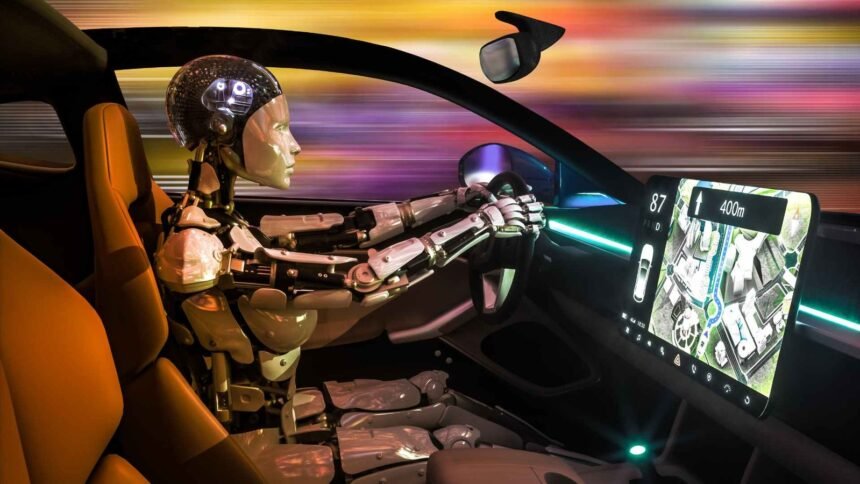
  • Autonomous Vehicles: Self-driving buses and trains could operate 24/7, reducing human error and improving accessibility. These vehicles will further optimize routes and schedules.
  • Integrated Transportation Systems: AI will connect buses, trains, bikes, and ride-sharing into cohesive networks, making it easier for passengers to switch modes seamlessly.
  • AI-Enhanced Infrastructure: Intelligent traffic signals, smart parking, and real-time traffic management will further reduce delays and optimize routes, creating smarter cities.

As AI technology advances, it will play a central role in shaping sustainable, efficient, and passenger-centric public transportation systems.

AI is transforming public transportation by optimizing routes and schedules and addressing challenges like congestion and inefficient scheduling. Through real-time data analysis, demand forecasting, and dynamic adjustments, AI enhances efficiency, reliability, and passenger satisfaction. While challenges such as data privacy and infrastructure costs remain, the benefits—cost savings, better passenger experiences, and environmental sustainability—are undeniable.


Fatima Shaikh
+ postsBio ⮌
    This author does not have any more posts

You Might Also Like

Semiconductor Independence: Why Every Country Is Fighting for Chip Sovereignty

Spirit Airlines Shutdown: The Full Story Behind the Collapse

Chinese EV Threat to European Carmakers: Why the Fear Is Justified

Advanced Social Media Security: A Practical Guide to Minimizing Personal Data Exposure in 2026

AI’s New Geopolitical Battlefield: The OpenAI–Anthropic Pentagon Controversy

Sign Up For Monthly Newsletter

Be keep up! Get the latest breaking news delivered straight to your inbox.
Please enable JavaScript in your browser to complete this form.
Loading
By signing up, you agree to our Terms of Use and acknowledge the data practices in our Privacy Policy. You may unsubscribe at any time.
Previous Article How to Choose the Right E-commerce Platform for Your Start-Up? How to Choose the Right E-commerce Platform for Your Start-Up?
Next Article Next-Gen Gaming Hardware Next-Gen Gaming Hardware: Powering the Future of Play in 2025

Next To Read

Uncovr Raises $7 Million
Uncovr Raises $7 Million in Seed Funding to Expand AI-Powered Surgical Documentation
News
Bhavesh Bob Patel
Sempra Infrastructure Names Bhavesh “Bob” Patel as Incoming Chief Executive Officer
News
InCharge Energy Raises $46 Million
InCharge Energy Raises $46 Million to Expand Energy Infrastructure Services Across North America
News
Kalogon funding
Kalogon Raises $5.75 Million to Advance Smart Seating Technology
News
Suno Series D Funding
Suno Raises Over $400 Million in Series D Funding at $5.4 Billion Valuation
News
The Board Room Leaders

The Boardroom Leaders is a premier news platform delivering breaking stories, insights, and analysis on business, technology, startups, and leadership, spotlighting corporate giants and innovative disruptors.

COMPANY

About Us
Contact

Insight

Featured
Technology
Business

Legal

Privacy Policy
Term Of Services
Cookie Policy

The Board Room Leaders © 2026 BuzzCraze Media Group

Follow US
© The Boardroom Leaders Media Company. All Rights Reserved.
Join Us!

Subscribe to our newsletter and never miss our latest news, podcasts etc..

Please enable JavaScript in your browser to complete this form.
Loading
Zero spam, Unsubscribe at any time.
Welcome Back!

Sign in to your account

Lost your password?