

Picture this: a guy in his early twenties, hoodie on, sneakers scuffed, standing in the skincare aisle at Target, not fumbling or embarrassed, but calmly comparing two different concealers like he’s choosing between streaming plans. No hesitation. No looking over his shoulder. Just shopping.
That scene, unremarkable as it sounds, would have been unthinkable fifteen years ago. Today, it’s Tuesday afternoon in America. And behind it sits one of the fastest-growing sectors in the entire consumer economy: the men’s skincare industry.
The Numbers Don’t Lie: Men’s Skincare Industry Is Exploding
The global men’s skincare products market was valued at nearly $20 billion in 2024 and is expected to surpass $31 billion by 2034, according to multiple market research firms, including Towards Consumer Goods and Global Market Insights. Some forecasts are even more bullish. Future Market Insights projects the market will grow from $17.6 billion in 2025 to $37.3 billion by 2035, a compound annual growth rate of 10.5%.
That’s not niche growth. That’s an industry rewriting itself.
Men’s grooming sales in the United States alone topped $7.1 billion in 2025, up 6.9% year over year, according to NielsenIQ. And the biggest driver isn’t beard oil or shaving cream, it’s skincare: moisturizers, serums, sunscreens, and anti-aging treatments that, not long ago, men weren’t supposed to buy.
So what changed? Everything.
Why Are Men Buying More Skincare Now?
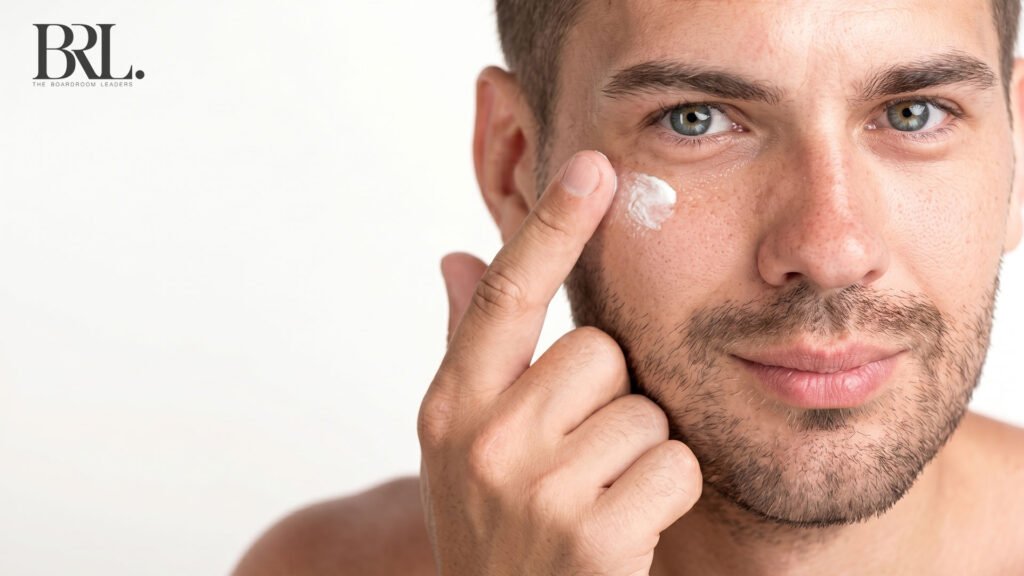
The men’s skincare market is growing because cultural permission has finally caught up with consumer demand. Evolving definitions of masculinity, a social media environment that normalizes grooming routines, and a generation of younger men who grew up watching beauty tutorials have combined to collapse a stigma that held the industry back for decades. Men aren’t buying skincare despite being men; they’re buying it because they care about how they look, and that no longer requires an apology.
The shift is visible in the data. According to Mintel research, more than half of U.S. men, 52%, used facial skincare products in 2024, a 68% increase compared to just 31% in 2022. Two years. A 68% jump. That’s not a trend. That’s a tipping point.
Gen Z Changed the Game
If there’s a single demographic that broke this market open, it’s Gen Z.
Facial skincare is especially popular among Gen Z men aged 18-27, of whom 68% used facial skincare in 2024, up from 42% in 2022, according to Mintel’s US Men’s Grooming Market Report 2024. That’s a 26-percentage-point jump in two years. These aren’t men who stumbled into skincare. They were raised on YouTube routines, TikTok tutorials, and influencer culture that made “what’s your skincare routine?” a completely normal question between friends.
Gen Z men are also more comfortable rejecting rigid gender categories and more skeptical of marketing that frames products as inherently masculine or feminine. They don’t need a product to shout “FOR MEN” in aggressive capital letters to feel comfortable buying it. In fact, gender-neutral brands like The Ordinary and CeraVe have thrived precisely because they dropped the posturing and focused on what works.
The framing that unlocked this generation’s spending isn’t vanity, it’s optimization. It’s not “look pretty.” It’s “look like the best version of yourself.” That reframing, subtle as it seems, removed the stigma and opened the wallet.
What’s Fueling the Men’s Skincare Industry Boom?
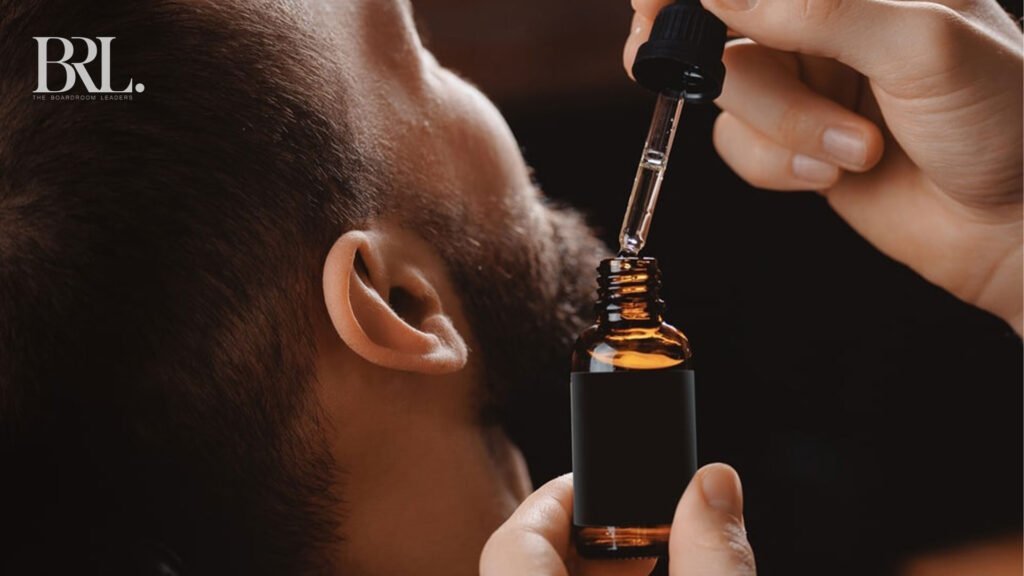
Three forces converged to turn this from a niche market into a mainstream one. And they didn’t happen independently; they fed each other.
Social Media Normalized It
Platforms like TikTok and Instagram have played a central role in normalizing skincare for men. Hashtags like #menskincare and #mensgrooming have accumulated millions of views, with influencers and everyday users alike sharing their routines and product recommendations. The hashtag #mensgrooming alone has surpassed 26 billion views on TikTok, according to CNBC.
TikTok in particular is having a huge influence, not only on building routines but on introducing male consumers to brands entirely, according to Suzanne Scott, Global Associate Beauty Director at SEEN Group. The visibility alone changed the calculus. When men see other men, athletes, creators, regular guys, talking openly about their moisturizers and SPF, the stigma quietly dissolves. Not through debate. Just through repetition and normalcy.
Celebrities Made It Cool
When A-listers started putting their names on grooming products, the category gained cultural legitimacy almost overnight. Harry Styles (Pleasing, 2021), Brad Pitt (Le Domaine, 2022), and Dwayne “The Rock” Johnson all launched their own skincare and personal care brands. Johnson’s Papatui, launched at 1,900 Target stores on March 10, 2024, was created directly in response to years of men quietly pulling him aside to ask about his skincare regimen. His answer: here’s the product, priced under $10, no whispering required.
That’s a fundamentally different conversation than what luxury brands attempted with male consumers in the 2000s, when messaging was more aspirational and less personal. Celebrity grooming brands like The Shop (LeBron James) and Papatui are now leading a cultural shift toward inclusive, expressive, and holistic approaches to grooming, empowering users to explore their identities while reshaping social notions of traditional masculinity, according to Carson Kitzmiller, Senior Analyst in Beauty & Personal Care at Mintel.
K-Beauty Opened the Door
In South Korea and Japan, skincare is a standard part of daily hygiene, woven into masculine identity. Male idols, actors, and athletes openly collaborate on cosmetics campaigns, normalizing BB creams, moisturizers, and lip care without controversy. That K-beauty cultural export didn’t just influence product formulations; it shifted global expectations of what men’s skincare could look like.
The “glass skin” ideal, the lightweight serum-first approach, the ingredient transparency, all of it trickled westward and gave men a new vocabulary for talking about their skin. And once you have the vocabulary, you can shop.
The Brands That Saw It Coming
Not every company caught this wave early. But the ones that did, and moved fast, own the market right now.
YouGov BrandIndex data shows that men aged 18-34 in the U.S. were nearly twice as likely to consider buying beauty products from Sephora in 2024 as they were in 2020. Sephora and Ulta have both responded by integrating men’s complexion products into gender-neutral, skin-first displays, quietly removing the aisle signage that made some men feel like they were shopping in the wrong section.
Drugstore stalwarts CeraVe and The Ordinary, meanwhile, succeeded by doing almost nothing traditionally “male” in their branding, no rugged fonts, no muted camo packaging, no mountain imagery. Just ingredient lists, dermatologist recommendations, and prices that don’t require a second thought. It turns out men, like everyone else, respond to effectiveness.
And on the premium end, Mintel data is clear: over 42% of men aged 18-34 purchase premium facial moisturizers over mass-market brands, driven by clean ingredient inclusions, brand trust, and a desire to align with elevated brands as part of their overall identity.
What This Means Going Forward
The men’s skincare industry isn’t riding a trend. It’s undergoing a structural shift in how an entire gender relates to its own appearance, and that shift has compounding momentum behind it.
According to CivicScience polling, only 29% of men maintain a consistent skincare routine, compared to 62% of women. That gap isn’t a failure; it’s an unaddressed market. Every man currently borrowing his partner’s moisturizer is a potential customer who hasn’t yet been converted. Every Gen Alpha boy watching skincare tutorials is a future routine-builder who will eventually need products and reach for brands that spoke to him first.
The brands that win this decade won’t be the ones who shout “MEN’S” the loudest. They’ll be the ones who build trust, prioritize efficiency, and meet men where they already are, which, increasingly, is scrolling through a skincare tutorial thinking: maybe I should try that.
A billion-dollar industry wasn’t built by convincing men that skincare was manly. It was built by making it feel normal. And once something is normal, the growth doesn’t stop; it compounds.