


The NASA Legacy Forging Earth’s Toughest Humanoids
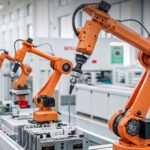
Global heavy industries are rapidly approaching a massive operational crisis. According to data from the Manufacturing Institute and international trade bodies, the global labor deficit in manufacturing, shipbuilding, and heavy logistics is projected to leave millions of critical roles unfilled by 2030. In industrial environments where the work is inherently hazardous, highly repetitive, and physically exhausting, reliance on human labor alone is becoming an unsustainable risk. While previous automation eras promised a future dominated by specialized stationary arms, the real-world built environment remains stubbornly unsuited for rigid machines.
The massive capital expenditures required to completely rebuild factories around fixed robots have stalled automation progress across heavy industry. True industrial evolution requires an entirely new approach: instead of redesigning the world to accommodate the machine, a new generation of engineering is designing machines capable of seamlessly navigating the world exactly as humans do.
The Flaw of Fixed Automation
Traditional industrial automation is fundamentally broken when applied outside pristine, highly controlled assembly lines. For decades, automation meant bolted-down robotic arms performing identical, sub-millimeter actions over and over. However, heavy industries such as shipbuilding, automotive assembly, and unstructured warehouse environments present a completely different set of challenges.
The primary friction points confronting modern industrial scaling include:
- Inflexible Facility Footprints: Heavy industrial sites are designed by humans, for humans. Forcing traditional automation into a shipyard or legacy manufacturing plant requires millions of dollars in facility redesigns, safety cages, and modified workflows.
- The Complexity of Specialized Tooling: Standard robots require unique end-effectors (custom robotic attachments) for every distinct task. Changing a process requires swapping out complex mechanical parts, stopping production lines, and rewriting low-level code.
- Severe Skilled Labor Shortages: Heavy fabrication environments feature extreme heat, confined spaces, and toxic fumes. Younger generations are choosing alternative career paths, leaving industries facing an aging workforce and skyrocketing recruitment costs.
Until recently, the market lacked an adaptable, mobile labor solution that could walk into an existing industrial ecosystem, pick up standard pneumatic or electric tools with human-like hands, and execute complex workflows without requiring a complete overhaul of the physical infrastructure.
From NASA Mission Control to the Factory Floor
Nicolaus “Nic” Radford is an established leader in advanced robotics, possessing over 25 years of experience architecting, scaling, and commercializing some of the world’s most sophisticated autonomous systems. As the Co-Founder and CEO of Persona AI, Radford is leveraging a deep background in space exploration and maritime tech to commercialize rugged, modularized humanoid robots for heavy industry.
Before launching Persona AI, Radford spent 14 years at NASA’s Johnson Space Center in the Dexterous Robotics Laboratory, where he served as Chief Engineer and Deputy Project Manager for revolutionary projects including Robonaut 2, the first humanoid robot deployed to the International Space Station. He later led NASA’s principal team in the DARPA Robotics Challenge, directing 55 engineers to build Valkyrie, one of the world’s first fully autonomous, rugged humanoid platforms designed for disaster relief. Following his tenure at NASA, Radford founded and took public Nauticus Robotics (NASDAQ: KITT), pioneering autonomous underwater vehicles capable of executing complex manipulation tasks in high-pressure subsea environments. His extensive technical lineage makes him uniquely equipped to bridge the gap between abstract artificial intelligence and heavy industrial application.
Decoupling Form from Biology
Radford’s journey into robotics was catalyzed by a realization that space and deep-sea exploration face identical constraints: harsh, unpredictable environments where human presence is highly restricted, yet complex physical tasks still need to be executed. During his early years at United Space Alliance as a robotics flight controller for the Space Shuttle payload systems, Radford witnessed how carefully human spaces had to be engineered to survive.
The true “lightbulb moment” occurred during his work on NASA’s Valkyrie robot. While observing how human workers operated in industrial facilities, Radford realized that the human body form is not just a biological consequence; it is the ultimate spatial blueprint. Every door, handrail, control panel, and steering wheel on Earth has been built around human proportions. Radford recognized that trying to automate the world using non-humanoid shapes required changing the world itself, which is far too expensive. By focusing on the humanoid form factor, engineers could unlock an immediate drop-in solution for global industrial labor shortages. This insight drove him to transition from government space exploration to high-growth, commercial industrial robotics.
The Anti-Stealth Engineering Strategy
Persona AI was established through an “anti-stealth” strategy designed to fundamentally challenge how deep-tech startups are built. Recognizing that developing humanoids is incredibly complex, Radford teamed up with co-founder Dr. Jerry Pratt, the former Chief Technology Officer of Figure AI and a fellow veteran of the DARPA Robotics Challenge ecosystem. Together with Co-Founder and CEO Jide Akinyode, an alumnus of NASA’s advanced dexterity programs and Nauticus Robotics, they structured Persona AI to prioritize rapid physical deployment over theoretical lab demonstrations.
Rather than operating in total secrecy, Radford publicly announced the company’s vision immediately to crowdsource top-tier global talent. The founding strategy focused on a few core milestones since their full operational kickoff:
- Establishing the Ecosystem: Persona AI anchored its core engineering operations at the Ion Innovation District in Houston, Texas, taking over a premier development center to sit at the intersection of heavy industrial manufacturing, energy, and maritime trade.
- Forming Strategic Partnerships: The company locked in landmark multi-year commercialization agreements with HD Hyundai, HD Korea Shipbuilding & Offshore Engineering (KSOE), and HD Hyundai Robotics, establishing a direct hardware generation pipeline specifically designed to deploy bipedal robotic labor into complex, unlined shipyard environments.
- Developing Modular Hardware Architecture: By utilizing advanced simulation environments like NVIDIA Isaac Lab and leveraging accelerated compute tools, Persona AI began building hardware platforms engineered specifically for rugged, real-world work.
Navigating the Deep-Tech Capital Squeeze
Building a humanoid robotics company in the mid-2020s means operating in an incredibly capital-intensive and competitive market. One of the primary hurdles Persona AI faced early on was avoiding the “hype cycle” of generative AI, where many companies showcased impressive digital reasoning but struggled with physical, real-world execution. Radford steered the company away from flashy, delicate lab demonstrations, focusing instead on ruggedizing systems to handle dust, moisture, vibration, heat, and impact.
To supercharge development without supply chain bottlenecks, Persona AI secured a massive $27 million oversubscribed Pre-Seed funding round backed by tier-one venture powerhouses including Founders Fund, Coatue Management, Index Ventures, Unity Growth, and Tides Ventures, building upon initial seed backing from SK Telecom. This immense financial runway allowed the company to rapidly scale its engineering team, utilizing advanced high-torque actuators and proprietary tactile hand designs to build highly durable industrial platforms, optimized for specialized configurations like “The Welder” and “The Fabricator”, to combat structural deficits in heavy manufacturing.
Orchestrating Mind and Muscle
Radford’s long-term vision is anchored in a profound technical truth: humanoids are a massive multidisciplinary puzzle. True differentiation does not come from the hardware alone or the AI brain alone; it comes from the seamless orchestration of both.
Persona AI distinguishes itself through three core technological pillars:
- True Universal Dexterity: Instead of using task-specific claws, Persona AI focuses on building advanced robotic hands. This design allows the humanoid to manipulate the exact same pneumatic wrenches, grates, levers, and material transport cases already used by human workforces.
- Adaptive Real-Time Reasoning: By leveraging the latest developments in foundational AI models, the robots do not rely on pre-programmed, static paths. They use real-time computer vision and spatial mapping to adapt to changing environments, avoiding obstacles and adjusting their grip based on an object’s weight and surface texture.
- Drop-In Workplace Interoperability: Because the platform matches human physical proportions, it can operate alongside human workforces without needing protective cages or customized factory lanes, preserving the existing workflow layout.
Radford estimates the addressable market for these systems to be in the trillions of dollars. By targeting heavy, unautomated fields like automotive manufacturing and shipbuilding first, Persona AI is positioning its humanoids where the labor shortage is most acute.
Decentralized Teams and Radical Autonomy
Radford’s corporate management philosophy is deeply influenced by his decades spent navigating high-stakes engineering cultures at NASA and public markets. He champions an egalitarian, highly decentralized approach to innovation. In an industry where specialized talent is scarce, Radford consciously structures equity and ownership to give early engineers a significant stake in the company’s success. He frequently states that constructing an operational humanoid requires a cohesive community, not just a standard corporate hierarchy.
His decision-making framework balances intense transparency with iterative execution. At Persona AI, this manifests as an open-source development mindset where hardware and software teams work in tight, concurrent loops. Radford encourages calculated risk-taking and fast failure in simulation, allowing the team to test thousands of design iterations in virtual sandboxes before committing capital to physical manufacturing. This collaborative, high-accountability environment empowers individual engineers to own entire subsystems, dramatically accelerating development timelines.
Forging the Next Industrial Era
The trajectory for Persona AI points toward an era where humanoids move completely out of research labs and straight onto factory floors. The company’s immediate roadmap focuses on deploying early-stage pilot fleets within heavy industrial facilities, validating how effectively the platforms can execute tasks like sandblasting, heavy lifting, and quality inspection alongside human colleagues.
Radford’s long-term legacy will be defined by his commitment to rethinking the relationship between humans and machines. As Persona AI continues to expand its development footprint, the company is building a platform designed to take over dangerous, unappealing tasks, allowing the human workforce to elevate into supervisory, analytical, and creative roles. By combining space-grade robotics precision with modern artificial intelligence, Radford is turning humanoid labor from an abstract concept into a practical industrial reality, a paradigm shift that The Boardroom Leaders will continue to track closely as automation redefines global corporate strategy.