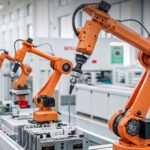



In the modern industrial landscape, the promise of total automation often crashes against the jagged reality of edge cases, those unpredictable, chaotic moments on a warehouse floor that algorithms simply cannot navigate. While the vision of a fully autonomous future has been sold for decades, the practical reliability required for 24/7 warehouse operations remains elusive. Enter the “Human-in-the-Loop” (HITL) paradigm. By bridging the gap between high-speed artificial intelligence and the nuanced, rapid decision-making of a human operator, Contoro Robotics is shifting the narrative from a total replacement of human labor to a powerful, reliable augmentation. This approach is not merely an incremental upgrade; it is the missing link that finally enables robots to handle the unpredictability of real-world logistics with the 99% reliability threshold required for commercial viability.
- Closing the Reliability Gap
- Meet Youngmok “Mok” Yun
- A Catalyst for Human-Centric Innovation
- Launching the Contoro Vision
- Navigating Growth and Industrial Scaling
- The Power of First Principles
- A Culture of Direct Leadership
- Architecting the Logistics Future
- Closing Perspective: A New Blueprint for Industrial Growth
Closing the Reliability Gap
The primary friction point in warehouse automation has long been the “last mile” of handling: the unloading of non-palletized, floor-loaded containers and trailers. Legacy automation has struggled significantly with this task due to the high variability in cargo shapes, orientations, and structural stability. When a traditional AI-powered system encounters a package that has shifted drastically in transit, the system frequently stalls.
In a high-throughput supply chain, these stoppages are catastrophic to efficiency. With global labor shortages tightening the margins of warehouse operators, the inability of legacy robotics to handle these frequent, unscripted disruptions has kept many businesses trapped in manual, labor-intensive workflows. The market has been crying out for a solution that provides the high-volume speed of industrial robotics without the fragility of pure software.
Meet Youngmok “Mok” Yun
Youngmok Yun, known to his colleagues and partners as “Mok,” serves as the CEO and Founder of Contoro Robotics, where he is actively redefining the relationship between robotics and human oversight. Mok is not a newcomer to the complexities of high-stakes automation. His professional trajectory is deeply rooted in engineering and research that bridge the divide between biological movement and mechanical precision. In 2016, while executing advanced robotics research at the University of Texas at Austin, Mok co-founded Harmonic Bionics to develop advanced neurorehabilitation solutions for upper-body movement disorders.
His early work leading the development of advanced rehabilitation robotics provided him with a unique, first-principles understanding of how to make robotics safe, responsive, and commercially viable. His research career is further distinguished by historical support from premier institutions, including NASA and the National Science Foundation.
A Catalyst for Human-Centric Innovation
Mok’s personal motivation is rooted in the conviction that technology serves humanity best when it removes the drudgery without discarding human intuition. His “lightbulb moment” occurred as he observed the disconnect between the rapid advancement of artificial intelligence and the stagnating real-world performance of industrial robots. He recognized that the obsession with “perfect” total autonomy was, ironically, the greatest barrier to actual warehouse implementation. Instead of viewing a human operator as a variable to be removed, Mok envisioned a symbiotic system where the human provides intuition and exception handling, while the robot provides consistent, tireless physical power.
This philosophy, that the best way to train an intelligent system is to embed it within human-led operations, became the foundation for Contoro’s unique approach to material handling.
Launching the Contoro Vision
The founding story of Contoro Robotics is one of rapid execution fueled by a commitment to solving the reliability problem from day one. By prioritizing an integrated human-in-the-loop teleoperation framework, the company bypassed the traditional pitfalls of R&D-heavy robotics startups that spend years in a lab before facing the chaotic environments of active shipping docks. The early strategy centered on building a robust system where remote operators can step in seamlessly from anywhere in the world the moment the AI encounters an edge case. This approach did not just create a functional product; it created a self-improving engine. Every time a human guides the robot through a complex unload, the AI observes and internalizes that specific data point, effectively accelerating the system’s own evolution toward full autonomy.
Navigating Growth and Industrial Scaling
Operating at the intersection of venture-backed innovation and heavy industrial hardware presents severe macroeconomic and operational hurdles. Scaling a robotic fleet requires more than just clean code; it requires a deep understanding of facility workflows, electrical infrastructure, and immediate economic returns. Contoro successfully overcame adoption barriers by deploying a zero-CAPEX, Robots-as-a-Service (RaaS) model where customers pay on a per-container or per-trailer basis.
The operational scale of this strategy has driven profound market traction. Contoro secured a $4.7 million Seed round, followed by a major $12 million Series A funding round featuring heavy strategic backing from industry titans, including the Amazon Industrial Innovation Fund, Coupang, and Doosan. This capitalization has fueled the expansion of their robotic fleet across major logistics nodes in California, Texas, Illinois, and New Jersey, processing between 300 and 650 cases per hour in active commercial operations.
The Power of First Principles
At the core of Contoro’s competitive edge is a highly specific, research-driven approach to physical manipulation. The company’s methodology relies on its patented DuoGrasp gripper, a specialized, two-sided mechanical end effector that allows the robot to firmly grasp a box from both the front and its sides simultaneously. This allows the system to effortlessly handle an extraordinary variety of boxes ranging from 8 inches to 30 inches in dimension and weighing up to 65–80 pounds, far exceeding the limitations of traditional vacuum-based grippers. This mechanical capability is managed by InteleOp, which uses its proprietary teleoperation interface to pair seamlessly with its AdaptAI software layer, which continuously generates collision-free paths from sensor-mapped container data.
A Culture of Direct Leadership
Mok’s internal corporate philosophy is characterized by a first-principles approach that trickles down through the entire organization. He manages his teams with an absolute focus on problem-solving speed and clear, evidence-based decision-making. By inviting systems engineers and product managers to participate directly in the deployment process at active client warehouses, he cultivates a corporate culture that is intensely practical rather than purely theoretical. The team is encouraged to engage with the dirt, noise, and real-world temperature variations of the loading dock, ensuring that the technology is not just advanced but genuinely resilient. This environment values the agility of a startup while maintaining the scientific rigor of an elite research institution.
Architecting the Logistics Future
The forward-looking roadmap for Contoro Robotics is centered on expanding the versatility of its AI-human interface. As the company continues its expansion into new geographical territories, its technical focus is shifting toward even higher levels of end-to-end automation, including the rollout of a dedicated companion palletizing solution designed to seamlessly move items from conveyor lines straight to warehouse storage racks.
As the global supply chain continues to grapple with labor volatility, high turnover, and demanding throughput targets, Contoro is positioned not just as a hardware manufacturer, but as the foundational layer of an increasingly automated, data-driven supply network. By maintaining their focus on the human-robot relationship, they are building an enterprise legacy defined by operational reliability, rapid commercial scalability, and a profound respect for the human labor that keeps the global economy moving.
Closing Perspective: A New Blueprint for Industrial Growth
The evolution of automated logistics offers a compelling masterclass in how leadership can fundamentally alter an industry’s trajectory by challenging its core assumptions. Rather than viewing human capability and machine intelligence as opposing forces, the strategic integration of both has unlocked a standard of supply chain reliability that was previously thought unattainable.
As we analyze the leaders redefining today’s corporate and technological landscape, the story of Contoro Robotics serves as a powerful case study for the executive community. Tracking these structural shifts in operational design, organizational philosophy, and market execution remains a core focus here at The Boardroom Leaders, where we examine the strategic decisions shaping the next era of industrial innovation. For executives looking to future-proof their operations, the takeaway is clear: the most sustainable breakthroughs occur not when we try to automate the human entirely out of the equation, but when we build technology that leverages human intuition at scale.