


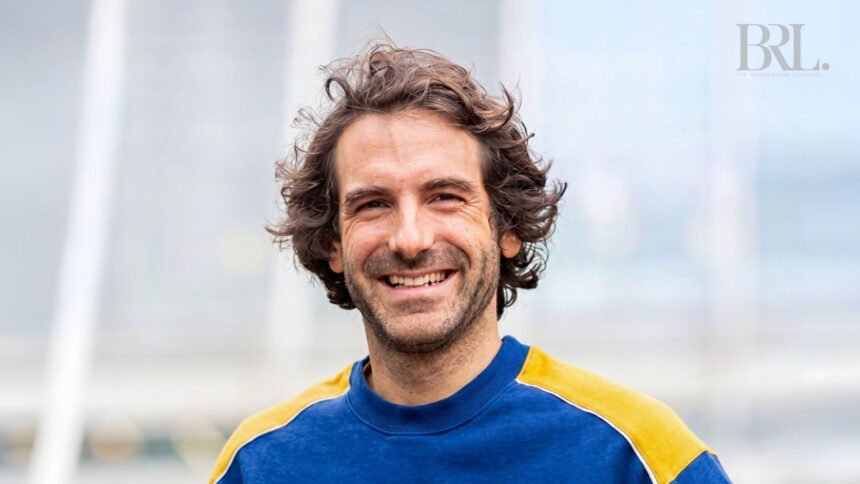
The modern culinary landscape is no longer defined solely by physical walls or white linens. Instead, it is being reshaped by high-speed data and the logistics of the “last mile.” At the center of this transformation is Taster, the London-founded, Paris-based powerhouse redefining what it means to be a food brand in the digital age. Led by Anton Soulier, a veteran of the delivery revolution, Taster is building a technological and cultural platform for the next generation of dining.
The Quality Gap in Digital Dining
For decades, the restaurant industry relied on footfall and physical hospitality. However, the rise of on-demand platforms like Deliveroo and Uber Eats fundamentally disrupted this model. Traditional restaurants often struggle to balance a busy dining room with a chaotic stream of delivery drivers. The result is a compromised experience: soggy food for the home diner and a frantic atmosphere for the guest eating in.
This inefficiency created a vacuum for a new kind of operator, one that treats delivery as the primary mission rather than a secondary chore. The industry faced a “quality gap” where food was rarely designed to travel, and the high overhead of prime real estate became a liability for chefs who simply wanted to get their product into people’s hands.
An Architect of the Delivery Era
Anton Soulier did not come from a traditional culinary background. A former KPMG professional with a sharp eye for operational complexity, Soulier’s trajectory changed when he joined Deliveroo as one of its first ten employees. As the Deputy General Manager for France, he witnessed the explosive growth of the platform and was instrumental in launching “Deliveroo Editions”, the world’s first major implementation of dark kitchens.
During this period, Soulier realized that while the infrastructure for delivery was maturing, the brands were lagging. They were traditional concepts trying to fit into a digital box. He believed that for delivery to succeed, brands had to be “digitally native”, built from the ground up to thrive in a delivery bag.
Lessons from a Fruitful Failure
Every entrepreneur has a “Plan A” that teaches them how to execute “Plan B.” For Soulier, an early venture into an organic fruit dessert brand provided the blueprint. While it didn’t reach a global scale, it taught him the brutal realities of food production and supply chains.
When he founded Taster in 2017, he wasn’t just creating a restaurant; he was solving the “soggy fry” problem. He envisioned a world where someone in a suburban neighborhood could access world-class street food, designed by top chefs, at the tap of a button. His motivation was fueled by the belief that home-delivered food should be just as exciting as a meal served in a trendy bistro.
Engineering the Digital Kitchen
Taster began its journey in Paris. Unlike traditional restaurants, Soulier didn’t look for high-street storefronts. Instead, he moved into “light industrial” spaces, efficient, high-tech kitchens located near residential clusters but without the heavy rent of retail spaces.
The building of Taster focused on three distinct pillars:
- Culinary Innovation: Soulier partnered with Michelin-starred chefs to create menus that prioritized “travelability.” Every dish, from the Korean fried chicken of Out Fry to the smash burgers of Starsmash, was tested for how it maintained texture during a 20-minute bike ride.
- Proprietary Technology: Taster developed a software suite to manage demand forecasting and inventory. This technology allows kitchen teams to know exactly how much to prep, reducing waste and ensuring orders are ready the moment a rider arrives.
- The Creator Economy: Recognizing that today’s tastemakers are on social media, Taster collaborated with influencers to launch brands like Pepe Chicken (with FastGoodCuisine). This taps into pre-existing, loyal audiences, bypassing traditional marketing costs.
Pivoting for Massive Growth
Scaling a food business across France, the UK, Belgium, and Spain required navigating diverse regulations. The company’s most significant pivot came in its expansion strategy. While initially operating its own kitchens, Taster transitioned into a high-growth franchise model.
Today, Taster operates as a platform for “kitchen entrepreneurs.” Local restaurant owners can partner with Taster to run these digital brands out of their existing facilities. This asset-light approach has allowed Taster to expand into over 150 locations. In recent years, the company has surpassed the milestone of 8 million meals delivered annually, with top-performing partners generating significant yearly revenue.
The Synergy of Data and Taste
Soulier’s expertise lies in bridging the gap between “Silicon Valley” logic and “Kitchen” reality. He views Taster as a data company that sells food. By analyzing millions of data points from delivery platforms, Taster identifies “white spaces” in specific neighborhoods, areas where there is high demand for a specific cuisine but low supply.
This vision has expanded his influence into the financial side of the industry. Having experienced the complexity of scaling, Soulier also co-founded Alpa, a financial layer designed to help multi-location restaurant operators manage their real-time finances. This dual focus on the kitchen and the ledger makes him one of the most influential figures in modern food-tech.
Values Rooted in Resilience
Anton Soulier’s leadership style is heavily influenced by the philosophy of “Let My People Go Surfing” by Yvon Chouinard. He promotes a culture of high standards and low ego. At Taster, the mantra is “We grow together,” reflecting the relationship between the corporate team and the franchise partners.
Soulier is an advocate for “failing forward.” He encourages his team to experiment with new recipes and tech features, knowing that in the fast-paced world of food-tech, standing still is the only true risk. His personal balance comes from surfing, a hobby that requires the same patience and respect for shifting environments that he applies to his business ventures.
The Horizon of Modern Dining
As of mid-2026, the outlook for Taster is one of sustainable, aggressive expansion. With over $60 million in capital raised from investors like Battery Ventures and Octopus Ventures, the company is focused on reaching total profitability while deepening its technological moat.
The future of Taster involves even deeper integration of AI for hyper-local demand forecasting and potentially moving into hybrid “phygital” spaces, kiosks, and digital-first storefronts that blur the line between online and offline. Under Soulier’s guidance, Taster is not just a collection of brands; it is the blueprint for how the world will eat for decades to come. By prioritizing quality and empowering local entrepreneurs, Anton Soulier is ensuring the digital dining revolution remains delicious.