

The global race to reverse the climate curve is no longer just about deploying wind turbines and solar panels. The true challenge lies in what happens when the wind dies down, the sun sets, or the electrical grid becomes too congested to handle the load. While many corporate leaders talk about reaching net-zero carbon emissions by the middle of the century, a quiet energy revolution has been brewing in Northern Europe. At the center of this movement is a company that chose not to build complete consumer energy systems, but instead to master the single most critical, high-tech component required to make green hydrogen and clean electricity viable on a global scale. By focusing entirely on perfecting solid oxide technology, this venture has turned complex electrochemistry into a highly scalable commercial reality. The strategy bypasses the high costs of traditional manufacturing, opening a clear path to true energy independence.
- The Limits of Today’s Green Infrastructure
- A Pioneering Visionary from Estonia
- Driven by Efficiency and Independence
- Engineering the Core of the Hydrogen Economy
- Navigating the Road to Commercial Scale
- Unmatched Technical Expertise
- A Leadership Built on Collaboration and Execution
- Expanding Globally to Support Emerging Industries
The Limits of Today’s Green Infrastructure
Traditional energy systems rely heavily on fuel combustion, a process that is inherently inefficient and produces massive amounts of harmful pollutants. For decades, the internal combustion engine and fossil-fuel-fired power plants have formed the backbone of global industry. However, as the world demands rapid decarbonization, the limits of legacy infrastructure are becoming painfully obvious.
When nations invest billions into wind and solar installations, they quickly hit a major bottleneck: intermittent supply. Grids become stuck or overloaded during peak production times, yet face severe shortages when weather conditions change. To bridge this gap, the world desperately needs a way to store excess renewable energy and convert it back into electricity without burning fossil fuels.
Green hydrogen has emerged as the most promising solution, but producing it efficiently has been a massive technical hurdle. Most conventional systems operate at extreme temperatures or rely on expensive, rare materials that make large-scale deployment economically impractical. Without a highly efficient, cost-effective technology to handle the conversion between electricity and hydrogen, the transition to a clean energy economy remains stuck in second gear.
A Pioneering Visionary from Estonia
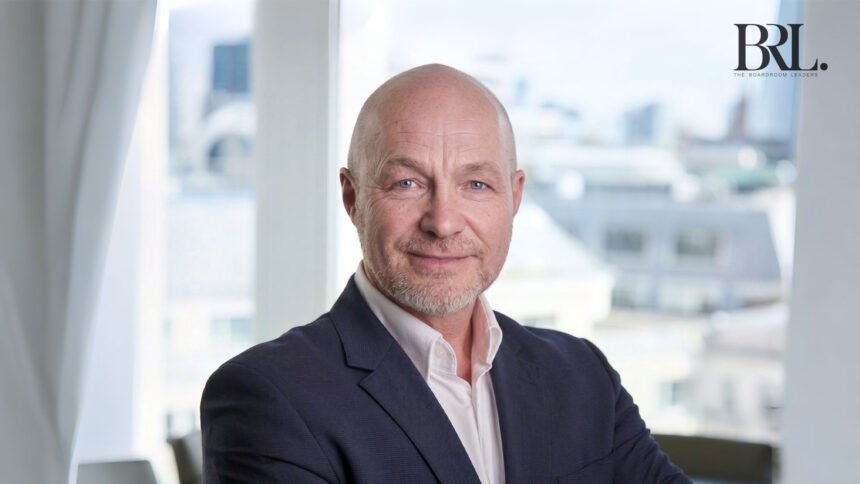
Enn Õunpuu, the founder and CEO of Elcogen, saw these systemic flaws long before clean energy became a mainstream investment trend. Born in February 1961, Õunpuu combined a sharp entrepreneurial mindset with a deep appreciation for his home country’s scientific legacy. Estonia possesses a remarkably strong heritage in the field of electrochemistry, a branch of science that explores the relationship between electricity and identifiable chemical changes.
Recognizing that academic research often stayed confined to university laboratories, Õunpuu set out to bridge the gap between pure science and industrial application. In 2001, he established Elcogen AS in Tallinn, Estonia. His objective was clear but incredibly ambitious: to take solid oxide fuel cell (SOFC) technology out of the research phase and transform it into a world-leading commercial product. Over the next twenty-five years, his steady guidance transformed a small, research-focused Baltic operation into an international cleantech powerhouse.
Driven by Efficiency and Independence
Õunpuu’s personal motivation stemmed from a basic engineering realization: burning things for fuel is an outdated and wasteful practice. He saw that solid oxide technology held an untapped potential to deliver a high-efficiency alternative to combustion-based energy generation. Rather than chasing short-term market trends or jumping into crowded consumer energy sectors, Õunpuu chose to focus on the core components.
His drive was further intensified by global geopolitical shifts and structural vulnerabilities in energy markets. He firmly believed that global energy independence could only be achieved if industries had access to secure, sustainable, and highly localized energy production. This philosophy shaped Elcogen’s corporate purpose: to act as the literal bridge for the green energy transition by manufacturing components that make every single drop of fuel and unit of electricity count.
Engineering the Core of the Hydrogen Economy
Building Elcogen required an unyielding commitment to long-term research and development. From the very beginning, the company aligned with premier academic institutions, most notably the University of Tartu. This deep collaboration allowed Elcogen to master the delicate chemical and structural design of solid oxide cells.
Instead of trying to manufacture entire end-user products, like complete vehicles or massive power stations, Elcogen adopted a distinct, component-based business model. The company focuses entirely on producing three core proprietary products:
- elcoCell®: Highly efficient solid oxide cells that serve as the fundamental unit where the electrochemical reaction takes place.
- elcoStack®: Layers of cells combined into a robust unit to scale up power output.
- elcoModule®: Pre-assembled stack systems designed for easy integration into larger industrial systems.
By selling these high-performance cells, stacks, and modules to third-party system integrators, Elcogen established a diversified, lower-risk revenue stream. Their components are engineered to work in two distinct modes: fuel cell mode (SOFC) to generate emission-free electricity from fuels, and electrolysis mode (SOEC) to split water into affordable green hydrogen using renewable electricity.
Navigating the Road to Commercial Scale
The journey from a laboratory concept to an industrial manufacturing leader was filled with demanding milestones. After nearly a decade of intense development, Elcogen achieved a critical breakthrough in 2010 by launching its first pilot production line and completing its initial customer deliveries. To expand its technological capabilities, Elcogen OY was established in Finland in 2009, creating a dedicated research center of excellence focused on advanced solid oxide stack development.
As the company grew, it consistently proved the real-world viability of its products across stationary power generation, industrial microgrids, data centers, and maritime auxiliary power units. These technological triumphs translated into massive commercial scaling. Elcogen has raised substantial capital to fund its industrial expansion, including a €45 million strategic investment from heavy-industry giant HD Hyundai, a €24.9 million grant from the European Union Innovation Fund, and investments from partners like Baker Hughes.
This commercial momentum has culminated in the company’s landmark scale-up project: the “ELCO I” manufacturing facility in Tallinn. Designed as a state-of-the-art, highly automated factory, this facility serves as Elcogen’s flagship model to drive production capacity up toward 360 megawatts. The ongoing phased expansion into this landmark site transitions the company from pilot-scale assembly into large-scale delivery for global partners.
Unmatched Technical Expertise
What sets Elcogen’s technology apart from global competitors is an incredible breakthrough in operating temperatures. Most conventional solid oxide technologies require extreme temperatures ranging from 700°C to 850°C to function, which demands expensive, highly specialized materials and accelerates system wear. Elcogen’s advanced technology operates at a significantly lower temperature range of 600°C to 750°C.
This lower operating temperature allows system integrators to use far more cost-effective materials, drastically reducing operational and capital costs. Despite the lower temperature, Elcogen’s components maintain industry-leading performance. When utilized for power generation, they deliver an electrical efficiency of up to 75%. When the surrounding industrial infrastructure captures and utilizes the generated waste heat, the total system efficiency skyrockets to an incredible 90%. In electrolysis mode, the system produces green hydrogen with an outstanding efficiency of just 33 kWh/kg.
A Leadership Built on Collaboration and Execution
While Enn Õunpuu steers Elcogen’s strategic execution and day-to-day operations as Chief Executive Officer, the corporate governance is anchored by Christopher Nash, who serves as the Independent Executive Chairman of the Board. Together, they have fostered a corporate culture rooted in scientific excellence, open collaboration, and lean execution. Today, Elcogen employs a highly diverse workforce across its corporate headquarters and R&D centers in Estonia and Finland.
The management team reflects this high-caliber focus, balancing deep scientific knowledge with mass-manufacturing expertise. The technology roadmap is steered by Chief Technology Officer Jan Gustav Grolig, an expert with over 15 years of multidisciplinary expertise in hydrogen and electrochemical energy technologies. On the operational and financial fronts, the bench features Chief Operations Officer Stefano Piscitelli, who previously played a pivotal role in delivering Northvolt’s battery Gigafactory, alongside interim Chief Financial Officer Andrew Foster and Group General Counsel Sara Leclerc.
Expanding Globally to Support Emerging Industries
As the energy landscape accelerates, Elcogen’s future outlook is fixed on rapid global expansion. The company has moved aggressively into the fastest-growing energy markets in the world, establishing a powerful footprint across Europe, the Asia-Pacific region, and China.
A major focus for the company is the rapid rise of data centers, one of the most power-constrained and fastest-growing sectors globally. Because data center operators face long grid connection queues and rising electricity demands, they are turning to Elcogen’s solid oxide fuel cell platforms to deploy highly resilient, on-site, low-emission power generation.
To capitalize on the booming energy needs of industrializing economies, Elcogen continues to cultivate strategic partnerships across India and the wider APAC region. This expansion has yielded massive results, including a strategic Memorandum of Understanding (MoU) with JNK India Limited and clean energy deployment collaborations with Bonicorn and Eltronic PtX in Thailand. By maintaining a CAPEX-light business model and focusing entirely on supplying the world’s most efficient core components, Enn Õunpuu and Elcogen are successfully transitioning from an innovative Baltic venture into an indispensable cornerstone of the global green economy.