
The wealth management industry is experiencing a profound shift. Financial advisors are no longer just picking stocks; they are expected to act as comprehensive financial therapists, tax strategists, and estate planners. Yet, as client demands grow more complex, the backend technology powering these advisory firms remains stubbornly fragmented. Independent financial advisors frequently find themselves trapped in an administrative nightmare, spending hours wrestling with legacy software, manual billing spreadsheets, and disjointed trading systems.
- The Operational Bottleneck in Modern Wealth Management
- The Athlete Executive at the Helm
- From the Back Office to a Vision for Change
- Constructing a Unified FinTech Infrastructure
- Navigating Scale and Winning the Backing of Wall Street
- Democratizing the Private Markets
- Executive Strategy Rooted in Team Dynamics
- The Next Era of Wealth Technology
This operational bottleneck drains a firm’s most valuable resource: face-to-face client time. The traditional solution has been to outsource investments to a Turnkey Asset Management Platform (TAMP). However, legacy TAMPs often force advisors into rigid, pre-packaged portfolios, stripping away the customization that independent firms pride themselves on. The industry reached a point where it desperately needed a platform that combined the operational relief of a traditional TAMP with the total flexibility of cutting-edge, customizable software.
The Operational Bottleneck in Modern Wealth Management
Registered Investment Advisors (RIAs) face an uphill battle. The independent advisory market has expanded rapidly as professionals leave major Wall Street brokerages to start their own practices. While this independence grants them the freedom to serve clients without corporate constraints, it also thrusts them into the role of chief technology officer, compliance officer, and operations manager.
The typical independent firm patches together five or six distinct software programs: one for client relationship management (CRM), another for portfolio accounting, a third for performance reporting, a separate portal for billing, and yet another for executing trades. This fragmented setup introduces massive data errors, increases compliance risks, and consumes hours of administrative labor.
When a client wants to shift their investment strategy, such as incorporating alternative assets like private equity or adjusting for tax efficiencies, the manual labor required to execute that change across hundreds of accounts can bring an RIA’s growth to a grinding halt. The core problem is clear: advisors cannot scale their businesses when they are buried under back-office logistics.
The Athlete Executive at the Helm
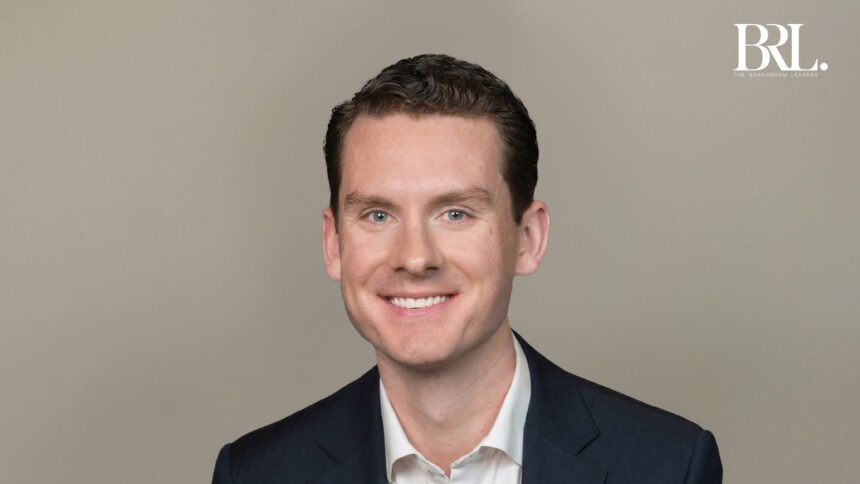
Enter Colin Falls, the CEO of GeoWealth. Standing at the intersection of enterprise software development and wealth management, Falls brings a unique competitive background to the financial technology (FinTech) landscape. Before he was navigating venture funding rounds and corporate boardroom strategies, Falls was a standout NCAA Division I athlete.
As a shooting guard and captain for the University of Notre Dame basketball team, he earned First Team All-Big East honors and set historical records for the most three-point field goals made in Notre Dame history, finishing his collegiate career with 331 successful three-pointers. Following his time at Notre Dame, he played basketball professionally in Europe, competing in top-tier leagues across Italy and the Czech Republic.
Transitioning from professional sports to corporate finance, Falls entered the wealth management space by working on the front lines of an actual RIA. He joined Frontier Wealth Management, a firm based in Kansas City, where his responsibilities spanned from client advisory services straight down into deep back-office operations. This hands-on experience proved crucial. Falls didn’t just study the pain points of financial advisors from a corporate distance; he lived them. He experienced the frustration of system crashes during market volatility, the tediousness of quarterly client billing cycles, and the friction of onboarding new clients using outdated tools.
From the Back Office to a Vision for Change
Falls’ move from the trading desk to FinTech leadership was driven by a distinct realization: the wealth management industry was building software backward. Most developers designing tools for financial advisors had never actually sat in an advisor’s chair. They built elegant code that failed to account for the chaotic, fast-moving realities of managing real human wealth.
When Falls joined GeoWealth in 2012, the company was in its earliest stages. He recognized that the platform had the foundational engine required to solve the core operational problems he had experienced firsthand. His personal motivation became centered on a clear objective: giving advisors their time back. Falls believed that if a technology platform could automate data reconciliation, client billing, and trade execution within a single dashboard, advisors could shift their energy away from administrative maintenance and toward building deeper client relationships. This philosophy transformed GeoWealth from a standard software vendor into a highly customized, partner-driven enterprise platform.
Constructing a Unified FinTech Infrastructure
Building GeoWealth into a major industry player required a radical departure from the standard TAMP model. Historically, TAMPs operated as closed loops; advisors surrendered their portfolio control in exchange for operational outsourcing. Falls and his engineering team chose to build an open-architecture platform anchored by a proprietary portfolio accounting engine.
The core of GeoWealth’s technological breakthrough is its advanced Unified Managed Account (UMA) framework. This specialized account structure allows a financial advisor to place entirely different types of investment vehicles, ranging from traditional mutual funds and liquid Exchange-Traded Funds (ETFs) to complex private equity allocations and custom direct indexing strategies, into a single, consolidated client account. Instead of generating five separate statements and managing five distinct billing schedules for one client, GeoWealth unifies the entire portfolio structure. This allows individual RIAs to design, trade, and rebalance highly personalized portfolios at scale, eliminating the manual administrative burdens that typically come with high-net-worth account management.
Navigating Scale and Winning the Backing of Wall Street
Growth for a young FinTech enterprise is rarely linear. In its early days, GeoWealth had to convince established, risk-averse advisory firms to trust a younger, independent platform with billions of dollars in client assets. To win that trust, Falls focused heavily on institutional-grade stability and security, scaling the platform’s processing capacity while expanding its service and onboarding support infrastructure.
The success of this strategy is clearly reflected in the company’s fundraising history and asset growth. Rather than pursuing traditional, short-term private equity buyouts that could compromise the company’s product direction, Falls structured highly strategic capital partnerships. The firm’s family office owner, The Globe Resources Group, maintains majority ownership, providing long-term structural stability. Meanwhile, GeoWealth has systematically drawn minority growth investments from the world’s largest institutional financial giants.
The platform secured its Series A investment from J.P. Morgan Asset Management in 2018, followed by a $19 million Series B funding round led by Kayne Anderson Capital Advisors in 2021. Growth accelerated rapidly in 2024 with an $18 million round led by BlackRock to expand UMA capabilities. By 2025, the firm closed a $38 million Series C funding round led by Apollo Global Management, culminating in a recent $42.5 million Series C Extension round funded directly by Goldman Sachs Asset Management.
This deliberate capital structure has triggered explosive growth on the platform. Between 2022 and 2025, GeoWealth achieved a remarkable annualized growth rate of over 48%, bringing in an inflow of $29 billion in platform assets over that brief three-year window. This rapid ascent established GeoWealth as the sixth fastest-growing TAMP in the United States, pushing its total platform assets to an impressive $49 billion.
Democratizing the Private Markets
Under Falls’ executive leadership, GeoWealth has established itself as an industry innovator by bringing institutional-grade investment strategies down to the retail advisory market. Historically, alternative investments like private credit, venture capital, and real estate were restricted to massive institutional funds or ultra-high-net-worth family offices due to complex compliance requirements and fragmented reporting.
To break down these barriers, GeoWealth launched an industry-leading Private Model Marketplace. Through strategic product collaborations with institutional powerhouses, the platform has fundamentally changed how independent RIAs build portfolios. The BlackRock partnership built a first-of-its-kind framework enabling advisors to easily access and integrate public-private model portfolios into standard retail accounts. Simultaneously, a close alliance with J.P. Morgan expanded custom model portfolio capabilities, allowing smooth cross-market execution across public equity and private asset exposures.
To deepen advisor access to institutional private credit and alternative asset models, GeoWealth integrated directly with Apollo Global Management, embedding complex private allocations straight into the standard UMA architecture. Finally, the partnership with Goldman Sachs Asset Management allowed high-growth enterprise RIAs to build highly bespoke, open-architecture portfolios tailored specifically for high-net-worth clients. These integrations ensure that while the underlying assets are highly sophisticated, the advisor’s operational workflow remains completely unified. Rebalancing an account that holds both an S&P 500 ETF and a private credit fund can now be executed seamlessly through a single interface, removing the traditional operational hurdles of alternative investing.
Executive Strategy Rooted in Team Dynamics
Colin Falls’ corporate leadership style is deeply informed by his years as an elite athlete and team captain. In the technology sector, executives often fall into the trap of managing purely by spreadsheet metrics. Falls balances data-driven results with an intense focus on organizational health and human capital.
He views GeoWealth not as a static software product, but as a collaborative service team built to solve complex problems. This approach has shaped a culture where product engineers work directly alongside financial professionals, ensuring that new code is immediately tested against real-world advisory challenges. Falls emphasizes transparency and long-term autonomy, intentionally maintaining majority family office backing to insulate his product and client service teams from the short-term, high-pressure demands of traditional venture capital cycles. This balanced structure gives the global team the operational freedom to build tools tailored directly to long-term advisor success.
The Next Era of Wealth Technology
The modern wealth management industry has officially passed the point where technology and portfolio management can exist as separate silos. Managed accounts are no longer an emerging trend for forward-looking firms; they are the baseline operational requirement for any modern advisory practice.
As GeoWealth eyes the future, the company is using its recent $42.5 million capital injection from Goldman Sachs Asset Management to double down on product engineering and client service infrastructure. The strategic goal is clear: expanding the depth of the UMA platform to handle advanced automated tax-loss harvesting, algorithmic direct indexing, and even deeper alternative asset integration. With a strong foundation of $49 billion in platform assets, institutional validation from Wall Street’s largest firms, and an independent corporate structure, GeoWealth is exceptionally well-positioned to drive the next generation of wealth tech.
Under Falls’ steady leadership, the company continues to break down the barriers between institutional asset management and independent financial advisors, proving that real scale is achieved by making the complex simple. For observers here at The Boardroom Leaders, the trajectory of GeoWealth serves as a definitive case study in modern executive strategy: a testament to how specialized operational experience, when paired with structured institutional backing, can fundamentally reshape a legacy industry from the ground up.