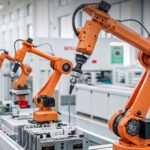



Out of the approximately five million industrial robotic arms deployed across global factory floors today, a staggering majority operate with zero real-world intelligence. For decades, the backbone of modern manufacturing has relied on rigid, sixty-year-old procedural programming methods. Under this traditional approach, a robotic arm operates down to the millimeter but remains completely oblivious to its surroundings. If a part sits skewed by a fraction of an inch, or if a rogue piece of debris blocks its predetermined path, the machine fails, the line stops, and production targets collapse. In modern manufacturing, a 95% success rate is a total failure; if a robot misses its mark just once out of twenty times, the downstream operational disruption negates the entire value of automation.
- The Billion-Dollar Friction of Hard-Coded Automation
- The Academic Pioneer Shifting the Industrial Balance
- From Laboratory Discovery to the Realities of the Shop Floor
- Validating the Blueprint Through Five Hundred Conversations
- Compressing Scale and Breaking Capital Records
- Acteris and the Evolution of Model-Defined Skills
- Balancing Technical Innovation with Shop-Floor Pragmatism
- The Autonomous Enterprise Era
- Editorial Retrospective: Mapping the Frontier of Physical AI
The industry stands at a critical inflection point as factories grapple with high-mix, low-volume production where products and part specifications change constantly. Historically, adapting an assembly line to a new product line required months of custom integration, specialized code rewriting, and costly downtime. The barrier to agile manufacturing has never been the physical hardware; it has always been the immense software burden required to make machines adapt to real-world variability.
The Billion-Dollar Friction of Hard-Coded Automation
The economic friction governing industrial automation stems directly from a structural bottleneck: automation is fundamentally code-defined rather than model-defined. In traditional manufacturing facilities, an integrator’s commercial value is trapped in the countless hours spent hard-coding a robot to perform a single, unvarying task. Every changeover, new part variation, or minor floor adjustment triggers an extensive manual reprogramming project.
This legacy blueprint introduces severe operational challenges across four main areas:
- Extended Deployment Cycles: Bringing a new robotic cell online typically demands months of custom programming, physical debugging, and trial runs, severely delaying time-to-value.
- Prohibitive Changeover Costs: Shifting from manufacturing one part model to another requires manufacturers to pay specialized integrators to write new deterministic scripts, turning small production shifts into capital-intensive initiatives.
- Fragile Runtime Performance: Traditional automation breaks down the moment real-world shop conditions diverge from the original codebase, resulting in costly manual interventions.
- The Skills Deficit: Operational teams on the factory floor rarely possess advanced robotics engineering degrees, creating a permanent dependency on external software contractors for basic operational updates.
The Academic Pioneer Shifting the Industrial Balance
Stepping directly into this technical vacuum is Dr. Asad Tirmizi, the co-founder and CEO of Trener Robotics. Dr. Tirmizi represents a new breed of deep-tech executives who bridge the gap between abstract algorithmic theory and heavy industrial application. Before spearheading Trener, Tirmizi spent fourteen years deeply embedded in robotics systems research, developing the technical foundations that would eventually reshape how heavy machinery interacts with unstructured environments.
Holding a PhD focused on enabling machines to sense, plan, and autonomously act in volatile conditions, Tirmizi’s early research examined how deep learning could be tightly integrated directly into the robotic control stack. His subsequent professional tenure, including a high-impact role as a Research Scientist at tech giants like ByteDance, sharpened his perspective on scaling massive machine learning models. Together with co-founder and CTO Dr. Lars Tingelstad, a prominent robotics expert from the Norwegian University of Science and Technology (NTNU), Tirmizi established the venture to convert highly sophisticated Physical AI into an accessible, robust industrial utility.
From Laboratory Discovery to the Realities of the Shop Floor
The catalyst for Trener Robotics did not stem from a sudden marketing epiphany, but rather from a deliberate, data-driven realization inside the research lab. Over years of experimentation, Tirmizi and his research colleagues realized that while the broader artificial intelligence sector focused entirely on digital agents, large language models, and virtual environments, the massive physical world of manufacturing remained trapped in a deterministic, script-bound past.
Tirmizi’s lightbulb moment occurred when observing how standard academic AI models collapsed when subjected to dirty, real-world conditions. A vision model that boasted flawless classification metrics in a pristine lab setting would fail immediately when confronted with the reflective sheen of industrial metal, fluctuating factory lighting, or a layer of grease on a component. Tirmizi recognized that to build truly autonomous machines, the industry needed an AI stack that combined vision, linguistics, and haptics into specialized, pre-trained “Physical AI skills.” The goal was clear: instead of programming a robot exactly how to move, operators should be able to tell a robot what to achieve, allowing the machine’s internal intelligence layer to figure out the optimal physical path.
Validating the Blueprint Through Five Hundred Conversations
Turning deep tech into a sustainable commercial business required an aggressive validation strategy. Moving away from stable, prestigious academic and corporate careers, Tirmizi and Tingelstad took a calculated risk to launch the company in 2024 under its original name, T-Robotics. Rather than retreating into isolation to build a product based on assumptions, the founders initiated one of the most exhaustive customer discovery processes in recent robotics history.
Before writing a single line of production code, the founding team interviewed between 60 and 70 target manufacturing companies, eventually speaking directly with nearly 500 operators, plant managers, and executives across the industry. This extreme focus on listening allowed them to bypass the typical pitfalls of technical founders who build sophisticated software looking for a problem.
The market insights gathered from these 500 conversations helped the founders execute a highly focused beachhead market strategy:
- Ruthless Niche Focus: While the underlying AI model was capable of powering over a hundred different robotic workflows, they ignored easy, low-complexity wins like basic warehousing picking to focus exclusively on CNC machine tending, the process where robots load and unload high-precision metal parts from computer numerical control mills.
- Solving the Hardest Problem First: CNC machine tending represented a massive industrial bottleneck defined by unstructured, dirty environments, sharp metal chips, and extreme precision requirements.
- The Power of Pre-Integration: Understanding that manufacturers buy outcomes rather than raw software, they established rapid alliances with fifteen major solution and integration partners across Europe and the United States to deploy complete, turnkey, pre-integrated robotic cells.
Compressing Scale and Breaking Capital Records
By establishing a dominant position in a highly specific industrial niche, the business unlocked an extraordinary trajectory of capital efficiency and scale. The company rapidly expanded its geographic footprint, establishing dual international headquarters in San Jose, California, and the engineering hub of Trondheim, Norway. This allowed the firm to simultaneously tap into Silicon Valley’s top-tier AI talent and Europe’s rich industrial automation ecosystem.
In February 2026, the company officially rebranded as Trener Robotics to signal its global market expansion and completed a record-breaking $32 million Series A funding round. This milestone brought the firm’s total capital raised to date to over $38 million. Co-led by elite deep-tech venture firms Engine Ventures and IAG Capital Partners, the round also featured strategic backing from industry giants like Cadence Design Systems, Geodesic Capital, and Nikon Corporation. The funding round arrived on the heels of major commercial validation, as Trener secured partnerships with three of the five largest robotic Original Equipment Manufacturers (OEMs) globally, effectively gaining software access to a massive global install base.
Acteris and the Evolution of Model-Defined Skills
At the absolute center of Trener Robotics’ competitive moat is its proprietary software platform, Acteris. Acteris serves as an intelligent software-defined layer in the factory stack, effectively transforming standard robotic arms from ABB, Universal Robots, and FANUC into autonomous, self-learning operators.
Instead of treating automation as a series of rigid code loops, Acteris utilizes multimodal foundation models trained on large datasets composed of human demonstrations, real-world robotic trials, and physical industrial simulations. The technical shift delivered by Acteris redefines the workflow entirely; where traditional frameworks rely on fixed, brittle instruction loops, this platform introduces an adaptive layer capable of automated path correction. The system infuses machinery with operational common sense, delivering high-fidelity simulation, advanced part identification under adverse conditions, and intelligent collision avoidance.
The practical impact of this methodology was vividly illustrated during an early deployment involving a routine chip blow-off step in a machining cell. While traditional programming would simply dictate an identical, repetitive blast of air, the Acteris platform autonomously detected that stubborn metal chips were still adhering to the fixture, which would prevent the next metal part from seating correctly. Without any pre-programmed “if-then” logic written by a human, the model independently recognized that the ultimate goal was a clean surface, causing the robot to autonomously hit the jig with an additional blast of air from an entirely different angle.
Balancing Technical Innovation with Shop-Floor Pragmatism
Dr. Asad Tirmizi’s internal corporate philosophy rejects the typical tech-startup trope of moving fast and breaking things. In the industrial world, breaking things translates to millions of dollars in destroyed machinery and halted supply chains. Tirmizi has carefully cultivated an organizational culture that balances high-level algorithmic innovation with strict operational pragmatism.
To bridge this cultural gap, Trener intentionally structures its product engineering around a productive tension between theoretical AI capabilities and practical shop-floor realities. Tirmizi ensures that software engineers regularly spend time on physical factory floors alongside traditional machinists. This leadership approach ensures that the resulting software remains highly functional, reliable, and accessible to non-technical staff. Tirmizi’s decision-making frameworks prioritize long-term, repeatable fleet reliability over flashy, short-term software updates, establishing a corporate culture where engineering triumphs are measured strictly by customer uptime.
The Autonomous Enterprise Era
The broader shift from rigid, program-driven manufacturing to dynamic, model-defined production is rapidly becoming irreversible. Under Tirmizi’s stewardship, Trener Robotics is steering the manufacturing world toward an ultimate end-state: a shop floor where traditional software programming is completely obsolete. In this future paradigm, a human operator simply shows the robotic fleet a new part, states the operational objective in natural language, and the system autonomously calculates how to run the line.
The business implications of this evolution are transformative. By stripping away the development time, changeover costs, and engineering constraints that have limited industrial robotics for over half a century, Trener is turning the factory floor into an asset that actively increases its efficiency over time. As factories transition to software-defined models capable of launching entirely new product lines in days rather than months, the legacy methods of manufacturing are quickly giving way to an era of truly flexible automation.
Editorial Retrospective: Mapping the Frontier of Physical AI
Tracking the intersection of leadership and deep tech reveals a clear pattern: the executives shaping the next decade are those who anchor complex engineering to the unforgiving realities of commercial scale. Dr. Asad Tirmizi’s work at Trener Robotics highlights a fundamental truth for modern industrial strategy: innovation without absolute operational reliability is just expensive experimentation.
As an ongoing study of market-defining leadership, this exploration reflects our core editorial focus at The Boardroom Leaders. In analyzing the strategic frameworks behind the world’s most critical deep-tech ventures, our publication aims to bring executives the nuance required to understand not just where technology is moving, but how it transforms physical infrastructure. The future of manufacturing is being written by those who dare to make machines think, and understanding that blueprint is essential for anyone leading from the modern boardroom.