


In the hyper-accelerated landscape of artificial intelligence, where multi-billion-dollar enterprises race to hoard raw compute, a different kind of progress is unfolding. It isn’t being driven by the construction of massive, opaque data centers, but by a fundamental shift in how developers interact with the models themselves. As AI adoption shifts from speculative experimentation to everyday functional utility, the industry faces a paradoxical wall: while open-weight models are becoming exponentially more powerful, the underlying infrastructure required to run them remains remarkably complex, prohibitively expensive, and heavily gated by centralized technology monopolies.
The gravity of this bottleneck is evident in the sheer economics of the market. Companies building agentic workflows regularly burn through millions of dollars simply keeping GPUs “warm” or idle to prevent cold-start latencies. This massive infrastructure tax means that true innovation is frequently stifled not by a lack of software ingenuity, but by the physical and fiscal realities of the hardware plumbing. Featherless AI is actively dismantling this wall, architecting a serverless future where the barrier to entry for deploying enterprise-grade open-source AI drops from a multi-million-dollar capital expenditure to a simple, highly scalable API call.
The Bottleneck of Innovation
The contemporary AI ecosystem is defined by a massive friction point that developers colloquially refer to as “token anxiety” and infrastructure exhaustion. For years, engineers attempting to deploy open-source Large Language Models (LLMs) faced a harrowing, binary choice. On one hand, they could choose to manage their own dedicated GPU clusters, an operational nightmare characterized by complex orchestration, underutilized hardware, and exorbitant bills for idle servers. On the other hand, they could rely on centralized, proprietary APIs that lacked data transparency, prohibited custom fine-tuning, and locked them into a single vendor’s ecosystem.
Grounding this problem in concrete data highlights the depth of the issue. Traditional transformer-based models carry a heavy structural tax known as the Key-Value cache. As context windows expand, the memory footprint required to store this cache swells dramatically, quickly overwhelming standard graphics cards. For an enterprise attempting to validate a 70B-class model across thousands of concurrent users, the infrastructure configuration and deployment validation costs historically climbed toward 5 million dollars. This capital-intensive hurdle meant that only the most well-funded Silicon Valley giants could afford to iterate rapidly. The open-source community was producing tens of thousands of highly capable, fine-tuned models on platforms like Hugging Face, yet they remained effectively trapped in repositories because the broader developer ecosystem lacked an affordable, predictable mechanism to serve them in production.
Meet Eugene Cheah
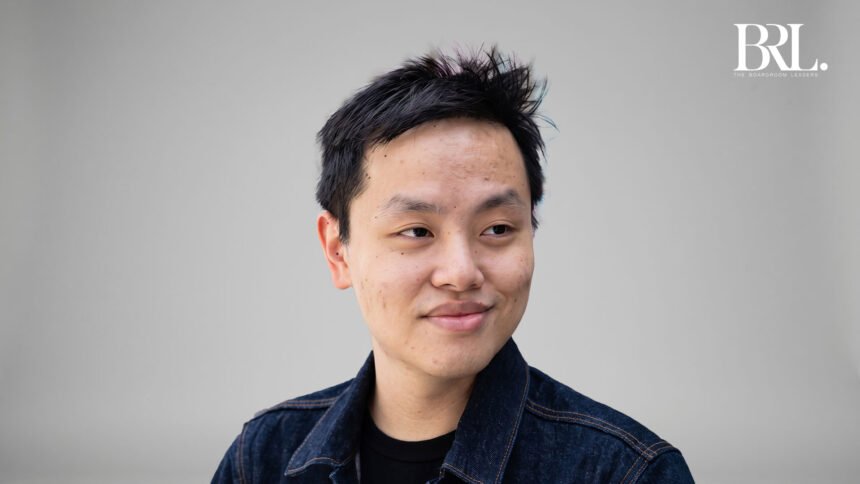
Eugene Cheah serves as the CEO and Co-Founder of Featherless AI, positioning himself not merely as a tech executive but as an architect of open-source accessibility. Cheah’s entry into the space is defined by a deep-rooted background in physics and software optimization, bringing a first-principles approach to the structural inefficiencies of AI deployment. Before founding Featherless, Cheah was a core contributor to the pioneering RWKV (Receptive Field Weighted Regression Attention-Free Transformer) project. This massive open-source effort aimed to build attention-free recurrent neural network architectures, proving that the traditional transformer design was not the only path forward, nor necessarily the most efficient path forward for modern language modeling.
Cheah’s engineering ethos stands in stark contrast to the dominant industry trend of pursuing raw model size for the sake of general benchmarks. While many of his contemporaries focus exclusively on inflating parameter counts to win public leaderboards, Cheah’s work focuses strictly on the deployment layer and real-world system reliability. By shifting the industry’s focus toward specialized open-weights and serverless execution, his leadership has pivoted away from the legacy status quo of “owning the stack” to a model of “optimizing the access.”
A Catalyst for Change
The genesis of Featherless AI began with a singular, frustrating realization: the tools to create state-of-the-art AI already existed in the public domain, but the friction of running them prevented them from reaching their full potential. While working closely with cutting-edge open-source architectures, Cheah observed a massive disconnect. Developers were successfully training highly specialized models for coding, medical diagnosis, and customer service, but the moment they tried to take those models live, they were met with a wall of infrastructure complexity.
His lightbulb moment occurred when he observed how much time brilliant researchers spent on infrastructure management versus actual model innovation. The ratio was completely inverted; teams were spending roughly 80% of their engineering cycles fighting cloud providers, provisioning Kubernetes clusters, and tracking down memory leaks, leaving only 20% for building unique product experiences. Cheah recognized that if the industry was to achieve true democratization, the infrastructure needed to become completely invisible. His motivation became to build a “featherlight” operational layer where a developer could instantly summon any of the thousands of open-source weights with a single, universal API call, entirely unshackled from the physical constraints of hardware configuration.
From Research to Realization
Co-founded in Singapore and headquartered in San Francisco, California, Featherless AI was engineered from day one to transform open-source AI from an experimental hobby into a commercial powerhouse. Alongside co-founders Harrison Vanderbyl (CTO) and Wesley George (COO), Cheah leveraged the collective optimization insights gained from their previous non-transformer research to build a highly optimized inference engine. The company emerged from its initial stealth phase backed by an elite roster of deep-tech and infrastructure investors, securing a 20 million Series A funding round co-led by AMD Ventures and Airbus Ventures, with participation from BMW i Ventures, Kickstart Ventures, Panache Ventures, and Wavemaker Ventures, bringing total capital backing to approximately 25 million dollars.
The early execution phase focused entirely on building an OpenAI-compatible interface that could host an incredibly vast library of open-source weights without the typical latency or cost penalties. The founding team achieved this by introducing hot-swapping techniques that dynamically load models into active GPU memory in under five seconds and release them when idle. By pairing these architectural breakthroughs with a “flat-capacity” pricing model that completely eliminates variable per-token billing, Featherless provided enterprise clients with the financial predictability required to fully commit their production workflows to open-source models.
Scaling Through Hurdles
The growth trajectory of Featherless AI has been an exercise in navigating the volatile economics of the AI compute market. In its early stages, the company faced the classic “cold-start” dilemma of infrastructure-as-a-service startups: how to host thousands of distinct models simultaneously without allowing cloud provider fees to completely erode profit margins. If a platform keeps thousands of models loaded in GPU memory at all times, the hardware costs are catastrophic; conversely, if it loads them only on demand, the user suffers from unacceptable latency.
Cheah navigated this hurdle through deep hardware optimization and a highly publicized strategic partnership with TensorWave and AMD. By building an AMD-first cloud utilizing AMD Instinct™ MI300X GPUs and the open ROCm™ software ecosystem, Featherless successfully bypassed the premium costs and supply constraints associated with legacy chip monopolies. Their engineering team proved they could match the performance of massive generalist models using optimized systems running on cost-effective, auditable hardware. This allowed Featherless to scale its catalog to host over 30,000 open-source models, experiencing massive month-over-month usage growth while dropping the validation and serving costs for major enterprises by orders of magnitude.
The Featherless Edge
The core competency that separates Featherless AI from legacy cloud infrastructure providers lies in its highly proprietary approach to dynamic GPU orchestration and “just-in-time” model loading. While traditional cloud providers require users to rent a specific virtual machine and manually load a single model onto it, Featherless acts as a massive, universal router. When an API call hits their system, the platform dynamically swaps, quantizes, and routes the request to an active GPU pool in milliseconds.
This proprietary methodology addresses what Cheah identifies as the true bottleneck of modern AI: the reliability gap. At global technology summits, Cheah has argued that while massive generalist models score highly on academic benchmarks, they consistently fail practical enterprise workflows because their success rate on complex, multi-step agentic tasks hovers around 70%. For a revenue-generating business, a 70% success rate is unusable.
Featherless solves this by allowing developers to easily deploy and run smaller, highly specialized models, typically in the 24B to 27B parameter range, that have been aggressively fine-tuned on task-specific data. By providing instant, serverless access to these precise, targeted models, Featherless enables companies to cross the critical 90% user-trust threshold and achieve the 99% reliability required for true automated operations.
Corporate Philosophy and Team Culture
Within Featherless AI, Cheah has cultivated an internal culture anchored in “engineering-first pragmatism.” The corporate philosophy avoids flashy, hyper-hyped industry marketing, focusing instead on measurable technical throughput and verifiable cost reductions. Cheah’s management style is highly decentralized and transparent, favoring rapid, iterative code deployments over rigid, multi-year bureaucratic roadmaps.
This philosophy is reflected in the company’s organizational structure. Operating as a distributed team across multiple continents, including the United States, Canada, Europe, Singapore, and Australia, Featherless explicitly recruits engineers who possess a deep background in low-level systems programming and hardware-level optimization. Decision-making authority is pushed directly to the engineers closest to the code, allowing the startup to adapt to new model releases within hours rather than weeks. Furthermore, the company maintains a strict, foundational commitment to data privacy, employing a transparent data routing mechanism and a strict no-logs policy that ensures enterprise clients retain total ownership over their data, free from corporate harvesting.
Looking toward the horizon, the roadmap for Featherless AI is centered on expanding the boundaries of specialized, hyper-local intelligence. As the broader technology sector transitions out of its initial speculative hype phase and into a mature, utility-driven era, the company is actively developing advanced tools to make autonomous AI agents functional and accessible for mid-sized businesses and decentralized developer communities worldwide. Their forward-looking expansion plans include launching a dedicated marketplace for specialized open models, expanding edge computing capabilities, and broadening their optimized inference network to meet sovereign AI demands across global regions.
By continuously lowering the cost of inference and championing an open, transparent model ecosystem, Featherless is positioning itself to be the quiet, fundamental architecture driving the next generation of software applications. Ultimately, leaders like Eugene Cheah are proving that the long-term legacy of the AI revolution will not belong to the centralized conglomerates that hoard the most raw hardware, but to the innovators who successfully democratize access to it. Keeping a close watch on these critical infrastructure shifts remains a core priority for us at The Boardroom Leaders, as the intersection of executive vision, capital efficiency, and open-source technology continues to fundamentally redefine the boundaries of global business.