


The Dawn of Light-Driven Chemistry
For more than a century, the global chemical industry has relied on a single, brutal mechanism to force molecules apart and fuse them into new shapes: burning fossil fuels to generate extreme heat. Industrial chemical manufacturing underpins modern civilization, providing the foundation for everything from agricultural fertilizers and plastics to transportation fuels. However, this foundational sector carries a devastating environmental tax, contributing roughly 10% to 15% of all global greenhouse gas emissions. The massive furnaces and boilers that drive these chemical reactions require temperatures exceeding $800^\circ\text{C}$ ($1470^\circ\text{F}$), consuming vast quantities of coal or natural gas simply to keep the fires burning.
- The Dawn of Light-Driven Chemistry
- The Hidden Engine of Global Emissions
- From West Texas Oilfields to Clean Energy Frontier
- The Weekend Breakthrough Hunt
- Forging the Rigel Photocatalytic Reactor
- Navigating Capital Deserts and Engineering Realities
- Redefining SAF and the Hydrogen Economy
- Radical Transparency and Mission Alignment
- Electrifying the Global Chemical Commons
For decades, scientists and climate advocates viewed this sector as “hard-to-abate”, a polite academic phrase meaning it was practically impossible to decarbonize using traditional renewable energy. While the electricity grid could swap coal for solar panels, and the automotive sector could trade internal combustion engines for lithium-ion batteries, industrial chemical reactors could not simply be plugged into a standard wall outlet. The physics of traditional thermal catalysts required raw heat, not electricity.
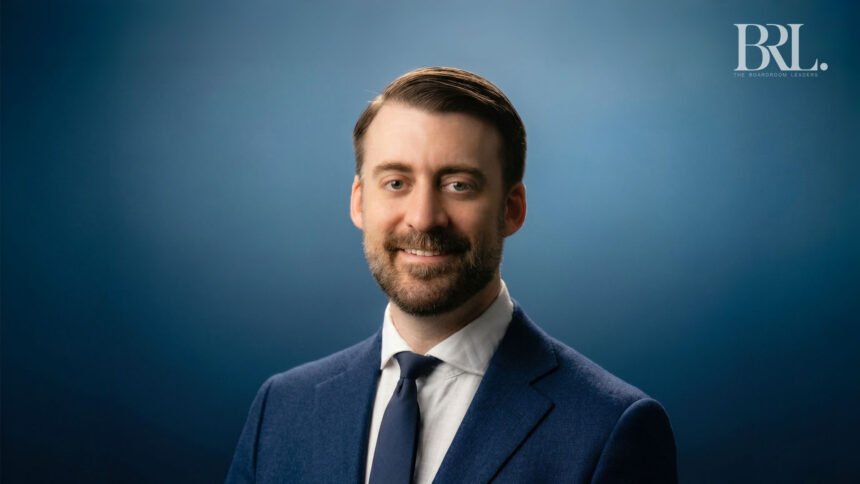
Enter Trevor Best, Co-Founder, CEO, and Board Chair of Syzygy Plasmonics Inc.
Based in Houston, Texas, the historic capital of the global oil and gas empire, Syzygy Plasmonics is actively executing a paradigm shift that replaces industrial combustion with renewable electricity and high-efficiency LED lights. By commercializing a revolutionary photocatalytic reactor platform that initiates chemical reactions with light rather than thermal energy, the company aims to eliminate combustion from chemical manufacturing entirely. Syzygy has committed to a staggering corporate milestone: preventing 1 gigaton of carbon dioxide from entering Earth’s atmosphere by 2040. In an industry defined by incremental, hyper-conservative shifts, this bold venture represents a fundamental rewrite of the laws of industrial manufacturing.
The Hidden Engine of Global Emissions
To understand the scale of the challenge Syzygy is tackling, one must examine the fundamental inefficiency of modern chemical processing. The primary culprit is a process known as catalysis. Catalysts are substances used to speed up chemical reactions without being consumed themselves. In standard industrial plants, these catalysts are placed inside massive steel tubes and roasted inside fossil-fuel-fired furnaces to trigger the necessary molecular breakups.
Consider the production of hydrogen and syngas (a mixture of hydrogen and carbon monoxide), which serve as the building blocks for global supply chains. The conventional method, Steam Methane Reforming (SMR), blasts natural gas and steam together over a nickel catalyst at extreme temperatures. This process results in a dual-emissions penalty: carbon dioxide is generated both as an unavoidable chemical byproduct of the reaction and as a direct result of burning fossil fuels to heat the furnace itself.
As a result, isolating just one ton of industrial hydrogen typically releases up to 10 tons of carbon dioxide into the air. This environmental tax is magnified across the 60-plus million metric tons of hydrogen consumed each year globally for petroleum refining and chemical synthesis.
Until recently, the only viable alternative was water electrolysis, using massive amounts of electricity to split water molecules. While clean when powered by renewables, electrolysis remains prohibitively expensive, consumes astronomical amounts of purified water, and requires massive infrastructure overhauls.
The industry remained trapped in a classic economic and environmental bottleneck: accept heavy carbon emissions to maintain cost-effective production, or pay an unsustainable premium for green alternatives. This systemic deadlock created a clear opportunity for a disruptive, out-of-the-box technology capable of achieving deep decarbonization without bankrupting the supply chain.
From West Texas Oilfields to Clean Energy Frontier
The executive guiding Syzygy Plasmonics through this industrial frontier does not fit the typical mold of a Silicon Valley tech evangelist. Trevor Best, CEO, was born and raised in Midland, Texas, surrounded by the pumping jacks, dust storms, and oil derricks of the Permian Basin. Deeply rooted in traditional energy culture, Best attended Texas Tech University, graduating with a firm understanding of the operational realities, economic drivers, and engineering complexities that power the modern world.
Upon graduation, Best stepped directly into the industry, joining Baker Hughes, one of the world’s largest oilfield services conglomerates. Over a multi-year tenure, he climbed through a variety of demanding management positions. Best developed a specialized expertise in technology deployment, global project execution, personnel management, quality assurance systems, and stringent international regulatory compliance. He learned how to take complex, volatile engineering concepts and safely scale them within unforgiving industrial environments.
Yet, as Best observed, in the shifting global landscape, he recognized an impending collision between traditional energy architecture and environmental reality. He realized that the future belonged not to those who extracted carbon from the ground, but to those who could innovate a practical path away from it. Rather than abandoning his industrial roots, Best resolved to leverage his deep corporate oilfield experience to rebuild chemical engineering from the ground up. He understood that to achieve a sustainable future, clean technology had to match the scale, reliability, and unforgiving economic metrics of the fossil fuel giants he had worked alongside.
The Weekend Breakthrough Hunt
The genesis of Syzygy Plasmonics began in the research labs of Baker Hughes in Houston, where Best met Dr. Suman Khatiwada, a brilliant materials scientist and research engineer. The two young professionals formed a fast friendship rooted in a shared entrepreneurial itch and a mutual desire to make a lasting, positive impact on global carbon reduction.
Convinced that the solutions to climate change lay buried within academic research, Best and Khatiwada initiated a rigorous, self-directed scouting mission. For over a year, the duo spent their weekend mornings huddled together over breakfast plates at local Houston diners, poring over dense academic journals, university patent filings, and scientific white papers. They were searching for a “holy grail” technology: a laboratory breakthrough with the potential to scale into a multi-billion-dollar industrial platform.
The breakthrough arrived when they discovered the extraordinary work of Professor Naomi Halas and Professor Peter Nordlander at Rice University’s Laboratory for Nanophotonics. For over two decades, Halas and Nordlander had studied the interactions of light and matter at the nanoscale, pioneering a field known as plasmonics. They had successfully engineered a revolutionary “antenna-reactor” nanoparticle.
This custom nanostructure utilized cheap, abundant materials to absorb specific wavelengths of light, such as that emitted by energy-efficient LEDs, and concentrate that energy directly into chemical bonds. This light-driven process completely bypasses the need for traditional thermal heat. Best and Khatiwada immediately recognized the commercial potential of this discovery. They reached out to the Rice professors, negotiated the exclusive technology licenses, and officially founded Syzygy Plasmonics in 2018, with Best taking the helm as CEO and Board Chair and Khatiwada stepping in as CTO.
The name “Syzygy”, an astronomical term describing the straight-line alignment of three or more celestial bodies, was selected to symbolize the core mission of their new enterprise: the alignment of three things shaping the planet: energy, technology, and sustainability within a single, world-changing business model.
Forging the Rigel Photocatalytic Reactor
When Syzygy launched, the core antenna-reactor technology worked flawlessly inside a glass vial under a microscopic laboratory setup. However, transitioning a nanoscale reaction from a university benchtop to an industrial facility capable of churning out tons of chemicals per day is an incredibly complex engineering challenge. Under Best’s strategic direction as CEO and Khatiwada’s technical oversight as CTO, the company set out to build a completely new class of hardware: the Rigel™ photoreactor.
The team systematically re-engineered the classic chemical reactor. Instead of a thick, opaque steel vessel surrounded by gas burners, the Rigel reactor features an innovative, modular design that integrates arrays of high-intensity, solid-state LEDs with custom-engineered catalyst beds. The system runs entirely on electricity. When renewable energy sources like wind or solar power the LEDs, the chemical reactions occur with zero combustion emissions.
Crucially, Best insisted that the core components of the Rigel reactor avoid the use of rare, hyper-expensive platinum-group metals or rare earth elements. Instead, Syzygy’s proprietary catalysts utilize earth-abundant, low-cost materials, protecting the company’s supply chain from geopolitical volatility and keeping capital expenditures remarkably low.
Over its first several years of intense development, the Syzygy team achieved a remarkable feat: they successfully brought plasmonics out of the lab and scaled the technology to a commercial level, transforming an academic curiosity into a rugged, industrial-grade reality.
Navigating Capital Deserts and Engineering Realities
The road to scaling a hard-tech clean energy startup is notoriously treacherous, often referred to by venture capitalists as the “valley of death.” Unlike software companies that require minimal capital to push code to the cloud, Syzygy required millions of dollars to lease specialized assembly facilities, purchase heavy machinery, and hire world-class chemical and electrical engineers. Best found himself pitching a highly theoretical, light-driven chemical manufacturing concept to deeply conservative energy investors during a volatile period for venture capital.
To overcome these hurdles, Best leaned heavily on his oilfield-honed operational discipline and quality assurance training. He implemented a highly transparent, milestone-driven approach to development that steadily de-risked the technology for external observers. This systematic strategy paid off handsomely. Best successfully spearheaded multiple highly oversubscribed funding rounds, raising over $135 million in private venture capital.
The company secured a diverse, blue-chip roster of strategic backers and industry giants that reads like a registry of the global energy elite, including:
- Aramco Ventures
- Chevron Technology Ventures
- Equinor Ventures
- Mitsubishi Heavy Industries
- Sumitomo Corporation
- Toyota
- The Engine Ventures
Furthermore, Syzygy secured competitive, non-dilutive federal grants from the U.S. Department of Energy’s ARPA-E program and the National Science Foundation (NSF). Supported by this financial foundation, Syzygy has been able to expand into field trials, maintain an elite team of roughly 75 professionals, and construct separate pilot plants testing distinct chemical pathways under real-world conditions.
Redefining SAF and the Hydrogen Economy
Today, Syzygy Plasmonics is leveraging its flexible technology platform to target the most lucrative and carbon-heavy segments of the energy transition. Rather than acting as a rigid, single-product company, the Rigel platform serves as an adaptable chemical toolset. By adjusting the specific wavelength of the LED lights and tweaking the mixture of the earth-abundant catalysts, a single Rigel reactor cell can be configured to perform entirely different industrial reactions without requiring expensive retooling or massive reinvestment.
The company’s near-term commercial deployment focuses on several primary, high-value molecular outputs:
| Technology Pathway | Primary Feedstocks | Output Molecules | Key Market Disruption |
| GHG e-Reforming™ | Raw Biogas, $\text{CO}_2$, Steam | High-Yield Syngas / Methanol | Cost-competitive Sustainable Aviation Fuel (SAF) and maritime alternatives without pipelines |
| Ammonia e-Cracking™ | Liquid Ammonia ($\text{NH}_3$) | High-Purity Hydrogen ($\text{H}_2$) | Clean, low-cost extraction converting 5.7 kg of $\text{NH}_3$ per kg of hydrogen |
The commercial value of this versatility was vividly demonstrated when Syzygy officially inked a landmark, binding six-year Sustainable Aviation Fuel (SAF) offtake agreement with the global commodities trading giant Trafigura Pte Ltd. The agreement covers the entire initial production volume of Syzygy’s pioneering commercial facility, NovaSAF-1, situated in Durazno, Uruguay.
The NovaSAF-1 facility is explicitly co-located with Estancias del Lago (EDL), one of South America’s most advanced industrial milk operations. The plant will tap waste biogas directly from EDL’s localized, closed-loop manure management system. Powered by local renewable electricity and processing agricultural carbon dioxide, the plant will bypass traditional gas upgrading pipelines entirely.
To turn the resulting syngas into flight-ready fuel, the facility integrates Fischer-Tropsch units to create liquid fuel. Scheduled to begin commercial operations and target its first fuel deliveries in 2028, independent life cycle analysis indicates that this light-driven process achieves an approximate 90% reduction in lifecycle emissions relative to conventional fossil Jet-A fuel. Crucially, the plant is engineered to achieve a SAF yield significantly higher than traditional thermal biogas reforming methods, proving that deep decarbonization can deliver superior project economics alongside environmental benefits.
Radical Transparency and Mission Alignment
The rapid, disciplined ascent of Syzygy Plasmonics reflects Trevor Best’s unique leadership philosophy. Operating at the intersection of traditional West Texas industrialism and forward-looking environmental sustainability, Best has cultivated an internal culture anchored by radical transparency, absolute accountability, and an intense alignment of purpose. He routinely shuns the chaotic, “move fast and break things” ethos of standard tech startups, replacing it with an uncompromising emphasis on rigorous safety protocols, physical asset security, and data-driven verification.
Best views his role not as a solitary corporate autocrat, but as a chief alignment facilitator. He actively practices a collaborative leadership style that empowers his engineering and business teams to take calculated ownership of complex challenges. He remains highly accessible, routinely mentoring early-stage founders through Rice University’s Clean Energy Accelerator and engaging directly with technicians on the assembly floor.
His strategic leadership and corporate performance have earned widespread industry recognition. He was named one of Houston’s “Most Admired CEOs” by the Houston Business Journal, and Syzygy secured the prestigious S&P Global Platts Energy Startup of the Year award. Best consistently reminds his team that they are not merely manufacturing hardware; they are defending a liveable planet. This mission-driven culture has allowed Syzygy to attract and retain top-tier talent from across both the traditional oil and gas sectors and the clean-tech landscape.
Electrifying the Global Chemical Commons
The future outlook for Syzygy Plasmonics is centered on rapid, international industrial scaling. Having successfully completed exhaustive front-end engineering and design (FEED) phases and logged thousands of hours of continuous performance testing on its commercial-scale demonstration units in Houston and Ulsan, South Korea, the company is shifting its primary focus from technological validation to global commercial execution.
As the aviation, maritime, and heavy transport industries face tightening international carbon mandates and strict compliance penalties, the demand for modular, distributed, and highly cost-competitive chemical manufacturing infrastructure is projected to skyrocket. Syzygy’s underlying modular deployment blueprint, where multiple Rigel cell stacks can be vertically grouped to scale production from 1 ton to over 100 tons per day within the same physical footprint, allows local operators to deploy clean chemical hubs exactly where the molecules are consumed, erasing the immense financial and carbon costs associated with long-distance liquefied transportation.
By successfully taking plasmonic nanotechnology out of the sterile confines of university research labs and forging it into a rugged, fully electrified industrial reality, Trevor Best and Syzygy Plasmonics are fundamentally altering the trajectory of the energy transition. They have proved that the deep decarbonization of heavy industry does not require economic sacrifice or regulatory subsidies; it simply requires the right alignment of light, electricity, and human ingenuity. As the NovaSAF-1 facility progresses toward its target 2028 deliveries and international deployment accelerates, Syzygy is well-positioned to illuminate a clean, profitable path forward for global manufacturing, ensuring that the next generation of industrial chemistry is powered entirely by the energy of light.