


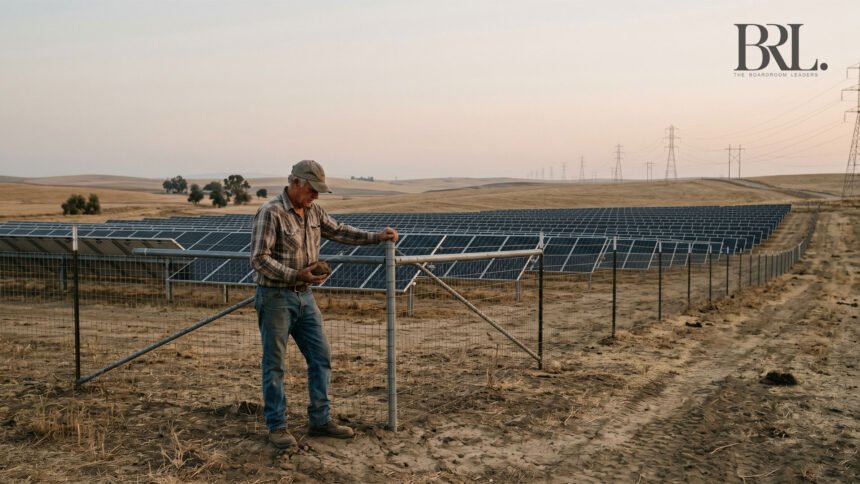
Your electricity bill went up last month. Your neighbor just had solar panels installed, subsidized, of course. Somewhere across town, a new EV charging hub opened, funded by a federal grant. And somewhere in Chile, a lithium mine expanded to keep all of it running.
- Who Is Actually Paying for the Green Transition?
- The Split Incentive Problem Nobody Talks About
- Renters Are Paying for Landlords’ Choices
- Taxpayers Are Subsidizing Both Sides
- What Are the Hidden Costs of Renewable Energy Nobody Mentions?
- The Global South Is Bearing the Heaviest Load
- So What Needs to Change?
The hidden cost of going green is very real. But it’s not landing where most people assume.
We’ve been sold a narrative where the green transition is a rising tide, clean energy, cleaner air, lower bills, and a better future. Some of that is true. But underneath the press releases and the net-zero pledges, there’s a deeply uneven distribution of burden. The question isn’t whether the green transition costs money. It’s who writes the check.
Who Is Actually Paying for the Green Transition?
The short answer: mostly ordinary people, through their taxes, their energy bills, and in some cases, their land.
The longer answer is more complicated and more uncomfortable.
Most economic incentives for green projects, tax credits for solar, subsidies for EV manufacturing, and waste management programs come from public funds. In the United States alone, the government committed $369 billion under the Inflation Reduction Act to climate and clean energy investment, an expense that ultimately falls on taxpayers. In Europe, consumers finance the emissions trading system through increases in their energy bills.
That’s not necessarily wrong. Public investment in transformative infrastructure has always worked this way, think highways, the internet, and rural electrification. But there’s a crucial difference: those investments broadly served the people who paid for them. This one? Not so much.
The Split Incentive Problem Nobody Talks About
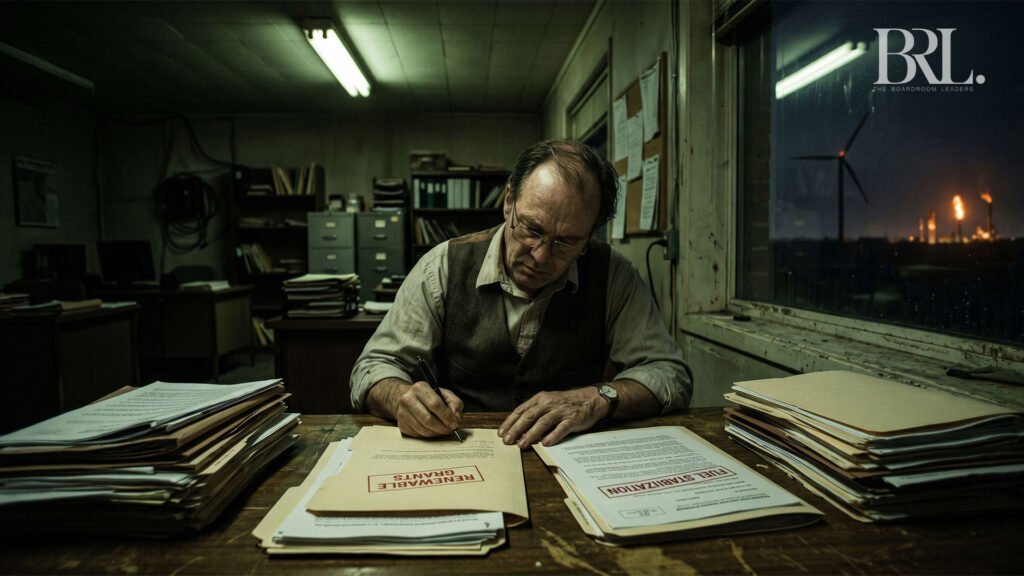
Here’s a term that doesn’t get nearly enough airtime: the split incentive problem.
Renters often face this dilemma; they pay the energy bills, but landlords control the building upgrades. So when a building needs new insulation, a heat pump, or better windows, the landlord has little financial motivation to invest. The renter, meanwhile, keeps paying inflated utility bills in an inefficient apartment they don’t own.
Renters Are Paying for Landlords’ Choices
This isn’t a fringe issue. One in seven families in the United States lives in severe energy poverty. And according to research from ACEEE, low-income households spend an average of 17.8% of their income on energy bills and transportation fuel, more than three times the national average.
Three times.
That’s not a gap. That’s a chasm. And the green transition, if it’s not designed carefully, is actively widening it.
Many programs for solar installation or electric vehicle procurement, which low-income households often don’t participate in, are financed by raising the price of electricity to all customers. So the family that can’t afford an EV or rooftop solar is effectively subsidizing the family that can. They’re paying into a system that benefits someone else.
Taxpayers Are Subsidizing Both Sides
Here’s the other inconvenient layer: while governments channel billions into renewable energy, they’re also still propping up fossil fuels on the other end. The UK government provides an estimated £17.5 billion per year in fossil fuel subsidies and consumer energy support, a figure that includes tax relief for producers, reduced VAT on gas, and fuel duty relief, the highest combined level of such support since 2016, according to research by Global Justice Now.
Both sides of the energy economy are being propped up with public money. And the people with the least political influence are paying the tab on both ends.
What Are the Hidden Costs of Renewable Energy Nobody Mentions?
When people debate the price of going green, they’re often talking about the visible costs: the EV sticker price, the heat pump installation, and the price of organic food. But the hidden cost of going green runs deeper.
There are at least four distinct categories of cost in the green transition: upfront household costs like retrofits and electric vehicles; system costs like grid upgrades and storage buildout; transition costs like job disruption and stranded assets; and hidden costs like mining impacts, supply-chain risk, and environmental justice burdens.
That last category is where things get quietly catastrophic.
Critical minerals, lithium, cobalt, copper, and rare earth elements, are the backbone of every battery, every solar panel, every wind turbine. And the countries extracting them are paying a price that the wealthy nations driving the demand rarely discuss.
In Chile and Argentina, the boom in demand driven by Europe’s green transition is destroying ecosystems and deepening inequalities in what some researchers and community advocates describe as a new wave of resource colonialism, extraction dressed up in environmental language.
Meanwhile, geopolitical tensions over cobalt, lithium, titanium, and rare earth elements are intensifying globally, as major powers race to secure supply chain dominance over the minerals that make decarbonization possible.
The people mining lithium in the Atacama Desert aren’t driving EVs. They’re draining aquifers so someone else can.
The Global South Is Bearing the Heaviest Load
The inequality doesn’t stop at the mine.
Developing countries pay more than double the interest rates of wealthy nations to fund clean energy projects. That means building a solar farm in Nigeria or a wind installation in Bangladesh costs dramatically more, not because of geography or technology, but because of how global finance assigns risk to poorer countries.
The Columbia Center on Sustainable Investment found that around $30 trillion in global savings exists every year, but most of it flows to economies already rich in physical and human capital, leaving a chronic shortfall for countries desperately in need of building their own infrastructure.
India is a telling case. Its solar capacity grew from 2.82 GW in 2014 to 110.9 GW in early 2025, a remarkable achievement by any measure. And yet India still pays the highest cost of borrowing among comparable economies, including France, Italy, Japan, the UK, and the United States, despite strong growth and debt indicators.
Imagine what faster progress would look like with equitable access to capital. That’s not a hypothetical; it’s a policy failure.
So What Needs to Change?
The green transition isn’t a bad idea. Let’s be clear about that. The alternative, doubling down on fossil fuels, absorbing the escalating costs of climate disasters, watching insurance markets collapse in flood-prone regions, is worse by any honest accounting.
According to First Street, a research firm specializing in climate risk, lenders could absorb up to $1.2 billion in losses this year alone from climate-driven mortgage defaults, as flooding and extreme weather push uninsured homeowners into foreclosure. Florida, Louisiana, and California are projected to account for more than half of those losses. And that $1.2 billion figure is expected to climb to $5.4 billion within a decade as climate exposure deepens. The cost of inaction is already here. It’s just not labeled as such.
But the hidden cost of going green, right now, in its current form, is being disproportionately absorbed by the people who can least afford it: renters who can’t upgrade their apartments, low-income households subsidizing EV credits they’ll never claim, and developing nations paying premium rates to finance infrastructure that rich countries needed a century ago.
The fix isn’t to slow down the transition. It’s to redesign who leads it and who benefits from it. That means renter protections tied to energy efficiency mandates. It means financing structures that don’t penalize the Global South for being poor. It means being honest that “going green” isn’t inherently just; it depends entirely on who holds the purse strings.
The planet needs a green transition. The question is whether we’re building one that works for everyone, or one that simply outsources the suffering somewhere less visible.