


Across the American business landscape, enterprise leadership faces a persistent dilemma. Organizations invest billions of dollars every year into digital transformation, generative artificial intelligence, and cloud migrations, yet an alarming number of these initiatives stall after the initial prototype stage. Demos impress in boardrooms, but when pushed into live production environments, systems struggle with unexpected scale, unexpected infrastructure costs, security vulnerabilities, or brittle integrations. In a marketplace where a few minutes of application downtime can cost millions of dollars and disrupt critical supply chains, the real measure of technology is not how clever a demo looks, but whether it works reliably when failure is not an option.
- The Quiet Crisis of Enterprise Software Rollouts
- A Tech Visionary Focused on Purpose and Pragmatism
- Driven by Empathy and the Desire to Fix What Breaks
- The Founding Story of Intuz and the Rise of Resilient Architecture
- Navigating Industry Shifts to Build a Global Footprint
- Pioneering Agentic AI, Cloud Modernization, and IoT Ecosystems
- Fostering a Culture of Accountability, Craftsmanship, and Empathy
- Shaping the Next Era of Intelligent Enterprise Software
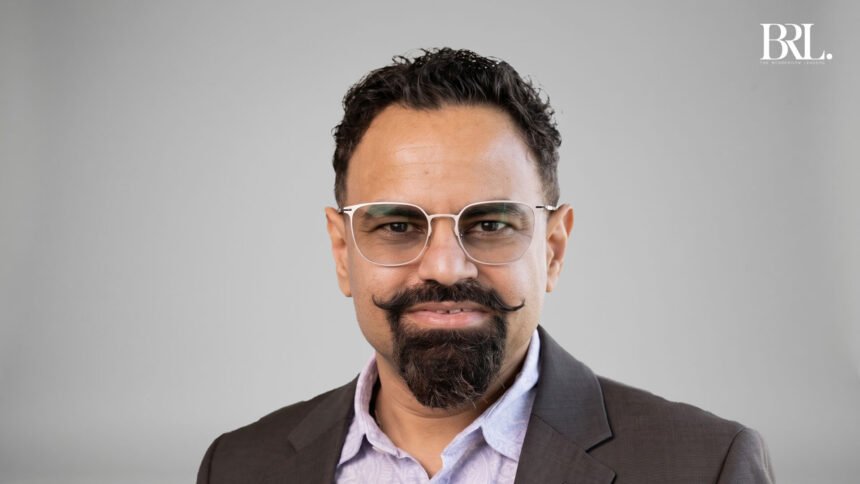
This gap between ambitious technical concepts and dependable, production-ready software is where modern technology leaders earn their reputation. For US enterprise teams ranging from legacy retail brands to healthcare networks and industrial automation firms, closing this gap requires more than just hiring software engineers. It demands a deliberate product philosophy that marries deep technical execution with genuine empathy for the end user. Leading this movement toward production-ready digital transformation is Kamal Rupareliya, Co-Founder and Director of Products at the software engineering firm Intuz. Together, they have spent more than sixteen years turning complex cloud architectures, Internet of Things networks, and advanced artificial intelligence models into dependable enterprise backbone systems.
The Quiet Crisis of Enterprise Software Rollouts
To understand why custom software and emerging technology projects frequently fall short, one must examine the operational realities inside mid-market and enterprise companies across the United States. In recent years, corporate technology stacks have grown increasingly fragmented. Organizations often find themselves managing legacy on-premise infrastructure alongside hybrid cloud systems, mobile user interfaces, and newly introduced machine learning pipelines. When companies attempt to layer new capabilities like generative AI or smart sensor connectivity onto these legacy foundations, the operational friction quickly multiplies.
Data pipelines frequently corrupt complex documents before they ever reach analytical models, cloud infrastructure bills skyrocket due to inefficient computing choices, and back-office staff remain burdened by repetitive, manual data entry. In sectors such as healthcare and social services, these technical inefficiencies directly affect human lives by slowing down case management and medical documentation. In manufacturing and energy, poorly integrated Internet of Things devices result in missed maintenance windows and lost revenue. The core problem in today’s software ecosystem is rarely a lack of powerful tools; it is the absence of unified product strategy and rigorous engineering principles capable of making those tools work seamlessly in real-world operational environments.
A Tech Visionary Focused on Purpose and Pragmatism
Kamal Rupareliya built his career around solving these exact operational friction points. Serving as Co-Founder and Director of Products, Kamal is a key driving force behind Intuz, bringing over fifteen years of deep hands-on expertise in software product strategy, Internet of Things architecture, serverless computing, and enterprise artificial intelligence. Rather than treating technology as an end in itself, he approaches software creation through a dual lens of technical mastery and operational empathy. He believes that every line of code, cloud database schema, and automated agent should exist to serve a clear business purpose and alleviate real human friction.
Throughout his career, Kamal has spearheaded the delivery of over seven hundred digital software products used across more than forty countries. His technical output spans early mobile application innovations to state-of-the-art agentic AI systems and connected device networks. As a thought leader and published technology writer, he regularly demystifies cutting-edge concepts like Retrieval-Augmented Generation, Model Context Protocol, and high-fidelity data extraction pipelines. His goal is always to provide enterprise technology leaders, Chief Technology Officers, and product directors with actionable clarity rather than superficial industry buzzwords.
Driven by Empathy and the Desire to Fix What Breaks
Kamal’s journey into software leadership began with a simple, foundational insight: technology only succeeds when it honors the reality of the person using it. Early in his professional development, he observed a recurring pattern across tech projects. Software developers would often construct complex systems based on ideal assumptions, only for real users to struggle with unintuitive interfaces, slow processing times, or broken workflows. He recognized that the primary reason software projects fail is not a lack of coding skill, but a lack of empathy during the design and architecture phase.
This realization became his personal motivation and North Star. Kamal understood that to build tools that truly endure, a product leader must deeply investigate the end-user’s day-to-day environment. Whether designing a mobile application for a doctor on hospital rounds, an automated workflow for a social worker managing heavy case files, or an industrial sensor interface for a field engineer, he committed himself to building solutions that eliminate stress rather than adding to it. This philosophy of blending technical discipline with empathetic problem-solving became the blueprint for his executive leadership at Intuz.
The Founding Story of Intuz and the Rise of Resilient Architecture
Intuz was established in 2008 to provide an answer to the widespread frustration with unreliable software developments. Founded with a mission to design and operate mission-critical systems that scale cleanly and run continuously, the firm positioned itself as a long-term engineering partner rather than a transactional vendor. From its inception, Intuz set out to master the full product lifecycle, covering everything from initial product scoping and rapid proof-of-concept prototyping to full production deployment and ongoing cloud infrastructure optimization.
In its early years, Intuz established strong credentials in high-performance mobile application development and custom web platforms. As consumer and business reliance on smartphones accelerated, the firm crafted custom iOS, Android, and cross-platform solutions for both disruptive startups and established global brands. Recognizing that standalone mobile applications would eventually need to connect with physical devices and scalable backend infrastructure, Intuz expanded its capabilities into cloud engineering and the Internet of Things. By earning official status as an AWS Consulting Partner and adopting ISO 9001-certified quality management standards, the company built an engineering environment capable of meeting the strict operational requirements of US enterprises.
Navigating Industry Shifts to Build a Global Footprint
Sustained growth over sixteen years requires constant adaptation, particularly as macroeconomic conditions and technical standards change. Intuz navigated major technology shifts, including the transition from monolithic server setups to cloud-native serverless architectures, the rise of industrial automation, and the recent explosion of artificial intelligence. During each market transition, the leadership team avoided chasing short-term trends, opting instead to master the underlying engineering principles required to make new tools safe, secure, and cost-effective for client organizations.
This disciplined approach allowed Intuz to scale its operations globally, serving clients across North America, Europe, and Asia. In the United States, Intuz has made a significant impact by modernizing critical software for diverse industries. For example, in the social services sector, Intuz engineered CasePath, an AI-powered SaaS case management platform designed for child welfare and family service agencies. Operating across more than twelve US states, this multi-tenant, HIPAA-ready solution streamlined intricate social work documentation so case workers could focus on helping families. In the retail space, Intuz transformed French Florist, a heritage 45-year-old American e-commerce brand, by rebuilding its digital storefront into an AI-driven personalized shopping experience. In healthcare, when a home health provider was overwhelmed by hand-processing physician orders and government forms, Intuz deployed AI-powered optical character recognition and automated workflows, reducing document processing times from hours down to seconds.
Pioneering Agentic AI, Cloud Modernization, and IoT Ecosystems
At the core of Intuz’s technical authority is a modern technology stack designed specifically for enterprise reliability. Under Kamal Rupareliya’s guidance, the firm has emerged as a premier developer of agentic AI systems, deploying over fifty-four live AI architectures into active production environments. Rather than relying on simple chatbot wrappers, Intuz builds multi-agent orchestration frameworks using technologies like LangGraph, CrewAI, and custom Retrieval-Augmented Generation pipelines. These systems allow software agents to autonomously execute complex multi-step workflows, retrieve precise data from enterprise repositories, and maintain operational accuracy without human intervention.
In addition to artificial intelligence, Intuz remains a trusted leader in custom cloud modernization and Internet of Things engineering. The company helps enterprises optimize expensive cloud setups, achieving dramatic cost reductions—such as cutting monthly AI cloud infrastructure bills from over fourteen thousand dollars down to less than four hundred dollars while maintaining peak performance. In the Internet of Things space, Intuz designs end-to-end connected systems spanning firmware development, edge computing, sensor integration, and real-time data visualization. Their solutions power smart energy monitoring for enterprise leaders like Sapient Industries, automated pool equipment controls, and fuel station operations across global markets.
Fostering a Culture of Accountability, Craftsmanship, and Empathy
Kamal Rupareliya’s leadership style is rooted in clarity, continuous learning, and absolute accountability. He believes that great engineering teams thrive when they are given a clear point of view on a problem, freedom to innovate, and an unwavering commitment to quality. Rather than managing through rigid top-down mandates, Kamal fosters a culture of open technical dialogue where team members are encouraged to ask tough questions about product utility, system security, and long-term maintainability before writing code.
This leadership philosophy extends directly to client relationships across the United States. Engineering leaders, Chief Technology Officers, and business founders frequently praise Intuz for acting as a true internal team member rather than a distant contractor. By prioritizing transparent communication, fast turnaround times, and genuine commitment to client outcomes, Kamal has built an organizational culture where a 99.9% uptime standard and flawless execution are treated as baseline expectations rather than optional goals.
Shaping the Next Era of Intelligent Enterprise Software
Looking toward the future, Kamal Rupareliya and Intuz are positioned to play a key role in shaping how modern enterprises adopt and scale intelligent technology. As artificial intelligence transitions from basic generative text to fully autonomous agentic workflows, Intuz is expanding its research and development in tri-modal data extraction, serverless edge computing, and hybrid cloud architectures. Their goal is to ensure that businesses of all sizes can leverage cutting-edge technical tools safely, securely, and with measurable return on investment.
The story of Kamal Rupareliya and Intuz is a testament to what happens when deep engineering craft is guided by human empathy and practical strategic thinking. In an industry often distracted by temporary trends, they have built a durable reputation by focusing on what matters most: shipping software that works, scales, and lasts. Here at The Boardroom Leaders, we continue to highlight visionaries who bridge the gap between technological innovation and practical execution, and Kamal Rupareliya stands as a prime example of executive leadership that drives real, lasting transformation for American enterprises navigating the digital age.